

Differences Between Air-Insulated And Compact Busducts
Nov 21, 2025
Leave a message
In the design of power distribution systems, the correct selection of busduct type directly affects the system's reliability, economy, and service life. Based on extensive project experience, our company provides professional selection guidance for customers.
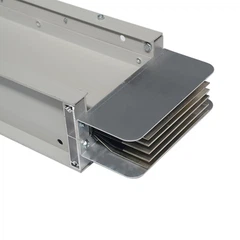
Air-insulated busducts use air as the main insulating medium, with sufficient safety clearance reserved between conductors. Their unique structural design ensures excellent heat dissipation, simple maintenance, and relatively economical costs, making them commonly used in dry environments such as power shafts and low-voltage switchgear rooms.
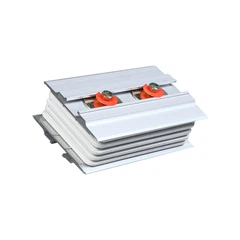
In contrast, compact busducts achieve higher current-carrying capacity and lower voltage drop through closely arranged conductors and high-efficiency insulating materials. Their compact structure results in a cross-sectional size 30%-40% smaller than that of air-insulated busducts under the same current-carrying capacity, making them particularly suitable as horizontal trunk lines for workshops or high-rise buildings with high current demands and limited space. Additionally, due to their low impedance characteristics, the power loss of compact busducts during operation is approximately 15%-20% lower than that of air-insulated ones, delivering significant long-term operational economy.
Our company manufactures both types of busducts and can provide customers with the most suitable solutions based on the specific environmental conditions, current loads, budget constraints, and future plans of the project. For example, air-insulated busducts are recommended for workshops with low current demands and ample space, while compact busducts are advised for space-constrained and load-intensive locations such as data centers. This demand-driven precise recommendation ensures that the power distribution system maintains optimal operating conditions throughout its entire lifecycle.
Send Inquiry