

AI Computing Infrastructure Continues To Expand
Aug 12, 2026
Leave a message
As the artificial intelligence industry accelerates, projects for intelligent computing centers and modular GPU computing clusters are being rolled out across various regions. The power per rack for AI servers has surged from 8 kW in traditional data centers to 50–130 kW, with high-density computing clusters running at full load 24/7. This has compelled a generational upgrade in power distribution systems, directly fueling a steady rise in busway orders and unlocking new growth opportunities for the busway manufacturing sector.
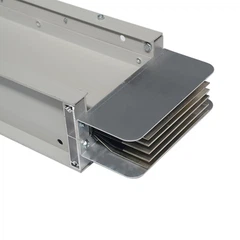
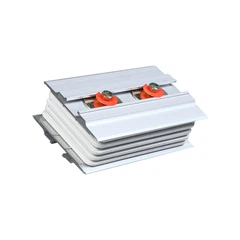
The conventional distribution model-cables paired with power distribution cabinets-falls short of meeting the demands of AI data centers. Extensive cabling occupies air ducts, impedes heat dissipation, and complicates later expansions, which require rewiring. Moreover, numerous cable terminals introduce potential overheating hazards. In contrast, busways feature factory-modular prefabricated structures that offer high current-carrying capacity, a compact layout, and flexible tap-off capabilities. They can be continuously installed along rows of racks, support on-demand power take-off via tap-off boxes, and enable live expansion, thereby significantly shortening construction cycles for modular data centers. Busways have now become the mainstream final‑distribution solution for new AI computing projects.
At the same time, market demand is shifting markedly. Compared to ordinary IDC facilities, AI computing projects show a strong preference for high-current compact busways and DC busways, with stricter requirements for temperature-rise control, insulation stability, and real-time temperature monitoring and early warning. With the increasing adoption of 1500V DC and 800V high-voltage DC distribution architectures, demand is surging for DC cast-resin busways and fire-resistant busways that are compatible with integrated energy storage + BESS computing parks. Industry demand is expanding from general AC busways to specialized AC/DC busways.
This market expansion is also intensifying technological competition. AI computing projects impose stringent demands on long-term full-load reliability and harmonic tolerance, gradually eliminating low-end non‑standard products. Manufacturers with independent R&D capabilities are accelerating their efforts to optimize conductor structures and insulation formulations, while developing intelligent monitoring busway products. They are also providing comprehensive solution design and on-site technical support services, catering to the differentiated customization needs of overseas containerized computing centers and domestic AI computing parks.
Industry analysts anticipate that investment in AI computing infrastructure will remain high over the coming years, and the penetration of busways in AI computing projects will continue to rise. Busway manufacturers should seize the opportunities presented by this computing infrastructure boom, continuously refine their technical solutions for DC busways and high-density intelligent busways, expand their reach into modular data centers and overseas AI computing parks, and leverage product differentiation to capture the dividends in the new energy and computing power distribution markets.
Send Inquiry