

Common Types Of Busway Elbows
Apr 08, 2026
Leave a message
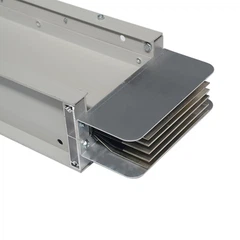
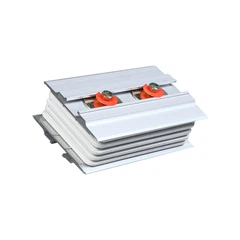
During the actual installation of busway systems, straight sections often cannot meet wiring requirements due to constraints such as on-site spatial layout and equipment arrangement. In such cases, busway elbows become indispensable connecting components. As the directional hubs of a busway system, the type selection and specification matching of elbows directly affect the stability and safety of the power distribution system.
Busway elbows are mainly classified by bending angle, with various specifications derived for different installation scenarios. The four most common types cover the vast majority of industrial and commercial wiring needs:
First is the 90°elbow, the most basic and widely used type, available in horizontal 90°and vertical 90°versions. It is suitable for most conventional wiring corners, featuring high cost performance and easy installation.
Second is the 45°elbow, mainly used for gentle turns where 90°is not applicable, such as diagonal connections between equipment and busways, or flexible wiring in confined spaces. It effectively reduces wiring resistance, avoids uneven stress on conductors caused by sharp turns, and protects the internal structure of the busway. Although less common than 90°elbows, this type is essential in complex layouts.
Third is the 135°elbow, a special-angle fitting mostly used for unconventional corners, wiring around large equipment, or routes requiring obstacle avoidance. With a turning angle between 90°and 180°, it offers strong flexibility and adapts to special on-site conditions. It is generally custom-produced and must be precisely matched to field dimensions.
Last is the tee elbow (T‑elbow), technically a branching fitting that splits one busway route into two. It is commonly used for power distribution from the main busway to different equipment, such as workshop machinery or floor branches in commercial buildings. It is available in horizontal tee and vertical tee versions to ensure stable current transmission in branches.
For proper selection, elbow specifications must match the main busway; material and ingress protection (IP) rating must be consistent with the on-site environment. Meanwhile, products with mature manufacturing processes should be chosen to avoid overheating, power failure, and other issues caused by loose connections or poor conductor contact.
Send Inquiry