

Busway Enclosure Spraying Process
Apr 07, 2026
Leave a message
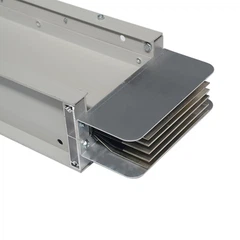
In power transmission and distribution systems, the busway trunking is not merely the "outer garment" of the equipment, but also a critical barrier protecting the internal conductors and insulation structure. The spraying process of the trunking directly determines the service life, protective performance, and applicable scenarios of the busway. As a core surface treatment technology in the busway industry, the selection and standardization of spraying processes constitute a crucial prerequisite for ensuring long-term stable operation of the equipment.
The primary objective of busway trunking spraying is to deliver the dual value of protection and aesthetics, rather than serving as a mere cosmetic enhancement. Given the widespread use of busways in complex environments such as industrial plants, data centers, commercial buildings, airports, and subway systems, they are often exposed to challenges like humidity, dust, mild corrosion, and extreme temperature variations. A high-quality spraying process can effectively isolate external environmental erosion, prevent oxidation and rust of the trunking, thereby safeguarding the internal copper conductors and insulation layers, and avoiding potential electrical safety hazards caused by trunking damage.
Currently, the dominant spraying process for busway trunkings in the industry is electrostatic powder coating, which offers the highest cost-performance ratio and the broadest application. This process involves rigorous multi-stage procedures: first, pre-treating the base material of the trunking to remove surface oil and oxide layers; then, performing sandblasting and phosphating treatment to enhance the surface adhesion of the base material; subsequently, applying electrostatic powder spraying technology to uniformly adhere high-quality epoxy-polyester powder onto the trunking surface; finally, subjecting it to high-temperature curing to form a dense coating.
The core standards for a high-quality spraying process are threefold:
Coating Quality: The thickness must be controlled within 60–100μm. It should exhibit strong adhesion, no peeling, blistering, or pinholes, and possess excellent impact resistance, heat-humidity resistance, and salt-spray resistance.
Material Selection: Environmentally friendly and anti-aging epoxy-polyester powder must be selected to avoid fading and powdering caused by inferior quality powder.
Color Standardization: The industry generally adheres to the RAL color chart while supporting customized color matching to meet the requirements of project designs.
It is important to note that the standardization of the spraying process directly impacts the service life of the busway. Inferior spraying tends to result in coating peeling and fading, leading to trunking rust, which in turn compromises the safety of internal conductors and increases long-term maintenance costs. Therefore, when selecting busway products, in addition to focusing on the core conductive performance, equal importance should be attached to the quality of the trunking spraying process. Choose products that comply with industry standards and feature mature craftsmanship.
Send Inquiry