

Green Development Of The Busway Industry
May 27, 2026
Leave a message
Driven by the implementation of new national standards, further advancement of the "dual carbon" goals and booming demand for new infrastructure, the busway industry is accelerating its transition from scale expansion to technology-driven development. Intelligent upgrading and green development have become the core industrial trends, while the rise of domestic brands and in-depth exploration of segmented scenarios are reshaping the market landscape.
Smart busways have entered a period of rapid growth and stand out as the fastest-growing segment in the industry. Statistics show that the penetration rate of smart busways has risen sharply in newly built large public construction projects in 2026, with remarkable progress also achieved in high-end industrial facilities and data centers. Unlike traditional products that only deliver power passively, the new-generation smart busways are equipped with high-precision sensors, IoT modules and edge computing units. They can collect real-time data such as current, voltage and temperature and transmit the data to cloud platforms, enabling three-level early warning of potential faults and greatly reducing power outage risks. In addition, the modular design supports live hot swapping, allowing capacity expansion without power cuts, which perfectly meets the flexible operation and maintenance requirements of data centers, new energy power stations and other scenarios.
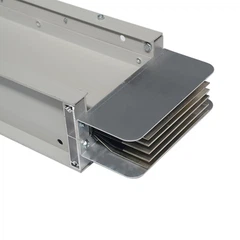
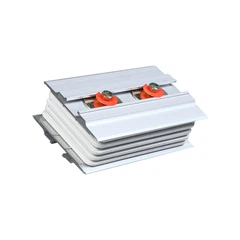
Green and low-carbon performance has evolved into a core competitive edge, spurring innovations in materials and manufacturing processes across the industry. To align with the "dual carbon" targets, manufacturers are increasingly adopting recycled copper and aluminum as well as halogen-free flame-retardant insulating materials. Optimized conductor structure design cuts line power loss and effectively reduces carbon footprint. Cast busways feature IP68 high protection rating and eco-friendly epoxy resin casting technology, gaining wider application in harsh environments such as chemical plants and offshore platforms. With aluminum alloy enclosures and compact layout, compact busways deliver efficient heat dissipation and space savings, making them the mainstream choice for industrial power distribution.
In terms of market structure, domestic brands have achieved a leap from import substitution to industry leadership. Foreign giants are scaling back their overall presence and focusing on high-end niche markets. Benefiting from technological breakthroughs, cost advantages and localized services, domestic enterprises now hold 60% to 70% of the market share. Meanwhile, industrial concentration keeps increasing. Leading companies are ramping up R&D investment to develop cutting-edge technologies including intelligent monitoring and digital twins, and enhancing customized solutions for diverse sectors such as photovoltaics, energy storage and rail transit.
As key equipment for power distribution systems, the busway industry stands at the intersection of technological innovation and industrial upgrading. Going forward, as intelligent, green and customized development gathers momentum, enterprises must prioritize technological innovation, strict quality control and service optimization to gain a competitive edge amid industry restructuring, and deliver reliable power distribution solutions for new infrastructure construction and energy transition.
Send Inquiry