


DC Outdoor Busduct
Working Principle
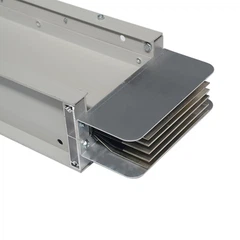
DC cast resin bus duct is a dedicated power transmission device tailored for DC power distribution systems such as photovoltaic power stations, energy storage facilities and AI computing centers. Adopting the integral vacuum epoxy resin casting process and optimized DC conductive structure, it delivers low-voltage, high-current power transmission with superior stability and high protection, perfectly accommodating long-term full-load operation of 1500V DC power systems.
The product adopts high-purity copper conductors as the power transmission core. The layout and spacing of conductors are optimized based on the characteristics of DC power transmission, which effectively weakens the DC skin effect, reduces line impedance and power loss, and addresses the problems of excessive temperature rise and high energy consumption of conventional power distribution equipment under DC operation. Through the integrated vacuum casting process, conductors are fully encapsulated inside modified epoxy resin insulation. After curing, a dense, seamless monolithic insulation structure is formed, completely isolating air, moisture and corrosive media to prevent leakage, creepage and short-circuit faults that frequently occur under DC operating conditions.
During operation, heat generated by energized conductors can be rapidly conducted to the metal enclosure via the epoxy resin insulation layer. The uniform solid heat conduction structure realizes balanced heat dissipation across the whole unit, eliminating uneven heat dissipation and local heat accumulation inherent to air-insulated bus ducts, thus ensuring long-term stable operation at low temperatures. In addition, the integrally cast structure has no exposed live parts and boasts excellent fire resistance, explosion-proof and impact resistance performance.
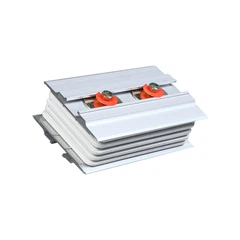
Compared with ordinary AC bus ducts, this product features optimized insulation formulas and structural design targeting the non-power-frequency alternating characteristic of DC power transmission, which effectively suppresses insulation aging under DC electric fields. Equipped with a modular tapping structure, it can flexibly cooperate with tap-off boxes for power shunting. Balancing transmission stability, safety and power distribution flexibility, it is suitable for various harsh DC power distribution scenarios including outdoor environments, underground tunnels and highly corrosive sites.
Quality Assurance
Our DC cast-resin busway adopts a full-process standardized quality assurance system. Strict control is implemented across three key links: raw-material sourcing, production process standards, and full-lifecycle quality traceability. This comprehensively guarantees safe and stable product operation under DC working conditions for energy-storage, photovoltaic and computing-power-center applications, eliminating risks from sub-standard products.
In terms of raw-material sourcing, premium branded base materials are selected for core components. Key materials such as high-purity copper conductors, modified epoxy resin and sealing accessories are sourced from designated suppliers. Sampling inspection is carried out before material warehousing to rigorously verify material parameters, insulation performance and electrical conductivity. Impure and inferior raw materials are barred from production, fundamentally avoiding common DC-transmission issues such as excessive temperature rise, insulation aging, water ingress and electric leakage, so as to secure basic product quality.
The production process complies strictly with national GB/T standards and international IEC electrical standards, with standardized dust-free manufacturing adopted. Fully-automatic vacuum casting equipment ensures precision throughout casting, curing, forming and polishing, with tight control over product sealing, flatness and structural stability. Every unit undergoes multiple factory tests including temperature-rise test, voltage-withstand test, water-proof & anti-corrosion test and short-circuit-withstand test, to satisfy operating requirements for 1500 V high-voltage DC and harsh outdoor environments.
Installation Guide
The installation procedure for DC cast-resin busway shall follow the specifications of the XLC-series busway. It consists of four major phases: pre-installation preparation, hoisting & fixing, joint connection, and fire-stopping sealing, and is applicable to DC power distribution scenarios such as energy-storage and photovoltaic systems.
Prior to installation, complete site verification: remove obstacles including water pipes and air ducts around the pipeline route, and reserve openings for wall-penetration and floor-penetration. Reserve standard opening dimensions for 4-wire / 5-wire busway according to corresponding rated current. After unpacking, inspect busway sections, joints and tap-off boxes for cracks in the cast-resin layer and oxidation damage of conductors. Measure phase-to-phase and phase-to-ground insulation resistance for each section; the value shall not be lower than 20 MΩ. Defective products are prohibited from installation. Arrange supports and hangers in advance. The spacing between hangers for horizontal installation shall not exceed 2m. Spring supports shall be adopted for vertical shaft installation, whose pre-tension shall match the self-weight of busway plus an allowance of 5-10 kg.
Use soft cloth padding to protect the cast-resin insulation layer during hoisting and handling. For high-current busway of 2500 A and above, clamp the busway with wooden boards during hoisting to prevent housing deformation. Horizontal installation modes include ceiling-mounted, wall-mounted and wall-penetration layout. When busways run vertically through floors, the clearance between adjacent busways shall be no less than 400 mm. For long-distance main trunk lines, install expansion joints every 40 meters to absorb thermal expansion. For vertical installation, deploy expansion joints complying with length standards corresponding to fixing modes.
Double-ended bolts with red torque indicators are used for busway joint connection, with a standard tightening torque of 68 N·m. The falling-off of the red mark indicates adequate tightening. Clean dust and impurities from conductor contact surfaces before connection. Hammering with iron hammers is forbidden. Fit and fasten sealing covers after assembly. Fill fire-resistant sealing materials and apply fire-retardant coatings at wall-penetration and floor-penetration positions to stop the spread of fire and smoke.
After completion of overall assembly, keep test records on file. Perform minor maintenance including joint retightening and insulation resistance re-testing after one-year continuous operation, and carry out full-system overhaul every three years, so as to ensure long-term and stable operation of the DC busway.
Hot Tags: dc outdoor busduct, China dc outdoor busduct manufacturers, suppliers, Dual Conductor Cast Resin Busduct, epoxy resin cast busway, Outdoor Busway, Waterproof Busbar, Waterproof Busduct, Waterproof Busway
You Might Also Like


Send Inquiry