

What is the power loss of Cast Resin Busduct?
Dec 05, 2025
Leave a message
What is the power loss of Cast Resin Busduct?
Hey there! I'm a supplier of Cast Resin Busduct, and I often get asked about the power loss of this nifty electrical component. So, let's dive right in and break it down in a way that's easy to understand.
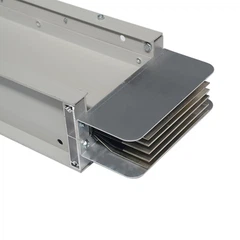
First off, what the heck is Cast Resin Busduct? Well, it's a type of electrical distribution system that uses copper or aluminum conductors encased in epoxy resin. This setup offers a bunch of advantages, like high mechanical strength, good insulation properties, and protection against environmental factors. You can check out more about 3-Phase Cast Resin Busduct on our website.
Now, onto power loss. Power loss in Cast Resin Busduct mainly happens due to two factors: resistive losses and eddy current losses.
Resistive losses are pretty straightforward. They occur because the conductors in the busduct have some resistance. When current flows through these conductors, they heat up, and that heat is a form of energy loss. The amount of resistive loss depends on the resistance of the conductor and the square of the current flowing through it. In simple terms, the higher the current and the higher the resistance, the more power is lost. This is governed by the formula P = I²R, where P is the power loss, I is the current, and R is the resistance.
Eddy current losses are a bit more complicated. Eddy currents are small, circular currents that are induced in the conducting materials (like the metal enclosures or the conductors themselves) when they are exposed to a changing magnetic field. These eddy currents create their own magnetic fields, which oppose the original magnetic field. This opposition causes energy to be dissipated as heat, resulting in power loss. Eddy current losses can be reduced by using materials with low magnetic permeability and by proper design of the busduct to minimize the magnetic field interactions.
To measure the power loss in Cast Resin Busduct, we usually use a combination of theoretical calculations and practical testing. In the lab, we can set up a test circuit with the busduct and measure the input and output power. The difference between the two gives us the power loss. We also use computer simulations to model the electrical and magnetic behavior of the busduct and predict the power loss under different operating conditions.
Now, why does power loss matter? Well, for one, it affects the efficiency of the electrical system. The more power that's lost in the busduct, the less power is available for the end - users. This means higher energy costs and a less efficient overall system. It can also lead to overheating of the busduct, which can damage the insulation and reduce the lifespan of the equipment.
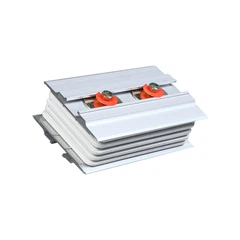
As a supplier, we're always looking for ways to reduce power loss in our Cast Resin Busduct. We use high - quality conductors with low resistance and optimize the design of the busduct to minimize eddy current losses. For example, we carefully select the shape and arrangement of the conductors and the enclosures to reduce magnetic field interactions. You can learn more about our Cast Resin Busduct Feeder Unit and how it's designed to be efficient.
Another important aspect is the installation of the busduct. Improper installation can increase power loss. For instance, if the connections between different sections of the busduct are not tight enough, it can increase the resistance at the joints, leading to higher resistive losses. So, we provide detailed installation guidelines to our customers to ensure that the busduct is installed correctly.
We also offer different types of Cast Resin Busduct to meet the specific needs of our customers. For example, if a customer has a high - current application, we can recommend a busduct with larger conductors to reduce resistive losses. And for applications where space is limited, we have compact designs that still maintain low power loss. You can take a look at our Epoxy Resin Cast Busway Elbow for some of these specialized solutions.
In conclusion, power loss in Cast Resin Busduct is an important factor to consider when designing and operating an electrical system. By understanding the causes of power loss and taking steps to reduce it, we can improve the efficiency and reliability of the system. As a supplier, we're committed to providing high - quality Cast Resin Busduct with low power loss.


If you're in the market for Cast Resin Busduct and want to learn more about how we can help you reduce power loss in your electrical system, feel free to reach out to us. We're here to answer all your questions and help you make the best choice for your project.
References
- Electrical Power Distribution Handbook by Terry L. Wildi
- Handbook of Electrical Engineering by John J. Cathey
Send Inquiry