

What is the eddy - current loss of Tinned Copper Busbar?
Jul 02, 2026
Leave a message
Eddy - current loss is a crucial concept in the field of electrical engineering, especially when it comes to tinned copper busbars. As a supplier of tinned copper busbars, understanding the eddy - current loss associated with these products is essential for both us and our customers. In this blog, we will delve into what eddy - current loss is, how it affects tinned copper busbars, and why it matters in various applications.
What is Eddy - Current Loss?
Eddy - current loss is a type of power loss that occurs in conductive materials when they are exposed to a changing magnetic field. When a magnetic field changes around a conductor, it induces circulating currents, known as eddy currents, within the conductor. These eddy currents flow in closed loops and generate heat due to the resistance of the conductor. This heat generation represents a loss of electrical energy, which is referred to as eddy - current loss.
The magnitude of eddy - current loss is influenced by several factors. One of the primary factors is the frequency of the changing magnetic field. Higher frequencies generally lead to greater eddy - current losses because the rate of change of the magnetic field is faster, inducing stronger eddy currents. Another factor is the conductivity of the material. Since copper is a highly conductive material, tinned copper busbars are particularly susceptible to eddy - current losses. The thickness of the conductor also plays a role. Thicker conductors tend to have higher eddy - current losses because there is more material available for the eddy currents to flow through.
Eddy - Current Loss in Tinned Copper Busbars
Tinned copper busbars are widely used in electrical power distribution systems due to their excellent electrical conductivity, corrosion resistance, and mechanical strength. However, the presence of eddy - current losses can have a significant impact on their performance.


In a power distribution system, tinned copper busbars carry large amounts of electrical current. When the current changes, it creates a changing magnetic field around the busbars. This changing magnetic field induces eddy currents within the busbars, resulting in power loss. The eddy - current losses not only reduce the efficiency of the power distribution system but also generate heat, which can lead to thermal issues.
To mitigate eddy - current losses in tinned copper busbars, several techniques can be employed. One common approach is to use laminated busbars. Laminated busbars consist of multiple layers of copper separated by insulating materials. The insulating layers break up the eddy current paths, reducing the magnitude of the eddy currents and thus the associated losses. Another technique is to use busbars with a smaller cross - sectional area. By reducing the thickness of the busbar, the path for the eddy currents is restricted, resulting in lower eddy - current losses.
Importance of Eddy - Current Loss in Applications
The eddy - current loss in tinned copper busbars has a significant impact on various applications. In industrial power distribution systems, high eddy - current losses can lead to increased energy consumption and higher operating costs. For example, in a large manufacturing plant, the cumulative effect of eddy - current losses in the busbars can result in a substantial amount of wasted energy over time.
In addition to energy efficiency, eddy - current losses can also affect the reliability of electrical systems. The heat generated by eddy currents can cause the temperature of the busbars to rise, which may lead to thermal expansion and mechanical stress. Over time, this can result in damage to the busbars and other components of the electrical system, leading to potential failures and downtime.
In the field of renewable energy, such as solar and wind power generation, tinned copper busbars are used to transmit electrical energy from the power generation source to the grid. Minimizing eddy - current losses in these applications is crucial for maximizing the overall efficiency of the renewable energy system.
Related Products and Solutions
As a tinned copper busbar supplier, we also offer a range of related products that can help in reducing eddy - current losses and improving the performance of electrical systems.
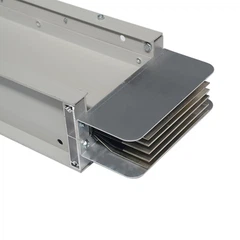
Flexible Busduct is a flexible alternative to traditional rigid busbars. It offers several advantages, including easier installation, better flexibility, and reduced eddy - current losses. The flexible design allows for more efficient routing of electrical power, which can help in minimizing the magnetic field interactions and thus reducing eddy - current losses.
High - Insulation Polyester Film can be used to insulate the tinned copper busbars. This film provides excellent electrical insulation properties, which can help in reducing the eddy - current losses by preventing the flow of eddy currents between different layers of the busbar.
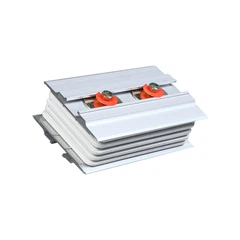
Busway Connector Insulation Plate is another important product that can be used to improve the insulation between busbars and connectors. By providing a high - quality insulation layer, it helps in reducing the eddy - current losses and improving the overall performance of the electrical system.
Conclusion
Eddy - current loss is an important consideration when using tinned copper busbars in electrical systems. Understanding the factors that contribute to eddy - current losses and implementing appropriate mitigation techniques can help in improving the efficiency, reliability, and performance of these systems. As a tinned copper busbar supplier, we are committed to providing high - quality products and solutions that can help our customers minimize eddy - current losses and achieve optimal performance in their electrical applications.
If you are interested in learning more about our tinned copper busbars or any of the related products, we encourage you to contact us for a detailed discussion. Our team of experts is ready to assist you in finding the best solutions for your specific needs.
References
- Grover, F. W. (1946). Inductance Calculations: Working Formulas and Tables. Dover Publications.
- Alexander, C. K., & Sadiku, M. N. O. (2017). Fundamentals of Electric Circuits. McGraw - Hill Education.
Send Inquiry