

What is the heat - dissipation performance of a busway connector?
May 12, 2026
Leave a message
Hey there! As a supplier of Busway Connectors, I often get asked about the heat - dissipation performance of these little but crucial components. So, I thought I'd sit down and write this blog to share some insights on what the heat - dissipation performance of a busway connector is all about.
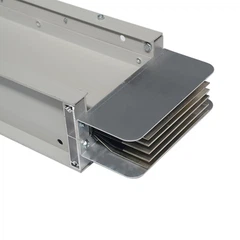
First off, let's understand what a busway connector is. It's a key part in electrical systems. It's used to connect different sections of busways, which are like big channels that carry electricity. You can check out more about Busway Connector on our website.
Now, why is heat dissipation so important for a busway connector? Well, when electricity flows through a conductor, it generates heat. That's just basic physics. In a busway connector, if the heat isn't dissipated properly, it can lead to a bunch of problems. The most obvious one is overheating. When a connector overheats, it can cause the insulation around it to break down. And once the insulation is gone, you're looking at potential short - circuits, which can be a real safety hazard. It can also reduce the lifespan of the connector itself and other nearby electrical components.
So, what factors affect the heat - dissipation performance of a busway connector?
Material
The material of the connector plays a huge role. Metals are good conductors of both electricity and heat. For example, copper is a popular choice for busway connectors because it has excellent electrical conductivity and relatively good heat - dissipation properties. Aluminum is another option, and you can learn more about Aluminum Busway Connector on our site. Aluminum is lighter and cheaper than copper, but its heat - dissipation ability is a bit different. It doesn't conduct heat as well as copper, but in some applications where weight and cost are major concerns, it can still be a great choice.
Design
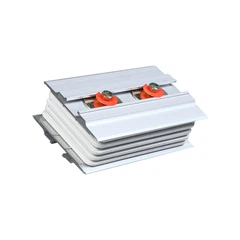
The design of the connector also matters a lot. A well - designed connector will have a larger surface area exposed to the surrounding air. Why is that important? Because heat transfer occurs through conduction, convection, and radiation. When more surface area is in contact with the air, it's easier for the heat to transfer from the connector to the air through convection. Some connectors are designed with fins or other structures that increase the surface area. These fins act like little heat - sinks, allowing the heat to escape more quickly.
Contact Pressure
Proper contact pressure between the connector and the busway is crucial. If the contact pressure is too low, there will be a higher resistance at the connection point. And as we know from Ohm's law, higher resistance means more heat is generated. On the other hand, if the pressure is too high, it can damage the connector or the busway. So, getting that balance right is key to ensuring good heat - dissipation performance.
Insulation
Insulation is important not only for safety but also for heat dissipation. The Busway Connector Insulation Plate helps to prevent electrical leakage. But it also needs to have good thermal properties. If the insulation is too thick or has poor heat - transfer characteristics, it can trap the heat inside the connector, leading to overheating. So, we need to choose insulation materials that can insulate well while still allowing some heat to pass through.
Environmental Conditions
The environment where the busway connector is installed also affects its heat - dissipation performance. If the connector is in a hot and humid environment, it will be more difficult for the heat to dissipate. High humidity can also cause corrosion on the connector, which can increase resistance and generate more heat. On the other hand, if the connector is in a well - ventilated area, the heat can be carried away more easily by the moving air.
Now, let's talk about how we test the heat - dissipation performance of our busway connectors.
We use a variety of methods. One common way is to measure the temperature of the connector under different load conditions. We apply a known electrical load to the connector and use thermocouples or infrared cameras to measure the temperature at different points on the connector. By monitoring how the temperature changes over time, we can get an idea of how well the connector is dissipating heat.
We also perform long - term tests. We run the connectors under continuous load for an extended period, sometimes for weeks or even months. This helps us to see how the connector performs over time and if there are any issues with heat buildup that might not show up in short - term tests.


As a supplier, we're constantly working on improving the heat - dissipation performance of our busway connectors. We're researching new materials, coming up with better designs, and using the latest testing methods to ensure that our products meet the highest standards.
If you're in the market for busway connectors, heat - dissipation performance should definitely be on your list of considerations. A connector with good heat - dissipation will not only keep your electrical system safe but also save you money in the long run by reducing the need for frequent replacements.
If you have any questions about our busway connectors or want to discuss your specific requirements, don't hesitate to reach out. We're here to help you find the best solution for your electrical needs. Whether you're working on a small project or a large - scale industrial installation, we've got the connectors that can do the job. So, get in touch and let's start a conversation about how we can work together.
References
- Electrical Engineering Handbook: Covers basic electrical principles related to heat generation and dissipation in conductors.
- Industry reports on busway technology: Provide insights into the latest developments in busway connector design and performance.
Send Inquiry