

What are the installation heights for different types of fire - resistant busways?
Aug 13, 2025
Leave a message
As a provider of fire-resistant busways, I often encounter inquiries from clients regarding the appropriate installation heights for different types of these crucial electrical components. Understanding these installation heights is not only essential for ensuring the safety and efficiency of electrical systems but also for complying with various industry standards and regulations. In this blog post, I will delve into the installation heights for different types of fire-resistant busways, offering insights and guidance based on our extensive experience in the field.
General Considerations for Busway Installation Heights
Before discussing the specific installation heights for different types of fire-resistant busways, it is important to understand the general factors that influence these heights. These factors include accessibility for maintenance and inspection, protection from physical damage, compliance with electrical codes, and the overall layout of the electrical system.
Accessibility is a key consideration when determining the installation height of a busway. Maintenance personnel need to be able to easily reach the busway for routine inspections, repairs, and component replacements. This typically means that the busway should be installed at a height that allows for comfortable access without the need for excessive stretching or the use of specialized equipment.
Protection from physical damage is another important factor. Busways should be installed at a height that minimizes the risk of being struck by moving equipment, vehicles, or other objects. This may involve installing the busway above the normal traffic flow or in a protected area.


Compliance with electrical codes is also crucial. Electrical codes, such as the National Electrical Code (NEC) in the United States, specify minimum installation heights for busways to ensure safety. These codes are designed to prevent electrical hazards, such as short circuits and electrical shocks, and to ensure the proper functioning of the electrical system.
Finally, the overall layout of the electrical system can influence the installation height of the busway. For example, if the busway is part of a multi-level electrical distribution system, the installation height may need to be coordinated with the layout of other electrical components, such as transformers and switchgear.
Installation Heights for Different Types of Fire-Resistant Busways
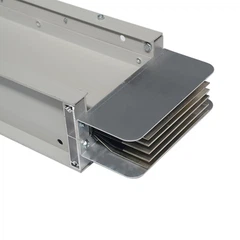
Fire-Resistant Busway Feeder Unit
The Fire-Resistant Busway Feeder Unit is a critical component in many electrical distribution systems. It is typically used to supply power from a main electrical source, such as a transformer or switchgear, to other parts of the system.
The installation height of a Fire-Resistant Busway Feeder Unit can vary depending on several factors, including the location of the main electrical source, the layout of the electrical system, and the accessibility requirements. In general, these units are installed at a height that allows for easy connection to the main electrical source and other components of the system.
For indoor installations, the Fire-Resistant Busway Feeder Unit is often installed at a height of between 7 and 10 feet (2.1 and 3 meters) above the floor. This height provides easy access for maintenance personnel while also protecting the unit from physical damage. In some cases, the unit may be installed higher, especially in areas with high ceilings or where there is a need to avoid interference with other equipment.
For outdoor installations, the installation height of the Fire-Resistant Busway Feeder Unit may need to be adjusted to account for environmental factors, such as exposure to the elements and the risk of flooding. In these cases, the unit is typically installed at a height that is above the expected flood level and protected from direct exposure to rain, snow, and sunlight.
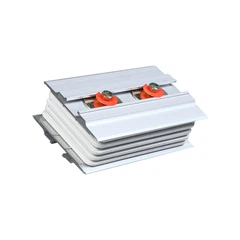
3-Phase Fire-Resistant Busway
The 3-Phase Fire-Resistant Busway is commonly used in industrial and commercial electrical systems to distribute power to multiple loads. It is designed to handle high electrical currents and is often used in applications where reliability and safety are of utmost importance.
The installation height of a 3-Phase Fire-Resistant Busway can also vary depending on the specific application and the layout of the electrical system. In general, these busways are installed at a height that allows for easy connection to the electrical source and the loads, as well as for maintenance and inspection.
For indoor installations, the 3-Phase Fire-Resistant Busway is typically installed at a height of between 8 and 12 feet (2.4 and 3.7 meters) above the floor. This height provides sufficient clearance for personnel to move around the busway and access the connection points without the need for excessive bending or stretching. In some cases, the busway may be installed higher, especially in areas with high ceilings or where there is a need to avoid interference with other equipment.
For outdoor installations, the 3-Phase Fire-Resistant Busway is usually installed at a height that is above the ground level and protected from physical damage and environmental factors. The exact height will depend on the specific location and the requirements of the electrical system.
Red-shell Fire-resistant Busway
The Red-shell Fire-resistant Busway is a specialized type of busway that is designed to provide enhanced fire resistance. It is often used in applications where there is a high risk of fire, such as in commercial buildings, hospitals, and industrial facilities.
The installation height of a Red-shell Fire-resistant Busway is similar to that of other types of fire-resistant busways. It is typically installed at a height that allows for easy access for maintenance and inspection, as well as for connection to the electrical source and the loads.
For indoor installations, the Red-shell Fire-resistant Busway is usually installed at a height of between 7 and 10 feet (2.1 and 3 meters) above the floor. This height provides a good balance between accessibility and protection from physical damage. In some cases, the busway may be installed higher, especially in areas with high ceilings or where there is a need to avoid interference with other equipment.
For outdoor installations, the Red-shell Fire-resistant Busway is installed at a height that is above the ground level and protected from environmental factors. The exact height will depend on the specific location and the requirements of the electrical system.
Conclusion
In conclusion, the installation height of different types of fire-resistant busways is influenced by several factors, including accessibility, protection from physical damage, compliance with electrical codes, and the overall layout of the electrical system. By understanding these factors and following the recommended installation heights, you can ensure the safety and efficiency of your electrical system.
If you are in the market for fire-resistant busways or have any questions about their installation, please do not hesitate to contact us. Our team of experts is available to provide you with the information and support you need to make the right decisions for your electrical system. We look forward to the opportunity to work with you and help you meet your electrical distribution needs.
References
- National Electrical Code (NEC)
- Manufacturer's installation manuals for fire-resistant busways
Send Inquiry