

How to overcome the challenges in high current busbar development?
Oct 21, 2025
Leave a message
In the dynamic landscape of electrical power distribution, high current busbars play a pivotal role in ensuring efficient and reliable energy transfer. As a dedicated high current busbar supplier, I've witnessed firsthand the numerous challenges that come with developing these critical components. In this blog post, I'll share some insights on how to overcome these challenges, drawing from my years of experience in the industry.
Thermal Management
One of the most significant challenges in high current busbar development is thermal management. When large amounts of current flow through a busbar, it generates heat due to the electrical resistance of the conductor material. Excessive heat can lead to a range of issues, including reduced conductivity, insulation degradation, and even system failures.
To address this challenge, we employ several strategies. First, we carefully select high - conductivity materials such as copper or aluminum for our busbars. Copper, in particular, has excellent electrical and thermal conductivity properties, making it an ideal choice for high current applications. By using high - quality materials, we can minimize the resistance and thus reduce the amount of heat generated.
Secondly, we optimize the busbar's cross - sectional area. A larger cross - sectional area means lower resistance, which in turn results in less heat production. However, this needs to be balanced with space constraints and cost considerations. We use advanced engineering calculations to determine the optimal cross - sectional area for each specific application.
In addition, we incorporate effective cooling mechanisms. For some high - power applications, we may use liquid cooling systems or heat sinks. These cooling solutions help to dissipate the heat generated by the busbar, maintaining its temperature within a safe operating range.
Mechanical Design and Structural Integrity
High current busbars often need to withstand significant mechanical stresses, such as vibrations, shocks, and electromagnetic forces. Ensuring the mechanical design and structural integrity of the busbar is crucial to prevent failures.
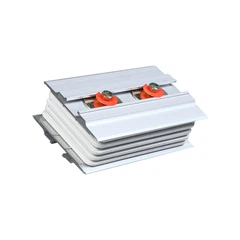
We start by designing the busbar with a robust mechanical structure. This includes proper support and anchoring to prevent movement and vibration. For example, we use Bus Duct Flange which provides a secure connection and helps to distribute the mechanical loads evenly.
We also conduct rigorous mechanical testing during the development process. This includes vibration testing, shock testing, and stress analysis. By simulating real - world operating conditions, we can identify any potential weak points in the design and make necessary improvements.
Moreover, we pay close attention to the material properties of the busbar and its associated components. Using high - strength materials and proper manufacturing techniques ensures that the busbar can withstand the mechanical stresses it will encounter in service.
Electrical Insulation
Proper electrical insulation is essential for high current busbars to prevent electrical leakage, short circuits, and electrical shock hazards. Selecting the right insulation material and ensuring its proper installation are key challenges in busbar development.
We use high - quality insulation materials that have excellent dielectric properties, thermal stability, and mechanical strength. These materials are carefully selected based on the specific requirements of the application, such as the operating voltage, temperature range, and environmental conditions.
During the manufacturing process, we ensure that the insulation is applied evenly and without any defects. We use advanced insulation techniques, such as vacuum impregnation, to ensure that the insulation material penetrates all the nooks and crannies of the busbar, providing complete coverage.
We also conduct regular insulation testing to monitor the condition of the insulation over time. This helps us to detect any early signs of insulation degradation and take preventive measures before a failure occurs.
Compatibility with Existing Systems
When developing high current busbars, it's often necessary to ensure compatibility with existing electrical systems. This can be a challenge, especially when dealing with older or legacy systems.
We work closely with our customers to understand their existing systems and requirements. Our engineering team conducts a detailed analysis of the system's electrical parameters, such as voltage, current, and frequency. Based on this analysis, we design the busbar to be fully compatible with the existing system.
We also offer customization services to meet specific customer needs. For example, if a customer has a unique layout or connection requirements, we can design and manufacture a busbar that fits seamlessly into their existing system.
In addition, we provide comprehensive technical support to our customers during the installation and commissioning process. This helps to ensure a smooth integration of the new busbar into the existing system.
Cost - Effectiveness
Developing high current busbars that meet all the technical requirements while remaining cost - effective is a constant challenge. Balancing the cost of materials, manufacturing, and testing with the performance and reliability of the busbar is crucial.


We optimize our manufacturing processes to reduce costs without sacrificing quality. This includes using lean manufacturing principles, automating certain processes, and sourcing materials from reliable suppliers at competitive prices.
We also offer a range of busbar solutions at different price points to meet the diverse needs of our customers. For example, we may offer standard off - the - shelf busbars for less demanding applications, as well as custom - designed high - performance busbars for more critical applications.
By providing cost - effective solutions, we help our customers to achieve their electrical power distribution goals without breaking the bank.
Meeting Industry Standards and Regulations
High current busbars are subject to a variety of industry standards and regulations, which are designed to ensure safety, reliability, and performance. Meeting these standards and regulations is a non - negotiable requirement in busbar development.
We stay up - to - date with the latest industry standards and regulations, such as IEC, UL, and IEEE standards. Our engineering and quality control teams are well - versed in these standards and ensure that all our busbars are designed and manufactured in full compliance.
We also participate in industry associations and working groups to contribute to the development of new standards and to stay informed about any upcoming changes. By adhering to the highest standards, we provide our customers with confidence in the quality and safety of our products.
The Role of Innovation
Innovation is key to overcoming the challenges in high current busbar development. We invest heavily in research and development to explore new materials, technologies, and design concepts.
For example, we are constantly researching new conductor materials that offer even higher conductivity and better thermal properties. We are also exploring the use of advanced manufacturing techniques, such as 3D printing, to create more complex and customized busbar designs.
In addition, we are developing smart busbar systems that can monitor their own performance in real - time. These systems can detect any potential issues early and send alerts to the operators, allowing for proactive maintenance and reducing the risk of failures.
Conclusion
Developing high current busbars is a complex and challenging task that requires a combination of technical expertise, innovation, and a commitment to quality. As a high current busbar supplier, we are dedicated to overcoming these challenges and providing our customers with the best possible solutions.
If you are in the market for high current busbars or have any specific requirements, we invite you to contact us for a detailed discussion. Our team of experts is ready to work with you to develop a customized solution that meets your needs. Whether it's for a new project or a system upgrade, we have the experience and capabilities to deliver high - performance, reliable, and cost - effective busbars.
References
- Electrical Power Distribution Handbook by John D. McDonald
- Handbook of Electrical Engineering by Richard C. Dorf
- Standards and Guidelines for High Current Busbars by International Electrotechnical Commission (IEC)
Send Inquiry