

Can Lighting Bus Duct be connected in parallel?
Mar 10, 2026
Leave a message
Can Lighting Bus Duct be connected in parallel?
As a lighting bus duct supplier, I often encounter questions from customers regarding the technical aspects of our products. One of the most frequently asked questions is whether lighting bus ducts can be connected in parallel. In this blog post, I will delve into this topic, providing a comprehensive analysis based on scientific principles and practical experience.
Understanding Lighting Bus Duct
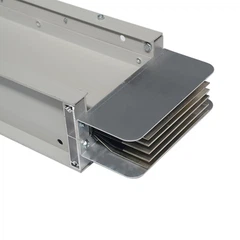
Before we discuss the parallel connection of lighting bus ducts, it's essential to understand what they are. Lighting bus ducts are electrical distribution systems designed specifically for lighting circuits. They consist of conductors enclosed in a protective housing, providing a safe and efficient way to distribute electrical power to lighting fixtures. Our lighting bus ducts are engineered to meet high - quality standards, ensuring reliable performance in various applications.
The Concept of Parallel Connection
In electrical engineering, parallel connection refers to a configuration where multiple electrical components are connected such that they share the same voltage across their terminals. When components are connected in parallel, the total current is divided among them, while the voltage remains constant. This is in contrast to a series connection, where the current is the same through all components, and the voltage is divided.
Factors to Consider for Parallel Connection of Lighting Bus Ducts
Electrical Characteristics
- Impedance Matching: For lighting bus ducts to be connected in parallel successfully, their impedance values must be closely matched. Impedance is a measure of the opposition to the flow of alternating current in a circuit. If the impedance values of the bus ducts are significantly different, the current will not be evenly distributed among them. This can lead to overloading of one or more bus ducts, which may cause overheating and potentially damage the system.
- Voltage Rating: All the lighting bus ducts connected in parallel must have the same voltage rating. A mismatch in voltage ratings can result in uneven voltage distribution, which can affect the performance of the lighting fixtures connected to the bus ducts.
Physical Characteristics
- Length and Cross - Sectional Area: The length and cross - sectional area of the bus ducts can also affect their parallel connection. Longer bus ducts generally have higher resistance, which can lead to an imbalance in current distribution. Similarly, bus ducts with different cross - sectional areas will have different impedance values. Therefore, it is important to ensure that the bus ducts used in parallel have similar lengths and cross - sectional areas.
- Installation Conditions: The installation conditions, such as the ambient temperature and the presence of other electrical equipment, can also impact the performance of the parallel - connected bus ducts. For example, if one bus duct is exposed to a higher ambient temperature than the others, its resistance may increase, causing an imbalance in current distribution.
Advantages of Parallel Connection of Lighting Bus Ducts
- Increased Capacity: One of the main advantages of connecting lighting bus ducts in parallel is the ability to increase the overall current - carrying capacity of the system. By adding more bus ducts in parallel, the system can handle a higher load, which is particularly useful in large - scale lighting installations.
- Redundancy: Parallel connection provides a certain level of redundancy. If one bus duct fails, the others can still continue to supply power to the lighting fixtures, ensuring that the lighting system remains operational.
Disadvantages of Parallel Connection of Lighting Bus Ducts
- Complexity: Parallel connection of lighting bus ducts adds complexity to the electrical system. It requires careful planning and design to ensure that the impedance values are matched and the current is evenly distributed. This can increase the installation and maintenance costs.
- Fault Detection: Detecting faults in a parallel - connected system can be more challenging. Since the current is divided among multiple bus ducts, a fault in one bus duct may not be immediately obvious, which can delay the repair process.
Practical Considerations for Parallel Connection
In practice, when considering parallel connection of lighting bus ducts, it is advisable to consult with a professional electrical engineer. They can perform detailed calculations to ensure that the bus ducts are suitable for parallel connection and that the system is designed to operate safely and efficiently.


We offer a range of high - quality lighting bus ducts, including Air-Insulated Bus Duct Feeder Unit, Air-Insulated Bus Duct Elbow, and Air Insulated Busbar. These products are designed to meet the highest standards of quality and performance, and our team of experts can provide you with the necessary guidance on parallel connection and other technical aspects.
Conclusion
In conclusion, lighting bus ducts can be connected in parallel, but it requires careful consideration of various factors, including electrical and physical characteristics. While parallel connection offers advantages such as increased capacity and redundancy, it also comes with challenges such as complexity and difficulty in fault detection.
If you are considering using lighting bus ducts in your project and have questions about parallel connection or any other aspect of our products, we encourage you to contact us. Our team of experts is ready to assist you in making the right decisions for your lighting distribution needs. Whether you need advice on product selection, installation, or maintenance, we are here to help.
References
- Electrical Installation Handbook, Schneider Electric
- Handbook of Electrical Engineering, McGraw - Hill
Send Inquiry