

Will Cast Resin Busduct be replaced by other products in the future?
Dec 31, 2025
Leave a message
Will Cast Resin Busduct be replaced by other products in the future?
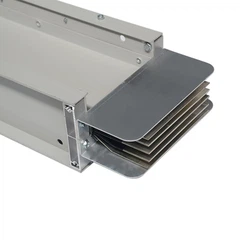
As a supplier of Cast Resin Busduct, I've often engaged in in - depth discussions about the future of this product. The question of whether Cast Resin Busduct will be replaced by other products is one that constantly lingers in the electrical industry. In this blog, I'll try to analyze this topic from multiple perspectives, exploring the possibility of Cast Resin Busduct being phased out and how it stands up against emerging alternatives.
Advantages of Cast Resin Busduct
One of the key reasons why Cast Resin Busduct has been a popular choice in the electrical distribution system is its excellent electrical performance. Cast Resin Busduct Cast Resin Busduct is known for its low impedance, which results in minimal power loss during electricity transmission. This is crucial for industries and large - scale facilities where energy efficiency is of utmost importance. By reducing power loss, it helps save on long - term energy costs, making it an economically viable solution.
Another outstanding feature is its high - level of insulation. The cast resin acts as a high - quality insulator, providing excellent protection against electrical shocks and short - circuits. This enhances the overall safety of the electrical system, which is a top priority in any application, whether it's a commercial building, industrial plant, or data center.
Cast Resin Busduct is also highly durable. Resistant to environmental factors such as moisture, dust, and chemicals, it can withstand harsh conditions. This makes it suitable for a wide range of applications, including outdoor installations Outdoor Bus Duct. The long service life of Cast Resin Busduct reduces the need for frequent replacements, which in turn cuts down on maintenance costs and minimizes downtime.
In addition, the modular design of Cast Resin Busduct allows for easy installation and expansion. Electricians can quickly assemble and install busduct systems with minimal disruption to existing operations. And when there is a need to expand the electrical system, adding more busduct sections is straightforward, which gives flexibility to meet changing power requirements.
Existing Alternatives
There are several existing alternatives to Cast Resin Busduct in the market, such as cable systems and traditional air - insulated busways.
Cable systems have been around for a long time and are a well - established solution for electrical distribution. They are relatively inexpensive in the initial purchase, and their installation can be simpler in some small - scale applications. However, cables have some limitations. Compared to Cast Resin Busduct, cables have higher impedance, which leads to greater power loss. They are also more vulnerable to mechanical damage, and their insulation can degrade over time, especially in harsh environments, posing a safety risk.
Traditional air - insulated busways use air as the insulating medium. They have lower initial costs compared to Cast Resin Busduct, but they are more sensitive to environmental conditions. Dust, moisture, and contaminants can easily enter the air - insulated busway, reducing its insulation performance and increasing the risk of electrical failures. Moreover, air - insulated busways are less compact than Cast Resin Busduct, which can be a drawback in applications where space is limited.
Emerging Technologies and Their Potential Impact
The electrical industry is constantly evolving, and new technologies are emerging that could potentially disrupt the market for Cast Resin Busduct. For example, the development of superconducting materials has shown promise in creating ultra - low - loss electrical transmission systems. Superconducting cables can carry large amounts of electricity with almost zero resistance, which could revolutionize the way we distribute power.
However, the practical application of superconducting materials still faces many challenges. Superconductors typically require extremely low temperatures to operate, which involves complex and expensive cooling systems. The high cost of research, development, and implementation makes it difficult for superconducting technologies to replace Cast Resin Busduct on a large scale in the near future.
Another emerging trend is the use of smart grid technologies. These technologies aim to optimize the distribution and consumption of electricity by integrating advanced sensors, communication systems, and control algorithms. While smart grid technologies can improve the overall efficiency of the electrical system, they do not directly replace the need for physical electrical distribution components like Cast Resin Busduct. Instead, they can be integrated with busduct systems to enhance their monitoring and control capabilities. For instance, sensors can be installed on Cast Resin Busduct to measure parameters such as temperature, current, and voltage, allowing for real - time monitoring and early detection of potential problems.
The Future of Cast Resin Busduct
Despite the presence of alternatives and emerging technologies, Cast Resin Busduct still has a bright future. Its unique combination of electrical performance, safety, durability, and flexibility makes it well - positioned to meet the diverse needs of the electrical industry.
In the industrial sector, where reliability and energy efficiency are critical, Cast Resin Busduct will continue to be a preferred choice. For example, in manufacturing plants, where large amounts of power are required to operate heavy machinery, the low power loss and high - level of insulation of Cast Resin Busduct are essential for maintaining smooth operations.
In commercial buildings such as shopping malls and office complexes, the modular design and space - saving features of Cast Resin Busduct make it an ideal solution for electrical distribution. It can be easily installed in limited spaces and can be expanded as the building's power needs grow.
Moreover, the development of new materials and manufacturing processes is likely to further enhance the performance of Cast Resin Busduct. For example, improvements in the cast resin formulation can lead to better insulation properties and higher resistance to environmental factors. The use of advanced manufacturing techniques can also reduce production costs, making Cast Resin Busduct more competitive in the market.


However, as a provider of Cast Resin Busduct, I also recognize the importance of continuous innovation. We need to keep up with the latest technological trends and adapt our products to meet the changing needs of the market. For example, by integrating smart technologies into Cast Resin Busduct, we can provide customers with more intelligent and efficient electrical distribution solutions.
Contact for Purchase and Negotiation
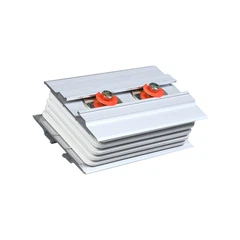
If you are interested in Cast Resin Busduct for your project, whether it's a small - scale commercial application or a large - scale industrial installation, I'm here to assist you. Our team of experts can provide you with detailed product information, technical support, and customized solutions to meet your specific requirements. We have a wide range of products, including the Cast Resin Busduct Feeder Unit, which are designed to provide reliable and efficient electrical distribution. Contact us for more information and to start the procurement process to see how our Cast Resin Busduct can benefit your project.
References
- "Electrical Distribution Handbook" by Robert C. Dugan, Mark F. McGranaghan, and H. Wayne Beaty.
- Industry reports on electrical distribution systems from leading research institutions such as IHS Markit and BloombergNEF.
- Technical papers on advanced materials for electrical insulation and their application in busducts from international conferences on electrical engineering.
Send Inquiry