

What is the rated current of Air Insulated Busbar?
Aug 28, 2025
Leave a message
What is the Rated Current of Air Insulated Busbar?
As a trusted supplier of Air Insulated Busbar, I often encounter questions from clients regarding the rated current of these essential electrical components. In this blog, I aim to provide a comprehensive understanding of what the rated current of an Air Insulated Busbar is, its significance, and how it is determined.
Understanding the Basics of Air Insulated Busbar
Before delving into the rated current, let's briefly understand what an Air Insulated Busbar is. An Air Insulated Busbar is a system used to conduct electricity within an electrical distribution system. It consists of copper or aluminum conductors separated by air, which acts as an insulator. This type of busbar is widely used in various applications, including industrial plants, commercial buildings, and power generation facilities, due to its simplicity, cost - effectiveness, and ease of installation and maintenance.
What is Rated Current?
The rated current of an Air Insulated Busbar is the maximum continuous current that the busbar can carry under specified conditions without exceeding its temperature limits. Temperature is a critical factor because excessive heat can lead to a degradation of the insulating materials, a reduction in the conductivity of the conductors, and even pose a fire hazard.
The rated current is typically specified in amperes (A) and is determined during the design and testing phase of the busbar system. It takes into account several factors, including the cross - sectional area of the conductors, the material of the conductors (copper or aluminum), the ambient temperature, the method of installation, and the ventilation conditions.
Factors Affecting the Rated Current
- Conductor Cross - Sectional Area: The cross - sectional area of the conductors in an Air Insulated Busbar has a direct impact on its rated current. A larger cross - sectional area allows for more electrons to flow through the conductor, resulting in a higher current - carrying capacity. For example, a busbar with a larger copper conductor will be able to carry more current than one with a smaller conductor of the same material.
- Conductor Material: Copper and aluminum are the two most commonly used materials for Air Insulated Busbar conductors. Copper has a higher electrical conductivity than aluminum, which means that for the same cross - sectional area, a copper conductor can carry more current than an aluminum conductor. However, aluminum is lighter and less expensive than copper, so it is often used in applications where cost is a major consideration.
- Ambient Temperature: The ambient temperature in which the busbar operates affects its rated current. Higher ambient temperatures reduce the ability of the busbar to dissipate heat, which in turn reduces its current - carrying capacity. For instance, if a busbar is rated for a certain current at an ambient temperature of 25°C, its rated current will be lower if it operates in an environment with an ambient temperature of 40°C.
- Installation Method: The way the busbar is installed also plays a role in determining its rated current. Busbars can be installed horizontally, vertically, or in a combination of both. Horizontal installation may allow for better natural convection and heat dissipation compared to vertical installation, which can affect the current - carrying capacity.
- Ventilation Conditions: Adequate ventilation is crucial for maintaining the temperature of the busbar within acceptable limits. Well - ventilated areas allow heat to be dissipated more effectively, increasing the rated current of the busbar. In contrast, a poorly ventilated environment can cause heat to build up, reducing the current - carrying capacity.
Determining the Rated Current
Manufacturers use a combination of theoretical calculations and practical testing to determine the rated current of an Air Insulated Busbar. Theoretical calculations are based on electrical and thermal principles, taking into account the factors mentioned above. These calculations provide an initial estimate of the current - carrying capacity.
However, practical testing is also essential to validate the theoretical calculations. During testing, the busbar is subjected to a controlled current, and its temperature is monitored over a period of time. The test is conducted under specific conditions, such as a defined ambient temperature and ventilation rate. The maximum current that the busbar can carry without exceeding its temperature limits is then determined as the rated current.


Importance of Knowing the Rated Current
Understanding the rated current of an Air Insulated Busbar is crucial for several reasons. Firstly, it ensures the safe and reliable operation of the electrical distribution system. If the actual current flowing through the busbar exceeds its rated current, it can lead to overheating, which can damage the busbar and other components of the system, and potentially cause a fire.
Secondly, knowing the rated current helps in the proper sizing of the busbar system. When designing an electrical distribution system, engineers need to select a busbar with a rated current that can handle the expected load. Oversizing the busbar can be costly, while undersizing it can lead to safety issues.
Applications and Rated Current Requirements
Different applications have different rated current requirements. For example, in a small commercial building, the electrical load may be relatively low, and a busbar with a rated current of a few hundred amperes may be sufficient. On the other hand, in an industrial plant with large machinery and equipment, the electrical load can be much higher, and a busbar with a rated current of several thousand amperes may be required.
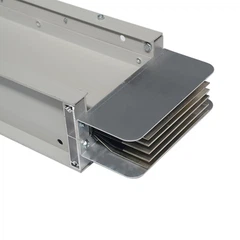
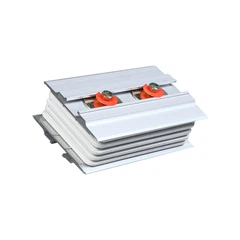
The 3 - Phase Air - Insulated Bus Duct is commonly used in three - phase electrical systems, where the rated current needs to be carefully calculated to ensure balanced power distribution. Similarly, the Air - Insulated Bus Duct Feeder Unit is designed to supply power to specific areas or equipment, and its rated current must be compatible with the load requirements.
Conclusion
In conclusion, the rated current of an Air Insulated Busbar is a critical parameter that determines its performance and safety in an electrical distribution system. It is influenced by various factors, including conductor cross - sectional area, material, ambient temperature, installation method, and ventilation conditions. By understanding the concept of rated current and its importance, engineers and end - users can make informed decisions when selecting and installing Air Insulated Busbar systems.
If you are in need of high - quality Air Insulated Busbar products or have any questions regarding rated current and busbar selection, we are here to assist you. Our team of experts can provide you with detailed technical advice and help you find the most suitable busbar solution for your specific application. Feel free to reach out to us for a consultation and let's discuss how we can meet your electrical distribution needs.
References
- Electrical Power Distribution Handbook, McGraw - Hill
- IEEE Standards for Electrical Installations and Equipment
- National Electrical Code (NEC)
Send Inquiry