

What is the current - carrying capacity of air - insulated bus duct?
Apr 24, 2026
Leave a message
What is the current - carrying capacity of air - insulated bus duct?
As a supplier of air - insulated bus ducts, I often encounter inquiries about the current - carrying capacity of these essential electrical components. Understanding the current - carrying capacity is crucial for designing efficient and safe electrical distribution systems. In this blog, I will delve into the factors that influence the current - carrying capacity of air - insulated bus ducts and provide insights into its significance in various applications.
Factors Affecting the Current - Carrying Capacity
- Conductor Material and Size
The material and cross - sectional area of the conductors in an air - insulated bus duct play a fundamental role in determining its current - carrying capacity. Copper and aluminum are the most commonly used conductor materials. Copper has higher electrical conductivity than aluminum, which means that for the same cross - sectional area, a copper conductor can carry more current with less resistance and heat generation.
The cross - sectional area of the conductor is directly proportional to its current - carrying capacity. A larger cross - sectional area allows for more electrons to flow through the conductor, thus increasing the amount of current it can carry. For example, a bus duct with a larger copper conductor will have a higher current - carrying capacity compared to one with a smaller copper conductor.
- Insulation Material and Thickness
The insulation material used in air - insulated bus ducts is designed to prevent electrical leakage and provide electrical isolation between conductors. The type and thickness of the insulation can affect the current - carrying capacity. High - quality insulation materials with good thermal properties can help dissipate heat more effectively, allowing the bus duct to carry more current without overheating.
If the insulation is too thick, it may impede heat transfer, leading to higher operating temperatures and a reduced current - carrying capacity. On the other hand, if the insulation is too thin, it may not provide sufficient electrical isolation, increasing the risk of short - circuits and other electrical hazards.
- Ambient Temperature
The ambient temperature in which the air - insulated bus duct operates has a significant impact on its current - carrying capacity. As the temperature rises, the resistance of the conductors increases, which in turn reduces the amount of current the bus duct can carry safely.
Most manufacturers provide derating factors for different ambient temperatures. For instance, if the ambient temperature is higher than the standard operating temperature (usually around 40°C), the current - carrying capacity of the bus duct needs to be reduced accordingly. This ensures that the bus duct does not overheat and maintains its performance over time.
- Installation Conditions
The way the air - insulated bus duct is installed also affects its current - carrying capacity. Proper ventilation is essential to dissipate heat generated by the conductors. If the bus duct is installed in a confined space with poor ventilation, heat will accumulate, leading to a decrease in the current - carrying capacity.
Additionally, the spacing between bus ducts and other electrical components can impact the heat dissipation. Adequate spacing allows for better air circulation, which helps to keep the temperature of the bus duct within a safe range.
Significance of Current - Carrying Capacity in Different Applications
-
Industrial Applications
In industrial settings, air - insulated bus ducts are used to distribute large amounts of electrical power to various equipment and machinery. The current - carrying capacity of the bus duct must be carefully selected to meet the power requirements of the industrial processes. For example, in a manufacturing plant with heavy - duty machinery, a high - current - carrying capacity bus duct is needed to ensure a stable and reliable power supply. -
Commercial Buildings
In commercial buildings such as office complexes, shopping malls, and hotels, air - insulated bus ducts are used for electrical distribution. The current - carrying capacity of the bus duct is determined by the total electrical load of the building, including lighting, HVAC systems, and other electrical appliances. A properly sized bus duct ensures that the electrical system can meet the demand without overloading. -
Data Centers
Data centers have high - density power requirements due to the large number of servers and other equipment. Data Center Busway with high current - carrying capacity is essential to ensure uninterrupted power supply and prevent downtime. The ability of the bus duct to handle high currents efficiently is crucial for the reliable operation of data centers.
Our Product Offerings
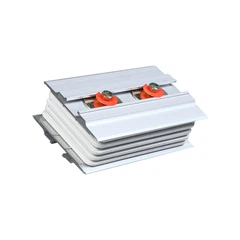
As an air - insulated bus duct supplier, we offer a wide range of products with different current - carrying capacities to meet the diverse needs of our customers. Our Air - Insulated Busway Tap Off Unit allows for easy connection of electrical loads at various points along the bus duct, providing flexibility in power distribution.
Our Air - Insulated Bus Duct Elbow is designed to change the direction of the bus duct, enabling efficient installation in different layouts. These products are engineered to provide high current - carrying capacity while ensuring safety and reliability.
Contact Us for Your Air - Insulated Bus Duct Needs
If you are in need of air - insulated bus ducts for your project, we are here to help. Our team of experts can assist you in selecting the right bus duct with the appropriate current - carrying capacity based on your specific requirements. Whether you are working on an industrial project, a commercial building, or a data center, we have the solutions to meet your needs.
Contact us today to discuss your air - insulated bus duct requirements and start the procurement process. We look forward to working with you to provide high - quality electrical distribution solutions.


References
- Electrical Installation Guidebooks
- Standards and Specifications for Air - Insulated Bus Ducts
- Technical Papers on Electrical Conductors and Insulation Materials
Send Inquiry