

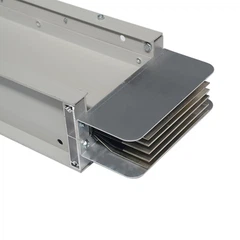
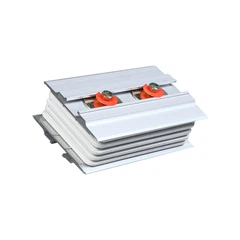
How to enhance the heat dissipation performance of sandwich busduct?
May 29, 2026
Leave a message
As a supplier of sandwich busduct, I understand the critical role that efficient heat dissipation plays in the performance and longevity of these electrical distribution systems. Inadequate heat dissipation can lead to increased resistance, energy losses, and even premature failure of the busduct. In this blog post, I will share some practical strategies on how to enhance the heat dissipation performance of sandwich busduct.
Understanding the Basics of Heat Dissipation in Sandwich Busduct
Before delving into the strategies, it's essential to understand how heat is generated and dissipated in sandwich busduct. When electrical current flows through the busbars in the busduct, resistance in the conductors causes heat to be produced. This heat needs to be dissipated to the surrounding environment to maintain safe operating temperatures.
The primary modes of heat transfer in sandwich busduct are conduction, convection, and radiation. Conduction occurs when heat is transferred through the solid materials of the busbars and the enclosure. Convection involves the movement of air or other fluids around the busduct, carrying heat away. Radiation is the emission of heat in the form of electromagnetic waves from the hot surfaces of the busduct.
Optimizing the Design of the Busduct
One of the most effective ways to enhance heat dissipation is to optimize the design of the sandwich busduct. This includes the following aspects:
Busbar Configuration
The configuration of the busbars can significantly impact heat dissipation. Using multiple parallel busbars can increase the surface area available for heat transfer, allowing for more efficient cooling. Additionally, spacing the busbars appropriately can improve air circulation between them, enhancing convective heat transfer.
Enclosure Design
The enclosure of the busduct plays a crucial role in heat dissipation. A well-designed enclosure should provide sufficient ventilation to allow for the free flow of air around the busbars. This can be achieved by incorporating ventilation slots or louvers in the enclosure. The material of the enclosure also matters; materials with high thermal conductivity, such as aluminum, can help transfer heat more effectively from the busbars to the outside environment.
Insulation Materials
The choice of insulation materials can affect heat dissipation. Insulation materials with low thermal resistance can help transfer heat from the busbars to the enclosure more efficiently. However, it's important to ensure that the insulation materials also meet the electrical safety requirements of the busduct.
Improving Air Circulation
Enhancing air circulation around the busduct is another key strategy for improving heat dissipation. Here are some ways to achieve this:
Natural Ventilation
As mentioned earlier, incorporating ventilation slots or louvers in the enclosure can promote natural ventilation. The size, number, and location of these ventilation openings should be carefully designed to ensure optimal air flow. For example, placing ventilation slots at the bottom and top of the enclosure can create a natural convection current, where hot air rises and is replaced by cooler air from below.
Forced Ventilation
In some cases, natural ventilation may not be sufficient, especially in high-power applications or in environments with limited air movement. In such situations, forced ventilation can be used. This can be achieved by installing fans or blowers near the busduct to increase the air flow rate around it. Forced ventilation can significantly improve convective heat transfer and reduce the operating temperature of the busduct.


Installation Location
The installation location of the busduct can also impact air circulation. Avoid installing the busduct in enclosed spaces or areas with restricted air flow. Instead, choose a location with good ventilation, such as near an open window or in a well-ventilated room.
Using Heat Sinks and Thermal Pads
Heat sinks and thermal pads can be used to enhance heat dissipation in sandwich busduct.
Heat Sinks
Heat sinks are passive cooling devices that can be attached to the busbars or the enclosure of the busduct. They work by increasing the surface area available for heat transfer, allowing for more efficient cooling. Heat sinks are typically made of materials with high thermal conductivity, such as aluminum or copper.
Thermal Pads
Thermal pads are used to fill the gaps between the busbars and the enclosure or heat sinks. They help improve thermal contact and transfer heat more effectively from the busbars to the cooling components. Thermal pads are made of materials with high thermal conductivity and good compressibility.
Monitoring and Maintenance
Regular monitoring and maintenance are essential to ensure the continued efficient heat dissipation of the sandwich busduct.
Temperature Monitoring
Installing temperature sensors in the busduct can help monitor the operating temperature of the busbars. This allows for early detection of any abnormal temperature rises, which may indicate a problem with heat dissipation. If the temperature exceeds the recommended limits, appropriate measures can be taken, such as adjusting the ventilation or checking for any blockages in the enclosure.
Cleaning and Inspection
Regular cleaning and inspection of the busduct are necessary to remove any dust, dirt, or debris that may accumulate on the busbars or in the ventilation openings. This can help maintain good air circulation and prevent the buildup of heat. Additionally, inspecting the busduct for any signs of damage or wear, such as loose connections or cracked insulation, can help ensure its proper functioning.
Conclusion
Enhancing the heat dissipation performance of sandwich busduct is crucial for ensuring its reliable and efficient operation. By optimizing the design of the busduct, improving air circulation, using heat sinks and thermal pads, and implementing proper monitoring and maintenance practices, we can effectively reduce the operating temperature of the busduct and extend its lifespan.
If you are interested in our New Generation Sandwich Busduct or Enclosed Busduct, or need more information about Bus Duct Flange, please feel free to contact us for procurement and negotiation. We are committed to providing high-quality busduct solutions with excellent heat dissipation performance to meet your specific needs.
References
- Electrical Power Distribution Handbook, by Dugan, McGranaghan, and Beaty.
- Handbook of Electrical Engineering, by H. Cotton.
- IEEE Standards for Electrical Safety in the Workplace.
Send Inquiry