



Enclosed Busduct
Product Introduction
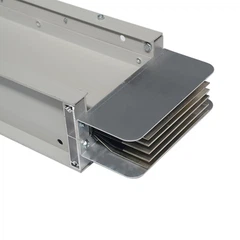
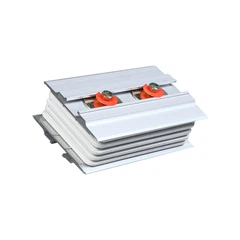
The enclosed busduct is a systematic concept and a general term referring to various types of busways protected by metal enclosures, including compact busways, air-insulated busways, fire-resistant busways, and others. Among this category, the compact busway is the most common and widely used type.
This is due to its exceptional cost-performance ratio. Compared with air-insulated busways, although it has a slightly higher price point, it offers higher current transmission efficiency (with a maximum current-carrying capacity of 6300A), superior protection, and a more space-saving design. In contrast to fire-resistant busways and cast resin busways, it has a marginally lower protection rating but comes at a more economical price, making it particularly suitable for space-constrained areas such as hotels and shopping malls.
Compact busways rely primarily on their enclosures for heat dissipation. Therefore, the production process and enclosure structure exert a significant impact on their heat dissipation performance. These aspects should be prioritized when selecting products.
Product Categories & Highlights
1,Compact Busway:It features high current-carrying capacity, excellent heat dissipation, a compact structure that saves space, a moderately high protection rating, and an emerging trend toward intelligent integration.For the trunk lines of newly built large-scale commercial complexes, data centers, modern industrial plants and other facilities requiring large-capacity, high-efficiency and high-reliability power distribution, the compact busway is currently the optimal and mainstream choice.
2,Air-insulated Busway:It uses air as the insulating medium and relies on air convection for heat dissipation. Featuring a simple structure, it is easy to install and expand, with a relatively low overall cost. For applications with limited budgets, moderate current requirements, or scenarios requiring long-span support, the air-insulated busway is a cost-effective choice.
3,Fire-resistant Busway:It adopts special fireproof materials and structures, with a fire resistance rating of up to 180 minutes, and can withstand the impact of high-pressure water guns simultaneously.It is mandatory to use fire-resistant busways in circuits that supply power to fire-fighting equipment such as fire pumps, smoke exhaust fans, emergency lighting systems, and fire control centers. This is the key to safeguarding the power lifeline in the event of a fire.
FAQ
Q1:What makes the compact busway the prevailing option in the current market?
This is attributed to its outstanding comprehensive advantages: it features a smaller footprint and saves more installation space at the same current rating, along with low impedance, minimal power loss, a high protection rating, and strong short-circuit current withstand capacity. It is therefore ideally suited to the compact, efficient and reliable power distribution requirements of modern buildings.
Q2:In which scenarios is it preferable to opt for air-insulated busways?
Projects featuring relatively small current classes, sufficient spatial conditions and high cost sensitivity.
Q3:What constitutes the core of fire resistance in fire-resistant busways? And what are their application scenarios?
The key lies in its special fireproof design and materials. Fireproof and heat-insulating layers are usually installed on both the inner and outer sides of the enclosure, and fire-retardant coatings are applied to the conductors. In the event of a fire, it can maintain system integrity and power supply capability for up to 180 minutes. It is exclusively designed to supply power to fire lifeline equipment such as fire pumps, smoke exhaust fans, and emergency lighting systems.
Q4:What key certifications and inspection reports are necessary for busway systems?
A type test report issued by a national-level testing institution is a prerequisite, as it serves as the "identity document" for product compliance.
Q5:What key precautions should be observed when installing busway systems?
The core principle is to ensure reliable connection and expansion compensation.
Connector Installation: It is imperative to ensure that the internal conductors of the connectors are tightly fitted to those of the busways, and the connecting bolts are properly tightened. This minimizes contact resistance and ensures the temperature rise meets the required standards.
Expansion Joint Arrangement: For long-distance installations or at building expansion joints, expansion joints must be installed to absorb the deformation stress caused by thermal expansion, contraction, or building settlement, thereby preventing deformation and damage to the busway itself.
Hot Tags: enclosed busduct, China enclosed busduct manufacturers, suppliers, Busway Tap off Unit, Busway Vertical Elbow, Bus Duct Flange, New Generation Compact Busway, Compact Busduct, 3 Phase Busbar Trunking
You Might Also Like


Send Inquiry