

How to dissipate heat from a high current busbar?
Oct 03, 2025
Leave a message
In the realm of electrical power distribution, high current busbars play a pivotal role in efficiently transmitting large amounts of electrical current. However, one of the most significant challenges associated with high current busbars is heat dissipation. Excessive heat can lead to a range of issues, including reduced efficiency, premature component failure, and even safety hazards. As a leading High Current Busbar supplier, I understand the importance of effective heat dissipation and have extensive experience in addressing this crucial issue. In this blog post, I will share some key strategies and considerations for dissipating heat from high current busbars.
Understanding the Heat Generation Mechanism
Before delving into the heat dissipation methods, it is essential to understand how heat is generated in high current busbars. When electrical current flows through a busbar, resistance in the conductor causes power loss in the form of heat, as described by Joule's law: (P = I^{2}R), where (P) is the power loss, (I) is the current, and (R) is the resistance of the busbar. The amount of heat generated is directly proportional to the square of the current and the resistance of the busbar. Therefore, higher currents and higher resistances result in more significant heat generation.


Factors Affecting Heat Dissipation
Several factors influence the ability of a high current busbar to dissipate heat effectively. These factors include:
- Material Properties: The thermal conductivity of the busbar material is a critical factor. Copper and aluminum are commonly used materials for busbars due to their high electrical and thermal conductivity. Copper has a higher thermal conductivity than aluminum, making it more efficient at dissipating heat.
- Surface Area: A larger surface area allows for more efficient heat transfer to the surrounding environment. Busbars with fins or other surface enhancements can increase the surface area and improve heat dissipation.
- Ambient Temperature and Airflow: The temperature of the surrounding environment and the availability of airflow play a crucial role in heat dissipation. Higher ambient temperatures reduce the temperature gradient between the busbar and the environment, making it more difficult to transfer heat. Adequate airflow can significantly enhance heat transfer by carrying away the heat from the busbar surface.
- Insulation: The type and thickness of insulation used on the busbar can affect heat dissipation. Insulation materials with low thermal conductivity can act as a barrier to heat transfer, increasing the temperature of the busbar.
Heat Dissipation Strategies
Material Selection
As mentioned earlier, the choice of busbar material is crucial for heat dissipation. Copper is the preferred material for high current applications where heat dissipation is a significant concern. Its high thermal conductivity allows for efficient heat transfer from the busbar to the surrounding environment. Aluminum is also a viable option, especially for applications where weight and cost are important considerations. However, when using aluminum busbars, larger cross - sectional areas may be required to achieve the same electrical and thermal performance as copper busbars.
Increasing Surface Area
One of the most effective ways to improve heat dissipation is to increase the surface area of the busbar. This can be achieved through various methods:
- Fins and Ribs: Adding fins or ribs to the busbar surface increases the surface area available for heat transfer. These fins can be either extruded or attached to the busbar. The design and spacing of the fins are critical to ensure optimal heat dissipation.
- Perforations: Perforating the busbar can also increase the surface area and promote better airflow around the busbar, enhancing heat transfer.
Improving Airflow
Adequate airflow is essential for efficient heat dissipation. Here are some ways to improve airflow around high current busbars:
- Ventilation Design: Proper ventilation design in the electrical enclosure or cabinet housing the busbar is crucial. This includes the use of vents, fans, or other ventilation systems to ensure a continuous flow of air over the busbar surface.
- Orientation: The orientation of the busbar can also affect airflow. Mounting the busbar vertically can promote natural convection, allowing hot air to rise and be replaced by cooler air.
Cooling Systems
In some cases, additional cooling systems may be required to dissipate heat from high current busbars effectively. These cooling systems include:
- Forced Air Cooling: Fans can be used to provide forced airflow over the busbar surface, increasing the heat transfer rate. Forced air cooling is suitable for applications where natural convection is insufficient to meet the heat dissipation requirements.
- Liquid Cooling: Liquid cooling systems, such as water - cooled or oil - cooled systems, can provide more efficient heat dissipation than air cooling. These systems circulate a cooling liquid around the busbar to absorb and carry away the heat. Liquid cooling is typically used in high - power applications where very high heat dissipation rates are required.
Application - Specific Considerations
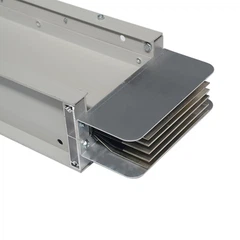
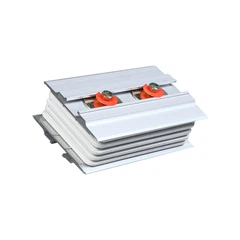
Different applications may have specific requirements for heat dissipation from high current busbars. For example, in Phase Segregated Bus Duct, the design of the bus duct can affect heat dissipation. The spacing between phases, the type of insulation used, and the overall configuration of the bus duct can all impact the ability of the busbars to dissipate heat. Similarly, in applications where Bus Duct Flange is used, the flange design and installation can influence heat transfer and dissipation.
Monitoring and Maintenance
Regular monitoring and maintenance are essential to ensure the continued effective heat dissipation of high current busbars. This includes:
- Temperature Monitoring: Installing temperature sensors on the busbar can help monitor the temperature and detect any abnormal temperature increases. This allows for timely intervention to prevent overheating and potential damage.
- Cleaning: Dust and debris accumulation on the busbar surface can reduce the surface area available for heat transfer and impede airflow. Regular cleaning of the busbar surface is necessary to maintain optimal heat dissipation performance.
- Inspection: Periodic inspection of the busbar connections, insulation, and cooling systems can help identify any issues that may affect heat dissipation, such as loose connections, damaged insulation, or malfunctioning cooling fans.
Conclusion
Effective heat dissipation is crucial for the reliable operation of high current busbars. By understanding the heat generation mechanism, considering the factors affecting heat dissipation, and implementing appropriate heat dissipation strategies, it is possible to ensure that high current busbars operate within safe temperature limits. As a High Current Busbar supplier, I am committed to providing high - quality busbars and solutions that meet the heat dissipation requirements of various applications. If you are in need of high current busbars or have any questions about heat dissipation, please feel free to contact us for a detailed discussion and to explore how our products can meet your specific needs.
References
- Grover, F. W. (1973). Inductance Calculations: Working Formulas and Tables. Dover Publications.
- Incropera, F. P., & DeWitt, D. P. (2002). Fundamentals of Heat and Mass Transfer. John Wiley & Sons.
- National Electrical Manufacturers Association (NEMA). (2016). Busways, Plug - in Busways, and Cable Bus. NEMA Standard PB 2 - 2016.
Send Inquiry