

Can flexible copper busbar withstand high temperatures?
Jun 05, 2026
Leave a message
Hey there! As a supplier of Flexible Copper Busbar, I often get asked if these busbars can withstand high temperatures. Well, let's dive right into it and find out.
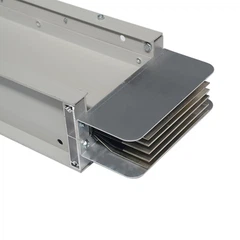
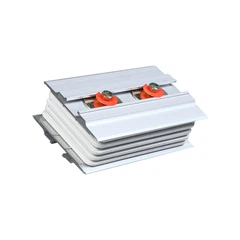
First off, let's understand what flexible copper busbars are. They're made from high - purity copper, which is known for its excellent electrical conductivity. The flexibility comes from the way they're constructed, usually with multiple thin copper layers that allow them to bend and adapt to different installation requirements.


Now, let's talk about temperature. Copper itself has a relatively high melting point. Pure copper melts at around 1084.62°C (1984.32°F). But in real - world applications, we're not talking about getting anywhere near that melting point. Most electrical systems operate at much lower temperatures, but there can still be significant heat generation due to electrical resistance.
When current flows through a busbar, some of the electrical energy is converted into heat. The amount of heat generated depends on factors like the current magnitude, the resistance of the busbar, and the duration of the current flow. The resistance of a copper busbar is influenced by its cross - sectional area, length, and the purity of the copper.
Flexible copper busbars are designed to handle a certain amount of heat. The insulation materials used around the busbar also play a crucial role in determining its high - temperature performance. For example, High-Insulation Polyester Film is often used as an insulating layer. This film has good thermal stability and can help protect the copper busbar from external heat sources and also prevent heat from escaping too quickly, which can affect the overall efficiency of the electrical system.
In many industrial applications, flexible copper busbars are exposed to elevated temperatures. For instance, in power distribution systems, large amounts of current are flowing, and heat is generated as a by - product. If the busbar can't handle the heat, it can lead to several problems. The resistance of the busbar may increase as the temperature rises, which in turn can cause more heat to be generated. This can create a vicious cycle and potentially lead to system failures.
However, flexible copper busbars are engineered to manage heat effectively. The multiple layers of copper in a flexible busbar can help dissipate heat more evenly compared to a solid copper bar. Each layer has a certain surface area that can transfer heat to the surrounding environment. Additionally, the flexibility of the busbar allows for better air circulation around it, which aids in cooling.
Another factor to consider is the coating on the copper busbar. Tinned Copper Busbar is a popular option. The tin coating not only provides corrosion resistance but also has some impact on the busbar's thermal performance. Tin has a lower melting point than copper, but it can act as a heat - conducting medium and help transfer heat away from the copper core.
Let's compare flexible copper busbars with other types of busbars. Tin-Plated Aluminum Busbar is another option in the market. Aluminum has a lower melting point than copper (around 660.32°C or 1220.58°F). While aluminum is lighter and cheaper than copper, it also has a higher electrical resistance. This means that for the same amount of current, an aluminum busbar will generate more heat compared to a copper busbar. So, in high - temperature applications where heat management is critical, flexible copper busbars are often a better choice.
In some high - end electrical systems, the operating temperatures can be quite extreme. For example, in some data centers, the servers generate a lot of heat, and the power distribution systems need to be able to handle this heat. Flexible copper busbars can be customized to meet these specific requirements. We can adjust the thickness of the copper layers, the type of insulation, and the coating to ensure that the busbar can withstand the high temperatures in these environments.
It's important to note that the maximum temperature a flexible copper busbar can withstand also depends on the duration of exposure. A short - term spike in temperature may not cause significant damage, but prolonged exposure to high temperatures can degrade the busbar over time. This can lead to a decrease in its electrical conductivity and mechanical strength.
When it comes to testing the high - temperature performance of flexible copper busbars, we use a variety of methods. We conduct thermal imaging tests to measure the temperature distribution across the busbar. We also perform long - term aging tests where the busbar is exposed to elevated temperatures for an extended period to simulate real - world conditions. These tests help us ensure that our busbars meet the highest quality standards and can perform reliably in high - temperature environments.
So, to answer the question "Can flexible copper busbar withstand high temperatures?" The answer is yes, but it depends on several factors. With the right design, insulation, and coating, flexible copper busbars can handle a wide range of high - temperature applications.
If you're in the market for flexible copper busbars and need a reliable solution for your high - temperature electrical systems, don't hesitate to reach out. We're here to provide you with the best products and support for your specific needs. Whether you're working on a small - scale project or a large industrial installation, we've got you covered.
References:
- Electrical Engineering Handbook: Covers general principles of electrical conductors and their thermal properties.
- Copper Development Association Publications: Provide in - depth information on the properties and applications of copper in electrical systems.
- Industry standards and guidelines for busbar design and performance.
Send Inquiry