

Can Fireproof Bus Duct be installed vertically?
Apr 22, 2026
Leave a message
As a supplier of Fireproof Bus Duct, one question I often encounter from customers is whether fireproof bus ducts can be installed vertically. This is a critical query, especially when dealing with various installation scenarios in commercial and industrial buildings. In this blog, I'll delve into the feasibility, advantages, challenges, and best practices of vertical installation of fireproof bus ducts.
Feasibility of Vertical Installation
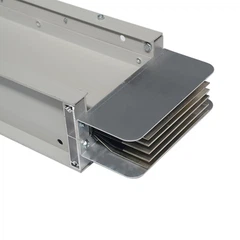
Fireproof bus ducts [1] are indeed designed to be installed both horizontally and vertically. Their structural integrity and fire - resistant properties are engineered to withstand different installation orientations. The key components of fireproof bus ducts, such as the conductive bars and the fire - resistant insulation materials, are carefully selected and assembled to ensure reliable performance regardless of the installation angle.
For example, the conductive copper or aluminum bars in a fireproof bus duct are mechanically supported and electrically insulated to prevent short - circuits and ensure efficient power transmission. When installed vertically, these bars are further braced to counteract the effects of gravity. The fire - resistant insulation materials, which are often made of inorganic or fiber - based compounds, maintain their insulating properties even under the stress of vertical installation.
Advantages of Vertical Installation
There are several compelling reasons to consider vertical installation of fireproof bus ducts.
Space Optimization
In multi - story buildings, vertical installation can significantly reduce the floor space occupied by the power distribution system. Instead of running long horizontal lengths of bus ducts on each floor, a single vertical run can supply power to multiple floors. This is particularly beneficial in buildings with limited floor area, such as high - rise offices, hospitals, and data centers.
Ease of Maintenance
Vertical installation allows for easier access to the bus ducts for maintenance and inspection. Technicians can simply access the duct at different levels through dedicated shafts or maintenance hatches. This reduces the time and effort required for routine checks and repairs, minimizing downtime for the building's electrical system.
Safety and Fire Protection
Fireproof bus ducts are designed to contain and prevent the spread of fire. When installed vertically, they can act as a fire - resistant barrier between floors. In the event of a fire, the vertical bus duct can limit the vertical spread of flames and smoke, providing valuable time for evacuation and firefighting efforts.
Challenges of Vertical Installation
However, vertical installation also presents some challenges that need to be addressed.
Structural Support
One of the primary challenges is providing adequate structural support for the bus duct. Gravity can cause additional stress on the bus duct's mounting and supporting components. Specialized mounting brackets and supports need to be used to ensure that the bus duct remains secure and in place. These supports should be designed to withstand the weight of the bus duct, as well as any additional forces due to vibration or dynamic loads.
Condensation
Vertical installation can lead to the formation of condensation inside the bus duct. Warm, moist air can rise inside the duct, and when it comes into contact with cooler sections, water droplets can form. This condensation can potentially damage the electrical components and reduce the effectiveness of the fire - resistant insulation. To prevent condensation, proper ventilation systems and moisture - resistant materials may be required.
Expansion and Contraction
As the temperature changes, the bus duct will expand and contract. In vertical installation, this can be more challenging to manage compared to horizontal installation. Expansion joints need to be carefully designed and installed at appropriate intervals to accommodate these dimensional changes without causing damage to the bus duct or its connections.
Best Practices for Vertical Installation
To ensure a successful vertical installation of fireproof bus ducts, the following best practices should be followed.
Professional Design and Engineering
Before installation, a detailed design and engineering plan should be developed. This plan should take into account the building's structure, electrical load requirements, and environmental conditions. It is crucial to consult with experienced electrical engineers and contractors who have expertise in bus duct installation.


Quality Components
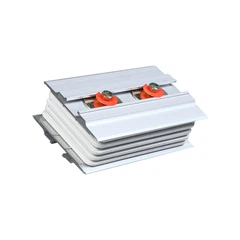
Only high - quality fireproof bus ducts and associated components [2] should be used. This includes the bus duct itself, mounting brackets, expansion joints, and fire - resistant seals. Using sub - standard components can compromise the safety and performance of the entire system.
Regular Inspections and Maintenance
Even after installation, regular inspections and maintenance are essential. Check for signs of wear, damage, and loose connections. Monitor the temperature and humidity inside the bus duct to detect any potential issues early.
Specific Considerations for Different Types of Fire - Resistant Bus Ducts
Fire - Resistant Busduct Elbow
When using Fire - Resistant Busduct Elbows in vertical installation, it is necessary to ensure that they are properly aligned and supported. These elbows need to be carefully selected to match the overall configuration of the bus duct system. Incorrectly installed elbows can cause stress concentrations and affect the electrical performance of the system.
3 - Phase Fire - Resistant Busway
For 3 - Phase Fire - Resistant Busways in vertical installation, the phase balance needs to be carefully monitored. Any imbalance in the electrical load distribution can lead to overheating and potential damage to the busway. Additionally, the grounding system of the 3 - phase busway should be properly designed and maintained to ensure electrical safety.
Conclusion
In conclusion, fireproof bus ducts can be successfully installed vertically, offering numerous advantages in terms of space optimization, safety, and ease of maintenance. However, it is essential to address the associated challenges through proper design, high - quality components, and regular maintenance. By following the best practices outlined in this blog, building owners and electrical contractors can ensure a reliable and efficient vertical power distribution system.
If you are considering installing fireproof bus ducts in your next project, whether horizontally or vertically, I encourage you to [contact us] for more information. Our team of experts can provide you with detailed specifications, installation guidance, and customized solutions to meet your specific requirements. We are committed to providing high - quality Fireproof Bus Duct products and excellent customer service.
References
[1] "Electrical Installation Handbook", Schneider Electric
[2] "Busway Installation and Maintenance Manual", Siemens
Send Inquiry