

Development Prospects Of DC Busduct
Jun 22, 2026
Leave a message
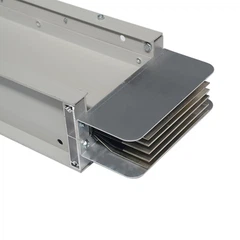
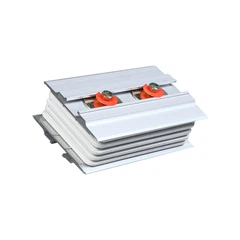
Driven jointly by the new power system, computing infrastructure development and the dual carbon strategy, DC busbar trunking has emerged as a high-growth product in the segmented power distribution equipment sector with broad long-term development prospects. Unlike conventional AC busbars, DC busbars require no frequency or phase synchronization and incur lower power conversion losses. They are well suited for emerging scenarios such as new energy facilities and high-density computing rooms, fueling continuous expansion of market demand.
The computing industry serves as the core growth driver. Following the rollout of the East Data, West Computing initiative and the construction of AI intelligent computing centers, power density per single cabinet has risen drastically, and 800V high-voltage DC power supply is gradually becoming the mainstream industrial solution. Featuring strong current-carrying capacity and a compact heat dissipation structure, DC busbar trunking can be directly connected to server DC power supply architectures, eliminating multi-stage AC-DC conversion processes and boosting comprehensive energy efficiency by over 5%. It significantly cuts power consumption of computer rooms and reduces wiring space occupation. The penetration rate of DC busbars in newly built large-scale data centers keeps rising, while renovation projects for existing computer rooms also generate incremental market demand.
The new energy sector unlocks long-term growth potential. Photovoltaic power stations, energy storage systems and charging piles all operate on direct current. DC busbar trunking enables direct integrated connection of power sources, energy storage units and loads, simplifying power distribution architectures and improving the consumption efficiency of new energy. Large-scale energy storage power stations, centralized PV convergence areas and ultra-fast charging stations widely adopt DC busbar trunking, forming a blue-ocean market distinct from traditional building power distribution. Meanwhile, relevant industrial standards are being accelerated for implementation. The General Technical Specifications for Compact DC Busbar Trunking is about to take official effect, and standardized product requirements will further lower market access thresholds for the industry.
From a policy perspective, the dual carbon goals and industrial energy efficiency improvement initiatives push power distribution equipment to upgrade toward low-loss and high-efficiency models. New large-scale projects are gradually mandated to adopt high-grade energy-saving power distribution products, and DC busbars gain policy support thanks to their energy-saving merits. Technologically, products are evolving toward compact dual-chamber heat dissipation and integrated intelligent monitoring, built with temperature measurement and fault early warning functions to accommodate high-power and impact loads. Lightweight aluminum alloy conductor solutions continue to cut manufacturing costs and enhance product cost performance.
The industry still faces technical barriers and competitive pressures, with core processes including high-voltage DC insulation and bidirectional power transmission requiring continuous breakthroughs. In the long run, as the computing, energy storage and new energy industries keep expanding, the market growth rate of DC busbar trunking will far outpace that of traditional AC busbars. It represents a core development path for busbar manufacturers to transform and upgrade and seize the high-end power distribution market.
Send Inquiry