

Analysis Of The Forming Process Of Dense Bus Duct
Jun 16, 2025
Leave a message
With the rapid development of modern industrial and building electrical systems, dense bus duct has become an important choice in the field of power transmission due to its high current carrying capacity, compact structure and efficient heat dissipation performance. Its forming process directly affects the performance, reliability and service life of the product, so it is crucial for industry practitioners to understand its manufacturing process.
The core forming process of dense bus duct includes four major links: conductor processing, insulation layer coating, shell assembly and overall testing. First of all, the conductor is usually made of high-purity copper or aluminum, and is formed by precision stamping or extrusion to ensure accurate cross-sectional dimensions to meet the needs of high current transmission. The surface of the conductor needs to be tinned or silver-plated to improve oxidation resistance and conductivity.
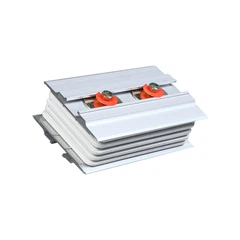
Insulation layer coating is one of the key steps. Modern processes mostly use high-heat-resistant materials such as epoxy resin or polyester film, which are evenly covered on the surface of the conductor by hot pressing or injection molding to form an insulation barrier. This process requires strict control of temperature and pressure to prevent bubbles or impurities from affecting the insulation performance. Some high-end products will also use a multi-layer insulation structure to further improve safety and durability.
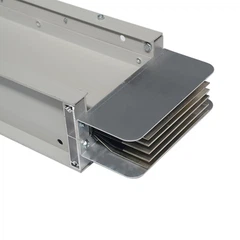
The shell assembly usually uses aluminum alloy or galvanized steel sheet, and the trough frame is formed by sheet metal stamping and welding. The shell design needs to take into account the heat dissipation efficiency and protection level. Some products will add heat dissipation fins or vents to optimize temperature rise control. After assembly, it is also necessary to seal to prevent dust and moisture from invading.
Finally, the finished product must undergo rigorous electrical performance testing, including voltage resistance testing, insulation resistance testing and temperature rise testing to ensure compliance with international standards (such as IEC 61439). Some manufacturers also conduct mechanical strength tests to verify the product's impact resistance during transportation and installation.
The molding process of dense bus duct combines material science, electrical engineering and precision manufacturing technology. Its optimization can not only improve product performance, but also reduce long-term operating costs. With the popularization of intelligent manufacturing technology, this process will develop in the direction of automation and digitalization in the future, providing more efficient solutions for power transmission systems.
Send Inquiry