

New Product Development in The Industry
Sep 23, 2026
Leave a message
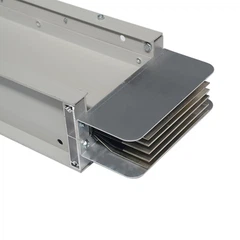
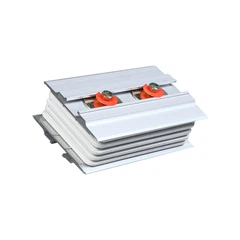
Currently, new product R&D in the busway industry and its upstream and downstream supply chains presents a linked pattern: upstream material iteration drives innovation, midstream products are developed for scenario-specific applications, and downstream demands reverse-force technological upgrades. Upstream copper and aluminum conductor, insulation coating, and enclosure profile manufacturers are focusing on cost reduction and performance improvement in material research. High-conductivity oxygen-free copper, modified aluminum alloys, halogen-free high-temperature-resistant insulation materials, and anti-corrosion epoxy coatings are gradually achieving industrialization, aiming to improve conductor creep resistance, insulation heat resistance, and corrosion resistance, thereby providing a material foundation for the iterative upgrading of midstream busway products. Midstream busway manufacturers are shifting their R&D focus from traditional structural optimization to intelligence, modularization, and high protection. They are continuously launching new-generation busway products featuring integrated sensor monitoring and hot-swappable expansion capabilities. At the same time, they are developing customized series for special working conditions such as coastal areas, chemical plants, and energy storage. Leading enterprises are investing heavily in R&D, while a large number of small and medium-sized manufacturers still rely mainly on imitation and improvement, with relatively insufficient reserves of original technology. Downstream end-user industries such as data centers, new energy factories, high-end manufacturing, and commercial buildings are imposing higher requirements on power supply reliability, energy efficiency indicators, and operation and maintenance capabilities. This is reverse-driving adjustments in the R&D direction of new busway products, prompting products to balance low loss, rapid installation, and predictive maintenance capabilities. However, there are still shortcomings in collaborative R&D across the industry chain. The alignment of technical standards between upstream and downstream is not sufficiently thorough, and some new materials face practical issues such as high costs and long batch verification cycles. The industry as a whole is continuously evolving toward green energy efficiency, digital intelligence, and full-lifecycle solutions.
Send Inquiry