

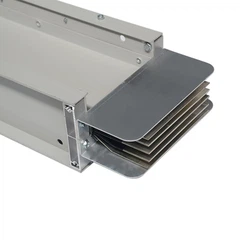
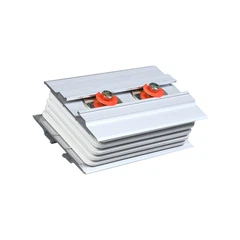
What is the weight of air - insulated bus duct?
Oct 28, 2026
Leave a message
Hey there! As a supplier of air-insulated bus ducts, I often get asked about the weight of these things. It's a pretty important factor, especially when it comes to installation, transportation, and overall system design. So, let's dive into what the weight of an air-insulated bus duct really means and why it matters.
Understanding Air-Insulated Bus Ducts
First off, let's quickly go over what air-insulated bus ducts are. They're basically a system used to distribute electrical power. Instead of using traditional cables, they use metal conductors separated by air as an insulating medium. This design has some great advantages, like better heat dissipation and easier maintenance.
Now, the weight of an air-insulated bus duct isn't a one-size-fits-all kind of thing. It depends on a bunch of factors. One of the main ones is the size of the bus duct. Larger bus ducts, which can carry more electrical current, are generally heavier. This is because they need bigger conductors and more robust enclosures to handle the load.
Another factor is the material used. Most air-insulated bus ducts have conductors made of copper or aluminum. Copper is denser than aluminum, so a bus duct with copper conductors will be heavier. The enclosure material also plays a role. Steel enclosures are heavier than aluminum ones, but they're often more durable.
Why Weight Matters
The weight of an air-insulated bus duct is a big deal for a few reasons. For starters, it affects transportation. Heavier bus ducts are more difficult and expensive to move around. You need stronger trucks and more careful handling to avoid damage.
Installation is another area where weight is crucial. When you're putting up a bus duct system, you need to make sure the supporting structures can handle the weight. If the weight is too much, it could lead to structural problems or even accidents.
The weight also impacts the overall cost. Heavier materials cost more to produce and transport, which can drive up the price of the bus duct system. So, finding the right balance between weight and performance is essential.
Calculating the Weight
Calculating the weight of an air-insulated bus duct isn't super complicated, but it does require some knowledge of the materials and dimensions. You start by looking at the weight of the conductors. Copper has a density of about 8.96 grams per cubic centimeter, while aluminum has a density of around 2.7 grams per cubic centimeter. You can calculate the volume of the conductors based on their cross-sectional area and length, and then multiply by the density to get the weight.
Next, you need to consider the weight of the enclosure. If it's made of steel, you'll need to know the thickness and dimensions of the steel sheets. You can then calculate the volume of the steel and multiply by its density (about 7.85 grams per cubic centimeter).


Once you have the weights of the conductors and the enclosure, you add them together to get the total weight of the bus duct. Keep in mind that this is just an estimate, and the actual weight may vary depending on factors like manufacturing tolerances.
Real-World Examples
Let's take a look at a couple of real-world examples to see how the weight can vary. Suppose we have a Data Center Busway with copper conductors and a steel enclosure. If it's a relatively small bus duct, say with a cross-sectional area of 100 square millimeters and a length of 3 meters, the weight of the copper conductors would be around 26.88 kilograms (using the density of copper). The steel enclosure might add another 10 - 15 kilograms, depending on its thickness. So, the total weight of this bus duct would be around 36 - 42 kilograms.
On the other hand, if we have a larger 3-Phase Air-Insulated Bus Duct with a cross-sectional area of 500 square millimeters and a length of 5 meters, the weight of the copper conductors would be much higher, around 134.4 kilograms. The steel enclosure could add another 20 - 30 kilograms, making the total weight around 154 - 164 kilograms.
Impact on Design and Installation
The weight of the air-insulated bus duct has a significant impact on the design and installation process. When designing a bus duct system, engineers need to consider the weight distribution. They need to make sure that the supporting structures, like brackets and hangers, are strong enough to hold the bus duct in place.
During installation, the weight also affects the handling. Workers need to use proper lifting equipment, like cranes or hoists, to move the bus duct into position. If the weight is too much for the equipment, it could lead to accidents or damage to the bus duct.
Importance of Weight in Different Applications
The importance of weight can vary depending on the application. In a data center, for example, space is often limited, and the weight of the bus duct can affect the overall layout. A heavier bus duct may require more support structures, which can take up valuable space.
In an industrial setting, the weight of the bus duct can impact the cost of installation and maintenance. Heavier bus ducts may require more frequent inspections and repairs, which can add to the overall cost.
Our Offerings
As a supplier of air-insulated bus ducts, we offer a wide range of products to meet different needs. Our Air-Insulated Bus Duct Elbow is designed to provide flexibility in the installation process. We also have different sizes and materials available to ensure that you get the right bus duct for your project.
Contact Us for Purchase
If you're in the market for air-insulated bus ducts, we'd love to talk to you. We can help you determine the right weight and specifications for your project. Whether you're working on a small data center or a large industrial facility, we have the expertise and products to meet your needs. So, don't hesitate to reach out and start the conversation about your air-insulated bus duct requirements.
References
- Electrical Power Distribution Handbook, by Dugan, McGranaghan, and Beaty
- Handbook of Electrical Installation Practice, by IET
So, that's a wrap on the weight of air-insulated bus ducts. I hope this blog has given you a better understanding of why weight matters and how it can impact your project. If you have any questions or need more information, feel free to get in touch.
Send Inquiry