

What is the maximum current capacity of a high current busbar?
Jun 12, 2026
Leave a message
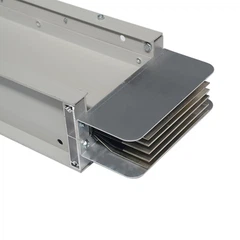
The maximum current capacity of a high current busbar is a critical parameter that determines its performance in various electrical applications. As a high current busbar supplier, we understand the significance of this factor and strive to provide products that meet the diverse needs of our customers.
Understanding High Current Busbars
High current busbars are conductors used to carry large amounts of electrical current in power distribution systems. They are commonly found in industrial facilities, data centers, and other high - power applications. Unlike traditional wiring, busbars offer several advantages, such as lower resistance, better heat dissipation, and higher current - carrying capacity.
The current - carrying capacity of a busbar depends on multiple factors. One of the primary factors is the material of the busbar. Copper and aluminum are the two most commonly used materials. Copper has a higher electrical conductivity than aluminum, which means it can carry more current for a given cross - sectional area. For example, a copper busbar can typically carry about 1.6 times more current than an aluminum busbar of the same size.
Factors Affecting the Maximum Current Capacity
Cross - sectional Area
The cross - sectional area of the busbar has a direct impact on its current - carrying capacity. According to Ampere's law, the larger the cross - sectional area, the more electrons can flow through the conductor, and thus the higher the current it can carry. For instance, if we double the cross - sectional area of a busbar, its current - carrying capacity will approximately double, assuming other factors remain constant.
Temperature Rise
Temperature rise is another crucial factor. As current flows through a busbar, it generates heat due to the resistance of the material. If the temperature rises too high, it can cause the insulation around the busbar to degrade and may even lead to a short - circuit. Therefore, the maximum current capacity is often specified based on a maximum allowable temperature rise. In general, a lower allowable temperature rise will result in a lower maximum current capacity.
Ambient Temperature
The ambient temperature of the environment where the busbar is installed also affects its current - carrying capacity. In a hot environment, the busbar will have a harder time dissipating heat, which reduces its ability to carry current. For example, if a busbar is rated to carry a certain current at an ambient temperature of 25°C, it may only be able to carry a lower current at an ambient temperature of 40°C.
Cooling Method
The cooling method used for the busbar can significantly impact its maximum current capacity. Natural convection cooling is the simplest method, where heat is dissipated into the surrounding air. However, this method is relatively inefficient. For high - current applications, forced - air cooling or liquid cooling may be used. Forced - air cooling uses fans to blow air over the busbar, increasing the rate of heat transfer. Liquid cooling, such as using water or oil, is even more effective as liquids have a higher heat - transfer coefficient than air.
Calculating the Maximum Current Capacity
There are several standards and formulas available for calculating the maximum current capacity of a busbar. One of the most commonly used standards is the National Electrical Manufacturers Association (NEMA) standard. According to NEMA, the current - carrying capacity of a copper busbar can be estimated using the following formula:
[I = k\times A\times\sqrt{\frac{T_{max}-T_{amb}}{R}}]
where (I) is the current in amperes, (A) is the cross - sectional area of the busbar, (T_{max}) is the maximum allowable temperature of the busbar, (T_{amb}) is the ambient temperature, (R) is the resistance of the busbar per unit length, and (k) is a constant that depends on the cooling method and other factors.


However, it should be noted that these calculations are only estimates, and in real - world applications, other factors such as the shape of the busbar, the presence of nearby conductors, and the installation method can also affect the current - carrying capacity.
Our High Current Busbar Products
As a high current busbar supplier, we offer a wide range of products to meet different customer requirements. Our busbars are made from high - quality copper and aluminum materials, ensuring excellent electrical conductivity. We also pay great attention to the design and manufacturing process to optimize the current - carrying capacity of our products.
For example, we use advanced cooling techniques in our high - end busbar products. Some of our busbars are equipped with built - in cooling channels for liquid cooling, which can significantly increase their current - carrying capacity. We also offer customized solutions, where we can design and manufacture busbars according to the specific needs of our customers, such as the required current capacity, installation space, and environmental conditions.
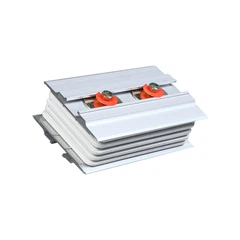
In addition to high current busbars, we also provide related accessories such as Sandwich Bus Duct Insulation, Busway Vertical Elbow, and Plug in Bus Duct. These accessories are designed to work seamlessly with our busbars, ensuring a reliable and efficient electrical distribution system.
Importance of Choosing the Right Busbar
Choosing the right high current busbar is crucial for the safety and efficiency of an electrical system. If the busbar's current capacity is too low, it can overheat, leading to insulation damage, short - circuits, and potential fire hazards. On the other hand, if the busbar's current capacity is much higher than necessary, it can result in higher costs due to the use of more material.
Therefore, it is essential to accurately calculate the required current capacity based on the specific application and then select a busbar that meets or slightly exceeds this requirement. Our team of experts is always ready to assist customers in making the right choice. We can provide technical support and advice on busbar selection, installation, and maintenance.
Contact Us for Procurement and Negotiation
If you are in the market for high current busbars or related accessories, we invite you to contact us for procurement and negotiation. Our experienced sales team will be happy to discuss your requirements and provide you with a detailed quotation. We are committed to providing high - quality products at competitive prices and excellent after - sales service.
References
- National Electrical Manufacturers Association (NEMA) standards.
- Electrical Power Transmission and Distribution Handbook.
- Research papers on high current busbar technology from various academic and industry sources.
Send Inquiry