

What is the difference between a single - phase and three - phase busway vertical elbow?
Sep 12, 2025
Leave a message
Hey there! As a supplier of Busway Vertical Elbows, I often get asked about the differences between single - phase and three - phase busway vertical elbows. So, I thought I'd write this blog to break it down for you in a simple way.
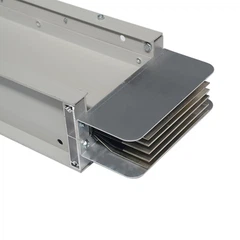
Let's start with the basics. First, what's a busway vertical elbow? Well, it's a crucial component in an electrical distribution system. It allows the busway to change direction vertically, which is super handy when you're trying to route power in a building or an industrial setup.
Single - Phase Busway Vertical Elbow
A single - phase busway vertical elbow is designed for single - phase electrical systems. Single - phase power is what you typically find in residential settings. It's used to power things like lights, small appliances, and electronics in your home.
One of the main features of a single - phase busway vertical elbow is its simplicity. Since it only deals with one phase of electrical power, the design is relatively straightforward. The conductors in a single - phase elbow are usually arranged in a way that's easy to install and maintain.


The current - carrying capacity of a single - phase busway vertical elbow is generally lower compared to its three - phase counterpart. This is because single - phase systems are meant for smaller loads. For example, if you're powering a small office with just a few computers and lights, a single - phase busway vertical elbow would be sufficient.
Another aspect to consider is the cost. Single - phase busway vertical elbows are often more affordable. This is due to the simpler design and the fact that they are used in less demanding applications. If you're on a tight budget and your power requirements are not too high, a single - phase elbow might be the way to go.
Three - Phase Busway Vertical Elbow
Now, let's talk about three - phase busway vertical elbows. Three - phase power is commonly used in industrial and commercial settings. It's capable of delivering a much larger amount of power compared to single - phase systems.
The design of a three - phase busway vertical elbow is more complex. It has to handle three phases of electrical power, which means there are more conductors. These conductors need to be carefully arranged to ensure proper electrical performance and safety.
Three - phase busway vertical elbows have a much higher current - carrying capacity. They can handle large motors, heavy machinery, and other high - power equipment. For instance, in a manufacturing plant where there are multiple large motors running simultaneously, a three - phase busway vertical elbow is essential to distribute the power efficiently.
In terms of cost, three - phase busway vertical elbows are more expensive. The additional materials and the complexity of the design contribute to the higher price. However, when you consider the amount of power they can deliver and the reliability they offer for large - scale applications, the cost is often justified.
Key Differences
Power Capacity
As mentioned earlier, the power capacity is a major difference between single - phase and three - phase busway vertical elbows. Single - phase elbows are for small - scale applications, while three - phase elbows are for large - scale industrial and commercial needs. If you're looking to power a big factory, a single - phase elbow won't cut it. You'll need a three - phase elbow to handle the high power demands.
Design Complexity
The design of a single - phase elbow is simple, with fewer conductors and a more straightforward layout. On the other hand, a three - phase elbow has a more intricate design due to the presence of three phases. This complexity also means that installation and maintenance of three - phase elbows require more expertise.
Cost
Single - phase busway vertical elbows are cheaper, making them a good choice for low - budget projects with low power requirements. Three - phase elbows, although more expensive, are necessary for high - power applications where reliability and performance are crucial.
Application
Single - phase busway vertical elbows are mainly used in residential and small - scale commercial settings. Three - phase elbows are the go - to option for industrial plants, large commercial buildings, and other high - power environments.
Related Products
If you're in the market for busway components, you might also be interested in some related products. Check out our Bus Duct Tap Off Unit, which allows you to easily tap into the busway to supply power to specific areas. We also offer 4000a Bus Duct for high - current applications. And if you're looking for a more lightweight option, our Aluminum Bus Duct is a great choice.
Conclusion
In conclusion, the choice between a single - phase and three - phase busway vertical elbow depends on your specific power requirements, budget, and application. If you have a small - scale project with low power needs, a single - phase elbow is a cost - effective option. But if you're dealing with a large - scale industrial or commercial setup, a three - phase elbow is essential for reliable power distribution.
If you're still not sure which type of busway vertical elbow is right for you, don't hesitate to reach out. We're here to help you make the best decision for your electrical system. Whether you need more information, a quote, or just some advice, we're just a message away. Let's start a conversation and find the perfect solution for your power distribution needs.
References
- Electrical Distribution Handbook
- Power Systems Engineering Textbooks
Send Inquiry