

What insulation materials are used for flexible copper busbar?
Aug 06, 2025
Leave a message
In the realm of electrical power distribution, flexible copper busbars have emerged as a reliable and efficient solution. These busbars are widely used due to their excellent electrical conductivity, flexibility, and ability to handle high currents. One crucial aspect of flexible copper busbars is the insulation materials used, which play a vital role in ensuring safety, performance, and longevity. As a supplier of flexible copper busbars, I am well - versed in the various insulation materials available in the market and their applications.
1. Polyvinyl Chloride (PVC)
Polyvinyl Chloride, commonly known as PVC, is one of the most widely used insulation materials for flexible copper busbars. PVC is a synthetic plastic polymer that offers several advantages. Firstly, it has good electrical insulation properties, which prevent the flow of electric current through the insulation layer, reducing the risk of short - circuits and electrical shocks. Secondly, PVC is highly flexible, making it an ideal choice for flexible copper busbars. It can be easily bent and shaped to fit different installation requirements without losing its insulation integrity.
Another benefit of PVC is its resistance to moisture and chemicals. In many industrial and commercial environments, busbars are exposed to various chemicals and humidity. PVC insulation can withstand these conditions, protecting the copper busbar from corrosion and damage. However, PVC also has some limitations. It has a relatively low temperature rating compared to some other insulation materials. At high temperatures, PVC may start to degrade, losing its insulation properties and becoming brittle.
2. Cross - Linked Polyethylene (XLPE)
Cross - Linked Polyethylene, or XLPE, is another popular insulation material for flexible copper busbars. XLPE is formed by chemically cross - linking polyethylene molecules, which gives it enhanced mechanical and electrical properties. One of the main advantages of XLPE is its high temperature resistance. It can operate at much higher temperatures than PVC, making it suitable for applications where the busbar may be exposed to heat, such as in power generation plants or high - load electrical systems.
XLPE also has excellent dielectric strength, which means it can withstand high voltages without breaking down. This makes it a reliable choice for high - voltage applications. Additionally, XLPE is resistant to environmental stress cracking, which is a common problem in some plastics. It has good flexibility, although not as high as PVC in some cases. However, the manufacturing process of XLPE is more complex and expensive than that of PVC, which may increase the overall cost of the flexible copper busbar.
3. Silicone Rubber
Silicone rubber is a high - performance insulation material that is often used in demanding applications. It has a wide temperature range, from extremely low temperatures to very high temperatures. This makes it suitable for use in environments with extreme temperature variations, such as in aerospace or outdoor electrical installations. Silicone rubber has excellent flexibility, even at low temperatures, which allows the flexible copper busbar to maintain its shape and performance in cold conditions.
In addition to its temperature resistance and flexibility, silicone rubber is also highly resistant to ozone, UV radiation, and weathering. This makes it a long - lasting insulation material, especially for outdoor applications. It has good electrical insulation properties and can provide reliable protection for the copper busbar. However, silicone rubber is relatively expensive compared to PVC and XLPE, and its mechanical strength is not as high as some other materials in some cases.
4. Epoxy Resin
Epoxy resin is a thermosetting polymer that is commonly used for encapsulating and insulating flexible copper busbars. Epoxy resin provides excellent electrical insulation and mechanical protection. It can be applied in a thick layer to fully encapsulate the busbar, protecting it from dust, moisture, and mechanical damage. Epoxy resin has high adhesion properties, which ensures that it bonds well with the copper surface, providing a tight seal.
One of the key advantages of epoxy resin is its chemical resistance. It can resist a wide range of chemicals, making it suitable for use in chemical plants or other harsh industrial environments. Epoxy resin also has good dimensional stability, which means it will not deform easily under different conditions. However, epoxy resin is relatively rigid compared to PVC, XLPE, and silicone rubber. This may limit its use in some applications where high flexibility is required.
5. Fluoropolymers
Fluoropolymers, such as polytetrafluoroethylene (PTFE), are high - performance insulation materials known for their excellent chemical resistance and high - temperature stability. PTFE has a very low coefficient of friction, which makes it easy to install and reduces the risk of abrasion during installation or operation. It has outstanding electrical insulation properties, with a high dielectric constant and low dielectric loss.
Fluoropolymers can operate at extremely high temperatures, often exceeding 200°C. They are also highly resistant to most chemicals, including strong acids and bases. However, fluoropolymers are very expensive, and their processing can be challenging. They are typically used in specialized applications where the highest level of performance and reliability is required, such as in the aerospace or medical industries.
Applications and Considerations
When choosing an insulation material for flexible copper busbars, several factors need to be considered. The application environment is a crucial factor. For example, in a wet or humid environment, a material with good moisture resistance, such as PVC or XLPE, may be preferred. In a high - temperature environment, XLPE or silicone rubber would be more suitable.


The electrical requirements of the application also play a significant role. For high - voltage applications, materials with high dielectric strength, such as XLPE or epoxy resin, are necessary. The flexibility requirements of the installation are also important. If the busbar needs to be bent and shaped frequently, a more flexible material like PVC or silicone rubber may be the best choice.
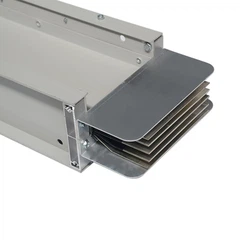
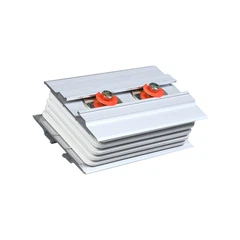
In addition to the insulation material, other components related to the busbar system are also important. For example, Busway Spring Support can help to support the busway and absorb vibrations, ensuring the stability of the system. Busway Tap - off Box is used to provide a connection point for tapping power from the busway, and Busway Connector is essential for joining different sections of the busway together.
As a supplier of flexible copper busbars, we understand the importance of choosing the right insulation material for each application. We work closely with our customers to understand their specific requirements and provide them with the most suitable solutions. Whether it is a small - scale electrical project or a large - scale industrial installation, we have the expertise and resources to meet your needs.
If you are in the market for flexible copper busbars and need to discuss your insulation material requirements, we invite you to contact us for a detailed consultation. Our team of experts is ready to assist you in selecting the best insulation material and busbar solution for your project. We are committed to providing high - quality products and excellent customer service to ensure your satisfaction.
References
- Rogers, A. (2018). Electrical Insulation Materials: Properties and Applications. CRC Press.
- Davis, B. (2020). Handbook of Polymer Science and Technology. Wiley.
- Smith, C. (2019). Electrical Power Distribution Systems: Design and Operation. McGraw - Hill.
Send Inquiry