

What factors affect the electrical conductivity of flexible copper busbar?
Jan 19, 2026
Leave a message
As a supplier of Flexible Copper Busbar, I've witnessed firsthand the critical role these components play in electrical systems. The electrical conductivity of flexible copper busbars is a fundamental property that determines their performance and suitability for various applications. In this blog, I'll explore the key factors that affect the electrical conductivity of flexible copper busbars, providing insights that can help you make informed decisions when selecting these products.
1. Copper Purity
The purity of copper used in the manufacturing of flexible copper busbars is one of the most significant factors influencing electrical conductivity. High - purity copper contains very few impurities, which allows electrons to move more freely through the material.
Copper with a purity of 99.9% or higher, often referred to as electrolytic - tough pitch (ETP) copper, is commonly used in high - quality flexible copper busbars. Impurities such as sulfur, oxygen, and other metals can act as scattering centers for electrons, increasing the resistance of the material and reducing its conductivity. For example, even a small amount of sulfur can form copper sulfide compounds within the copper lattice, which disrupts the flow of electrons.

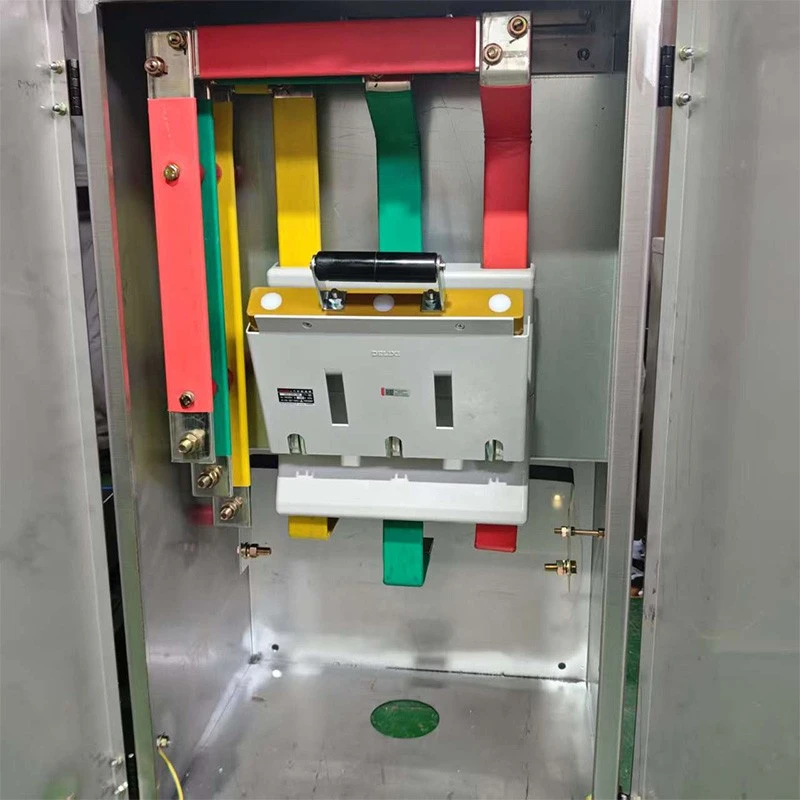
When sourcing flexible copper busbars, it's essential to ensure that the copper used meets high - purity standards. This not only guarantees better electrical conductivity but also enhances the long - term reliability of the busbar. You can learn more about high - quality Flexible Copper Busbar options on our website.
2. Cross - sectional Area
The cross - sectional area of a flexible copper busbar has a direct impact on its electrical conductivity. According to Ohm's law, resistance (R) is inversely proportional to the cross - sectional area (A) of a conductor, given by the formula (R=\rho\frac{l}{A}), where (\rho) is the resistivity of the material and (l) is the length of the conductor.
A larger cross - sectional area provides more pathways for electrons to flow, reducing the overall resistance of the busbar. This means that for a given current, a busbar with a larger cross - sectional area will experience less voltage drop. In applications where high currents are involved, such as in power distribution systems, using busbars with an appropriate cross - sectional area is crucial to minimize power losses and ensure efficient operation.
However, it's important to balance the need for a large cross - sectional area with other factors such as cost and space constraints. Our team can assist you in determining the optimal cross - sectional area for your specific application.
3. Temperature
Temperature has a significant effect on the electrical conductivity of flexible copper busbars. As the temperature of copper increases, the thermal vibrations of the copper atoms become more intense. These vibrations impede the flow of electrons, causing an increase in resistance and a corresponding decrease in conductivity.
The relationship between temperature and resistance is approximately linear over a certain range and can be described by the temperature coefficient of resistance. For copper, the temperature coefficient of resistance is positive, meaning that resistance increases with increasing temperature.
In practical applications, it's important to consider the operating temperature of the busbar. In high - temperature environments, such as near industrial furnaces or in areas with poor ventilation, the conductivity of the busbar may be significantly reduced. Adequate cooling measures, such as using heat sinks or fans, may be required to maintain the busbar within an acceptable temperature range.
4. Surface Condition
The surface condition of a flexible copper busbar can also affect its electrical conductivity, especially in applications where the busbar makes contact with other components. A clean and smooth surface ensures good electrical contact, reducing contact resistance.
Oxidation is a common issue that can occur on the surface of copper busbars. When copper is exposed to air, it forms a thin layer of copper oxide, which has higher resistance than pure copper. This oxide layer can increase the contact resistance between the busbar and other components, leading to power losses and potential overheating.
To prevent oxidation, busbars can be coated with a protective layer, such as tin or nickel. These coatings not only protect the copper from oxidation but also improve the solderability of the busbar, making it easier to connect to other components. You can find busbars with high - quality surface treatments on our website, which are designed to maintain good electrical conductivity over time.
5. Mechanical Stress
Flexible copper busbars are often subjected to mechanical stress during installation and operation. Bending, twisting, and vibration can cause changes in the internal structure of the copper, which may affect its electrical conductivity.
Excessive mechanical stress can lead to the formation of micro - cracks in the copper. These cracks can disrupt the flow of electrons, increasing the resistance of the busbar. In addition, repeated bending and straightening can cause work hardening of the copper, which also affects its conductivity.
When installing flexible copper busbars, it's important to follow the manufacturer's guidelines to minimize mechanical stress. Proper support and routing of the busbar can help prevent excessive bending and vibration. Our technical team can provide guidance on the correct installation methods to ensure that the busbar maintains its electrical conductivity under mechanical stress.
6. Alloying Elements
In some cases, small amounts of alloying elements may be added to copper to improve certain properties, such as strength or corrosion resistance. However, these alloying elements can also have an impact on the electrical conductivity of the busbar.
Alloying elements increase the complexity of the copper lattice, which can scatter electrons and increase resistance. The type and amount of alloying elements used need to be carefully controlled to balance the desired properties with the need for good electrical conductivity.
For example, some copper alloys may contain small amounts of silver to improve strength without significantly reducing conductivity. When considering alloyed copper busbars, it's important to evaluate the trade - off between the improved properties and the potential decrease in electrical conductivity.
7. Frequency of the Current
The frequency of the current flowing through the busbar can also affect its electrical conductivity. At high frequencies, the skin effect becomes more pronounced. The skin effect causes the current to be concentrated near the surface of the conductor, reducing the effective cross - sectional area available for current flow.
As a result, the resistance of the busbar increases at high frequencies. This is particularly important in applications such as high - frequency power electronics, where the design of the busbar needs to take into account the skin effect. Using busbars with a larger surface area or special designs, such as laminated structures, can help mitigate the skin effect and maintain good electrical conductivity at high frequencies.
Conclusion
The electrical conductivity of flexible copper busbars is influenced by a variety of factors, including copper purity, cross - sectional area, temperature, surface condition, mechanical stress, alloying elements, and the frequency of the current. As a supplier of Flexible Copper Busbar, we understand the importance of these factors and strive to provide high - quality products that meet the specific requirements of our customers.
If you're in the process of selecting flexible copper busbars for your application, our team of experts is ready to assist you. We can help you choose the right busbar based on your electrical requirements, operating conditions, and budget. Whether you need a Busway Feeder Box or a Copper Busway Connector, we have a wide range of products to meet your needs.
Contact us today to start a procurement discussion and find the best solution for your electrical system.
References
- Groover, M. P. (2010). Fundamentals of Modern Manufacturing: Materials, Processes, and Systems. John Wiley & Sons.
- Fitzgerald, A. E., Kingsley Jr, C., & Umans, S. D. (2003). Electric Machinery. McGraw - Hill.
- ASM Handbook Committee. (1990). ASM Handbook Volume 2: Properties and Selection: Nonferrous Alloys and Special - Purpose Materials. ASM International.
Send Inquiry