

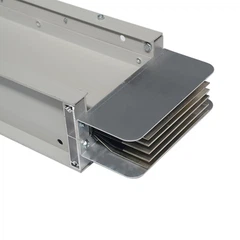
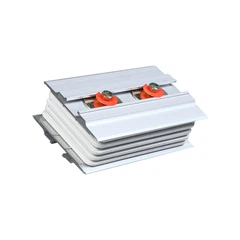
What are the load - management features of an underground bus duct?
Aug 08, 2025
Leave a message
As a reputable supplier of Underground Bus Duct, I am often asked about the load - management features of our underground bus ducts. In this blog post, I will delve into the various aspects of load management that make our underground bus ducts a top - choice for electrical distribution systems.
1. High - Capacity Load Handling
One of the primary load - management features of our underground bus ducts is their ability to handle high - capacity loads. The design of our bus ducts allows for efficient conduction of large amounts of electrical current. We use high - quality conductive materials, such as copper or aluminum, which have excellent electrical conductivity. These materials are carefully selected and engineered to minimize resistance, ensuring that the bus ducts can carry heavy loads without significant power losses.
For example, in industrial settings where large machinery and equipment require substantial amounts of electricity, our underground bus ducts can provide a reliable power supply. The cross - sectional area of the conductors in our bus ducts is optimized to handle high - current applications. This means that whether it's a manufacturing plant with multiple motors running simultaneously or a data center with numerous servers, our bus ducts can meet the high - capacity load demands.


2. Adjustable Load Distribution
Our underground bus ducts offer adjustable load distribution capabilities. This is achieved through a modular design that allows for easy customization. We can install tap - off units at various points along the bus duct, which enables us to distribute the electrical load according to the specific requirements of different areas or equipment.
In a commercial building, for instance, different floors or departments may have different power needs. With our bus ducts, we can install tap - offs at strategic locations to supply power to areas such as offices, conference rooms, and break rooms. The tap - off units can be adjusted to control the amount of power being delivered to each area, ensuring that the load is evenly distributed and preventing overloading in any one section.
3. Overload Protection
Overload protection is a crucial load - management feature of our underground bus ducts. We incorporate advanced protection mechanisms to safeguard the bus ducts and the connected equipment from damage caused by excessive current.
Thermal sensors are installed within the bus ducts to monitor the temperature. If the temperature rises above a certain threshold, indicating an overload, the system can automatically trip a circuit breaker. This prevents the bus duct from overheating and potentially causing a fire or other electrical hazards. Additionally, our bus ducts are designed with short - circuit protection. In the event of a short - circuit, the protection system will quickly isolate the fault and cut off the power supply, minimizing the damage to the bus duct and the connected electrical components.
4. Real - Time Monitoring
Another significant load - management feature is real - time monitoring. Our underground bus ducts can be equipped with monitoring systems that provide continuous data on the electrical parameters such as current, voltage, and power factor. This data is transmitted to a central control system, where it can be analyzed in real - time.
For facility managers, real - time monitoring allows them to keep a close eye on the load distribution and usage. They can identify any abnormal load patterns, such as sudden spikes or drops in current, which may indicate a problem with the equipment or an impending overload. By having access to this information, they can take proactive measures to adjust the load or perform maintenance before a major issue occurs.
5. Compatibility with Smart Grids
Our underground bus ducts are designed to be compatible with smart grids. In the era of smart cities and intelligent energy management, this is a crucial feature. Smart grids enable two - way communication between the power generation source and the end - users. Our bus ducts can integrate with smart grid systems, allowing for better load management at a larger scale.
The real - time monitoring data from our bus ducts can be shared with the smart grid. This information can be used by power utilities to optimize the power distribution across the grid. For example, during peak demand periods, the smart grid can adjust the load on our bus ducts based on the available power supply. This not only helps in efficient energy utilization but also reduces the overall cost of electricity.
6. Redundancy and Backup
Redundancy is an important aspect of load management in our underground bus ducts. We offer redundant systems that ensure continuous power supply even in the event of a failure in one part of the bus duct. By having multiple parallel conductors or backup power sources, we can provide a reliable power supply to critical equipment.
In a hospital, for example, where uninterrupted power is essential for life - saving equipment, our redundant bus duct systems can provide the necessary backup. If one section of the bus duct fails, the backup system can quickly take over, ensuring that there is no disruption in the power supply. This redundancy feature also helps in load management by providing an additional layer of security and reliability.
7. Integration with Cast Resin Busduct and Cast Resin Busduct Feeder Unit
Our underground bus ducts can be seamlessly integrated with Cast Resin Busduct and Cast Resin Busduct Feeder Unit. Cast resin busducts offer excellent insulation properties and are suitable for indoor applications. By integrating our underground bus ducts with cast resin busducts, we can create a comprehensive electrical distribution system that combines the advantages of both.
The cast resin busduct feeder units can be used to supply power from the main underground bus duct to specific areas or equipment. This integration allows for more efficient load management, as the cast resin busducts can be used to fine - tune the power supply to the connected loads. It also provides a more flexible and scalable solution for various electrical distribution needs.
8. Energy Efficiency
Energy efficiency is an important consideration in load management. Our underground bus ducts are designed to minimize power losses during transmission. The use of high - conductivity materials and optimized conductor designs reduces the resistance, which in turn reduces the amount of energy wasted as heat.
In addition, the adjustable load distribution and real - time monitoring features contribute to energy efficiency. By distributing the load evenly and adjusting the power supply based on the actual demand, we can avoid over - supplying electricity. This not only saves energy but also reduces the operating costs for the end - users.
Conclusion
In conclusion, the load - management features of our underground bus ducts make them an ideal choice for a wide range of electrical distribution applications. From high - capacity load handling and adjustable load distribution to overload protection and real - time monitoring, our bus ducts offer a comprehensive solution for efficient and reliable power supply.
If you are in need of a reliable underground bus duct system for your project, we invite you to contact us for a detailed consultation. Our team of experts can work with you to understand your specific load - management requirements and provide a customized solution. We are committed to providing high - quality products and excellent customer service. Let's work together to ensure that your electrical distribution system meets the highest standards of performance and reliability.
References
- Electrical Engineering Handbook, Third Edition, Edited by Richard C. Dorf
- Power Systems Analysis and Design, Fourth Edition, by J. Duncan Glover, Mulukutla S. Sarma, and Thomas J. Overbye
Send Inquiry