

What are the acoustic noise characteristics of waterproof busbars?
Aug 21, 2025
Leave a message
Hey there! As a supplier of waterproof busbars, I've been getting a lot of questions lately about the acoustic noise characteristics of these nifty electrical components. So, I thought I'd take a deep dive into this topic and share what I've learned.
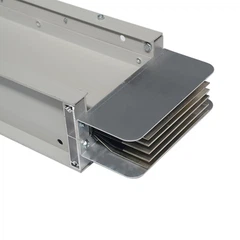
First off, let's talk about what waterproof busbars are. They're basically a type of electrical conductor used to distribute electrical power. They're designed to be waterproof, which makes them perfect for use in outdoor or wet environments. You can find them in a variety of applications, from industrial facilities to commercial buildings and even in some residential setups.
Now, onto the acoustic noise characteristics. Acoustic noise in busbars can be a real pain, not just because it's annoying but also because it can sometimes be a sign of underlying issues. There are a few factors that can contribute to the noise produced by waterproof busbars.
One of the main factors is electromagnetic forces. When electrical current flows through a busbar, it creates a magnetic field. The interaction between these magnetic fields and the busbar's structure can cause vibrations, which in turn produce noise. This is known as magnetostriction. The level of noise generated by magnetostriction depends on several things, like the magnitude of the current, the frequency of the electrical supply, and the design of the busbar.
For instance, if you have a high - current application, the magnetic forces will be stronger, and the resulting vibrations and noise will likely be more significant. Similarly, higher frequencies can also lead to more pronounced magnetostrictive effects. As a supplier, we take these factors into account when designing our waterproof busbars. We use advanced materials and construction techniques to minimize the impact of electromagnetic forces and reduce noise levels.


Another factor that can contribute to acoustic noise is mechanical resonance. Just like any physical structure, busbars have natural frequencies at which they tend to vibrate more easily. If the frequency of the vibrations caused by electromagnetic forces or other external factors matches one of these natural frequencies, resonance occurs. Resonance can amplify the vibrations and significantly increase the noise level.
To avoid mechanical resonance, we carefully design the shape and dimensions of our waterproof busbars. We use computer - aided design (CAD) and finite element analysis (FEA) to model the busbar's behavior and ensure that its natural frequencies are well - separated from the frequencies of the electrical supply and other potential vibration sources.
The installation of the busbar also plays a crucial role in noise generation. If the busbar is not properly supported or if there are loose connections, it can lead to additional vibrations and noise. For example, if the mounting brackets are not firmly attached, the busbar can move around, causing rattling or thumping sounds. That's why we provide detailed installation instructions to our customers. We recommend using high - quality mounting hardware and ensuring that all connections are tight and secure.
Now, let's talk about how we test and measure the acoustic noise characteristics of our waterproof busbars. We have a state - of - the - art testing facility where we subject our busbars to various electrical and environmental conditions. We use specialized microphones and acoustic measurement equipment to record and analyze the noise levels.
During testing, we measure the sound pressure level (SPL) of the busbar at different frequencies. The SPL is expressed in decibels (dB), and it gives us an idea of how loud the noise is. We also analyze the frequency spectrum of the noise to identify the specific frequencies at which the noise is most prominent. This information helps us to further optimize the design of our busbars and address any noise - related issues.
In addition to the technical aspects, the acoustic noise characteristics of waterproof busbars can also have practical implications. For example, in a quiet office building or a hospital, excessive noise from the electrical system can be a real problem. It can disrupt the work environment or interfere with medical equipment. That's why our waterproof busbars are designed to meet strict noise standards, ensuring that they can be used in a wide range of applications without causing any noise - related problems.
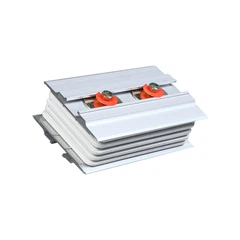
If you're in the market for waterproof busbars, you might also be interested in some of our related products. We offer a Modular Plug - in Cast Resin Busduct, which is a great option for flexible power distribution. It allows for easy connection of electrical loads and can be customized to meet your specific requirements.
Our Cast Resin Busduct Feeder Unit is another excellent product. It's designed to efficiently transfer electrical power from the main power source to the busbar system. And if you need a solution for underground applications, our Underground Bus Duct is a reliable choice. It's built to withstand the harsh underground environment and provides a safe and efficient way to distribute power.
So, if you're looking for high - quality waterproof busbars with low acoustic noise characteristics, we're here to help. Whether you're an electrical engineer working on a large - scale industrial project or a contractor building a new commercial complex, our products are designed to meet your needs. We offer a wide range of options in terms of size, capacity, and configuration, and we can also provide customized solutions based on your specific requirements.
If you're interested in learning more about our waterproof busbars or have any questions about acoustic noise characteristics or our other products, don't hesitate to reach out. We're always happy to have a chat and discuss how we can help you with your electrical power distribution needs. Let's work together to find the best solution for your project!
References
- Grover, F. W. (1946). Inductance Calculations: Working Formulas and Tables. Dover Publications.
- IEEE Std 141 - 1993 (R2004). IEEE Recommended Practice for Electric Power Distribution for Industrial Plants.
Send Inquiry