

How to reduce the skin - effect of flexible copper busbar in high - frequency applications?
Jun 15, 2026
Leave a message
In high-frequency applications, the skin effect of flexible copper busbars can significantly impact performance, leading to increased resistance, power losses, and heat generation. As a supplier of flexible copper busbars, we understand the importance of addressing this issue to ensure optimal performance and efficiency for our customers. In this blog, we will explore various strategies to reduce the skin effect of flexible copper busbars in high-frequency applications.
Understanding the Skin Effect
The skin effect is a phenomenon where alternating current (AC) tends to flow near the surface of a conductor rather than uniformly throughout its cross-section. This effect becomes more pronounced at higher frequencies, as the magnetic field generated by the current induces eddy currents in the conductor, which oppose the flow of current in the interior. As a result, the effective cross-sectional area of the conductor decreases, leading to an increase in resistance and power losses.
For flexible copper busbars, the skin effect can have several negative consequences. It can cause uneven current distribution, leading to hot spots and potential damage to the busbar. Additionally, the increased resistance can result in higher power consumption and reduced efficiency, which can be particularly problematic in high-frequency applications where power losses can be significant.
Strategies to Reduce the Skin Effect
1. Using Litz Wire
Litz wire is a type of multi-stranded wire that is specifically designed to reduce the skin effect. It consists of a large number of individually insulated strands that are twisted together in a specific pattern. By dividing the current among multiple strands, the effective cross-sectional area of the conductor is increased, reducing the skin effect and improving the overall performance of the busbar.
Litz wire is particularly effective in high-frequency applications because it minimizes the eddy currents that are responsible for the skin effect. The individual strands are insulated from each other, which prevents the formation of large eddy currents and allows the current to flow more evenly throughout the conductor. This results in lower resistance and reduced power losses, making Litz wire an ideal choice for flexible copper busbars in high-frequency applications.

2. Increasing the Surface Area
Another way to reduce the skin effect is to increase the surface area of the flexible copper busbar. This can be achieved by using a busbar with a larger cross-sectional area or by adding fins or other surface features to increase the surface area. By increasing the surface area, the current is spread out over a larger area, reducing the concentration of current near the surface and minimizing the skin effect.
In addition to increasing the surface area, it is also important to ensure that the surface of the busbar is smooth and free of any irregularities. Rough surfaces can cause the current to concentrate in certain areas, increasing the skin effect and reducing the performance of the busbar. By using a smooth surface, the current can flow more evenly throughout the conductor, reducing the skin effect and improving the overall efficiency of the busbar.
3. Using a Conductive Coating
Applying a conductive coating to the surface of the flexible copper busbar can also help to reduce the skin effect. The coating can provide an additional path for the current to flow, reducing the concentration of current near the surface and minimizing the skin effect. Conductive coatings can be made from a variety of materials, such as silver, copper, or graphite, and can be applied using a variety of methods, such as electroplating or spraying.
When choosing a conductive coating, it is important to consider the specific requirements of the application. The coating should have good conductivity, adhesion, and durability, and should be able to withstand the operating conditions of the busbar. Additionally, the coating should be compatible with the copper busbar and should not cause any corrosion or other damage to the busbar.
4. Optimizing the Busbar Design
The design of the flexible copper busbar can also have a significant impact on the skin effect. By optimizing the design of the busbar, it is possible to reduce the skin effect and improve the overall performance of the busbar. Some of the key design considerations include the shape, size, and layout of the busbar.
For example, using a busbar with a rectangular cross-section can help to reduce the skin effect compared to a circular cross-section. This is because the rectangular cross-section provides a larger surface area for the current to flow, reducing the concentration of current near the surface and minimizing the skin effect. Additionally, using a busbar with a larger cross-sectional area can also help to reduce the skin effect, as it provides a larger area for the current to flow.
Another important design consideration is the layout of the busbar. By minimizing the length of the busbar and reducing the number of bends and turns, it is possible to reduce the resistance and inductance of the busbar, which can help to reduce the skin effect. Additionally, using a busbar with a uniform cross-section can also help to reduce the skin effect, as it ensures that the current is distributed evenly throughout the conductor.
The Role of Accessories in Reducing the Skin Effect
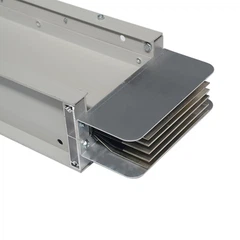
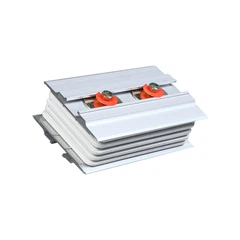
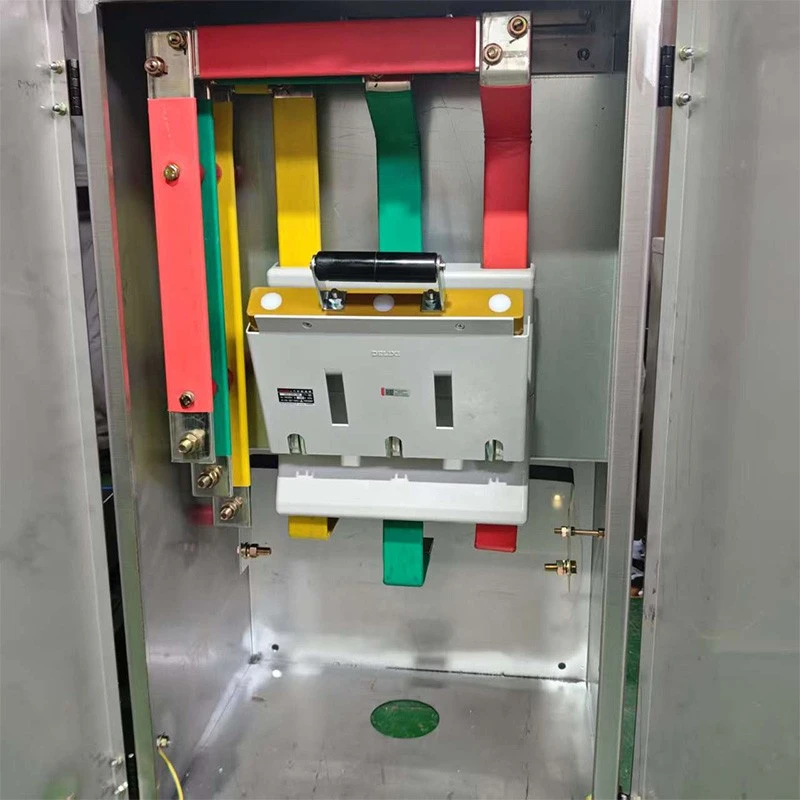
In addition to the strategies mentioned above, using high-quality accessories can also help to reduce the skin effect of flexible copper busbars in high-frequency applications. Accessories such as Busway Spring Support, Busway Connector Insulation Plate, and Busway Feeder Box can play a crucial role in ensuring the proper installation and operation of the busbar, which can help to reduce the skin effect and improve the overall performance of the system.
Busway Spring Support helps to provide a stable and secure mounting for the busbar, which can help to reduce the vibration and movement of the busbar. This can help to prevent the formation of hot spots and other issues that can be caused by the skin effect. Busway Connector Insulation Plate helps to insulate the busbar connections, which can help to reduce the electrical resistance and improve the overall performance of the busbar. Busway Feeder Box helps to provide a convenient and efficient way to connect the busbar to the power source, which can help to reduce the length of the busbar and minimize the skin effect.
Conclusion
Reducing the skin effect of flexible copper busbars in high-frequency applications is essential for ensuring optimal performance and efficiency. By using strategies such as using Litz wire, increasing the surface area, using a conductive coating, and optimizing the busbar design, it is possible to minimize the skin effect and improve the overall performance of the busbar. Additionally, using high-quality accessories such as Busway Spring Support, Busway Connector Insulation Plate, and Busway Feeder Box can also help to reduce the skin effect and ensure the proper installation and operation of the busbar.
If you are interested in learning more about our flexible copper busbars and how we can help you reduce the skin effect in your high-frequency applications, please contact us to discuss your specific requirements. Our team of experts is ready to assist you in finding the best solution for your needs.
References
- Grover, F. W. (1946). Inductance Calculations: Working Formulas and Tables. Dover Publications.
- Rosa, E. B. (1908). The Self and Mutual Inductances of Linear Conductors. Bulletin of the Bureau of Standards, 4(2), 301-344.
- Sadiku, M. N. O. (2014). Elements of Electromagnetics. Oxford University Press.
Send Inquiry