

Can sandwich busduct be installed vertically?
Nov 17, 2025
Leave a message
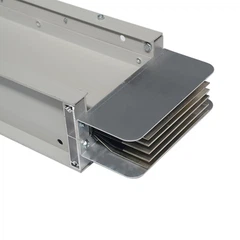
Sandwich busducts are crucial components in modern electrical distribution systems, offering efficient power transmission and distribution solutions. One common question that often arises among engineers, contractors, and facility managers is whether sandwich busduct can be installed vertically. As a leading sandwich busduct supplier, I am here to provide a comprehensive analysis of this topic, exploring the technical feasibility, advantages, challenges, and best practices associated with vertical installation of sandwich busducts.
Technical Feasibility
The technical feasibility of vertical installation of sandwich busducts depends on several factors, including the design of the busduct, the electrical load requirements, and the environmental conditions. In general, sandwich busducts are designed to be installed both horizontally and vertically, as long as certain design and installation considerations are met.
Design Considerations
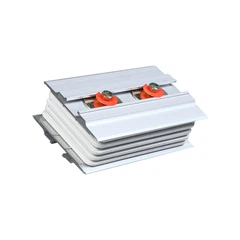
Sandwich busducts are typically designed with a modular structure, consisting of multiple busbars sandwiched between insulating materials. The busbars are usually made of copper or aluminum, which offer high electrical conductivity and mechanical strength. To ensure safe and reliable operation in vertical installations, the busducts must be designed to withstand the additional forces and stresses caused by gravity.


One important design consideration is the support system. Vertical busducts require a robust support system to prevent sagging, vibration, and movement. The support system should be designed to evenly distribute the weight of the busduct and its contents, and to provide adequate protection against seismic and wind loads. Additionally, the support system should be easy to install and maintain, and should allow for expansion and contraction of the busduct due to temperature changes.
Another design consideration is the insulation system. Vertical busducts are more susceptible to moisture and dust accumulation than horizontal busducts, which can affect the performance and reliability of the insulation. To prevent moisture and dust ingress, the busducts should be designed with a sealed enclosure and a high-quality insulation material. Additionally, the insulation system should be tested and certified to meet relevant industry standards and regulations.
Electrical Load Requirements
The electrical load requirements of the system also play a crucial role in determining the feasibility of vertical installation of sandwich busducts. Vertical busducts are typically used in high-rise buildings, industrial facilities, and other applications where space is limited and the electrical load is high. In these applications, the busducts must be able to handle the high current and voltage levels without overheating or causing electrical failures.
To ensure safe and reliable operation, the busducts must be sized and rated according to the electrical load requirements of the system. This involves calculating the maximum current and voltage levels that the busduct will be required to carry, and selecting a busduct with a sufficient ampacity and voltage rating. Additionally, the busducts must be installed and connected correctly to ensure proper electrical continuity and to prevent electrical arcing and short circuits.
Environmental Conditions
The environmental conditions in which the busducts will be installed also need to be considered when evaluating the feasibility of vertical installation. Vertical busducts are often exposed to harsh environmental conditions, such as high temperatures, humidity, dust, and vibration. These conditions can affect the performance and reliability of the busducts, and can increase the risk of electrical failures and safety hazards.
To ensure safe and reliable operation in harsh environmental conditions, the busducts must be designed and constructed to withstand the specific environmental challenges. This may involve using special materials and coatings to protect the busducts from corrosion, moisture, and dust, and installing additional cooling and ventilation systems to prevent overheating. Additionally, the busducts should be installed in a location that is protected from direct sunlight, rain, and other environmental factors.
Advantages of Vertical Installation
There are several advantages to installing sandwich busducts vertically, especially in high-rise buildings and other applications where space is limited. Some of the key advantages include:
Space Savings
Vertical installation of sandwich busducts can significantly reduce the amount of floor space required for electrical distribution. In high-rise buildings, where space is at a premium, this can be a major advantage. By installing the busducts vertically, the electrical distribution system can be located in a smaller area, freeing up valuable floor space for other uses.
Easier Installation and Maintenance
Vertical installation of sandwich busducts can also make installation and maintenance easier and more efficient. In a vertical installation, the busducts can be installed in a single run, without the need for multiple horizontal runs and elbows. This can reduce the installation time and cost, and can also make it easier to access and maintain the busducts in the future.
Improved Electrical Performance
Vertical installation of sandwich busducts can also improve the electrical performance of the system. In a vertical installation, the busducts can be installed in a more direct path, reducing the length of the electrical circuit and minimizing the resistance and voltage drop. This can result in a more efficient and reliable electrical distribution system, with lower energy losses and fewer electrical failures.
Challenges of Vertical Installation
While there are several advantages to installing sandwich busducts vertically, there are also some challenges that need to be addressed. Some of the key challenges include:
Gravity and Support
One of the main challenges of vertical installation is the additional forces and stresses caused by gravity. Vertical busducts must be designed and installed to withstand the weight of the busduct and its contents, as well as the additional forces caused by seismic and wind loads. This requires a robust support system that is designed to evenly distribute the weight of the busduct and to prevent sagging, vibration, and movement.
Moisture and Dust Ingress
Another challenge of vertical installation is the increased risk of moisture and dust ingress. Vertical busducts are more susceptible to moisture and dust accumulation than horizontal busducts, which can affect the performance and reliability of the insulation. To prevent moisture and dust ingress, the busducts must be designed with a sealed enclosure and a high-quality insulation material, and should be installed in a location that is protected from direct sunlight, rain, and other environmental factors.
Thermal Management
Vertical installation of sandwich busducts can also pose challenges for thermal management. In a vertical installation, the heat generated by the busbars can accumulate at the top of the busduct, leading to overheating and potential electrical failures. To prevent overheating, the busducts must be designed with adequate cooling and ventilation systems, and should be installed in a location that allows for proper air circulation.
Best Practices for Vertical Installation
To ensure safe and reliable operation of sandwich busducts in vertical installations, it is important to follow best practices for design, installation, and maintenance. Some of the key best practices include:
Design
- Use a Robust Support System: The support system for vertical busducts should be designed to withstand the weight of the busduct and its contents, as well as the additional forces caused by seismic and wind loads. The support system should be evenly spaced and securely attached to the building structure.
- Seal the Enclosure: The busduct enclosure should be sealed to prevent moisture and dust ingress. This can be achieved by using gaskets, seals, and other sealing materials.
- Use High-Quality Insulation: The insulation material used in the busduct should be of high quality and should be tested and certified to meet relevant industry standards and regulations. The insulation should be able to withstand the high temperatures and electrical stresses associated with vertical installation.
Installation
- Follow Manufacturer's Instructions: The busduct should be installed according to the manufacturer's instructions and recommendations. This includes following the correct installation sequence, using the correct tools and materials, and ensuring proper alignment and connection of the busbars.
- Provide Adequate Clearance: The busduct should be installed with adequate clearance from other electrical equipment, building structures, and environmental hazards. This will help to prevent interference and damage to the busduct.
- Test the System: After installation, the busduct system should be tested to ensure proper electrical continuity and to verify that the system is operating safely and reliably. This includes performing insulation resistance tests, circuit impedance tests, and other electrical tests.
Maintenance
- Regular Inspections: The busduct system should be inspected regularly to check for signs of damage, wear, and corrosion. This includes inspecting the support system, the enclosure, the insulation, and the busbars.
- Cleaning and Lubrication: The busduct system should be cleaned and lubricated regularly to prevent the accumulation of dust, dirt, and other contaminants. This includes cleaning the busbars, the contacts, and the insulation.
- Replace Worn Components: Any worn or damaged components of the busduct system should be replaced immediately to prevent electrical failures and safety hazards. This includes replacing the busbars, the contacts, the insulation, and the support system.
Conclusion
In conclusion, sandwich busducts can be installed vertically, as long as certain design and installation considerations are met. Vertical installation of sandwich busducts offers several advantages, including space savings, easier installation and maintenance, and improved electrical performance. However, it also poses some challenges, such as gravity and support, moisture and dust ingress, and thermal management. To ensure safe and reliable operation of sandwich busducts in vertical installations, it is important to follow best practices for design, installation, and maintenance.
As a leading sandwich busduct supplier, we offer a wide range of high-quality busduct products that are designed and tested to meet the most demanding applications. Our busducts are available in a variety of sizes, ratings, and configurations, and can be customized to meet the specific requirements of your project. Whether you need a Non-Standard Bus Duct Flange End, a 4000a Bus Duct, or a Low Voltage Bus Duct, we have the expertise and experience to provide you with the right solution.
If you are interested in learning more about our sandwich busduct products or have any questions about vertical installation, please contact us today to discuss your specific needs and requirements. Our team of experts will be happy to assist you in selecting the right busduct solution for your project and to provide you with the support and guidance you need throughout the installation and maintenance process.
References
- "Electrical Power Distribution Handbook" by Dugan, McGranaghan, and Beaty
- "Busway Installation and Maintenance Guide" by the National Electrical Manufacturers Association (NEMA)
- "Standards for Low-Voltage Switchgear and Controlgear Assemblies" by the International Electrotechnical Commission (IEC)
Send Inquiry