

The Evolution Of Busways: From Inception To Technical Advancement
Sep 19, 2025
Leave a message
The birth of busways is essentially a technological breakthrough arising from the collision between the upgraded demand for power distribution and the limitations of traditional cables. In the early days of industrial power distribution, cables were the primary choice, yet they had obvious shortcomings: limited current-carrying capacity, low heat dissipation efficiency, and a large number of joints. Long-term use often led to failures caused by poor contact. This dilemma became particularly prominent during the large-scale industrial development in Europe and the United States in the early 20th century, as the surging demand for stable high-current distribution from high-power motors, machine tools, and other equipment in factory workshops gave rise to the prototype of busways. The earliest busways had a simple structure, using only copper bars as conductors and covered with a basic insulating shell. Although they solved the current-carrying problem, their safety and adaptability still needed improvement.
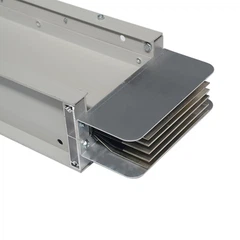
After World War II, the world entered a period of industrial reconstruction and expansion. Industries such as automobile manufacturing, heavy machinery, and steel rapidly flourished, further raising requirements for power distribution capacity and stability. After the 1950s, air-insulated busways became the mainstream due to technical optimizations: they utilized gaps between conductors for insulation, which not only increased the current-carrying capacity to several hundred amperes but also simplified the structure and reduced maintenance difficulty. Capable of adapting to high-dust and strong-vibration environments in heavy industry workshops, they quickly replaced the distribution method of parallel multiple cables and became a core component of factory main-line power distribution.
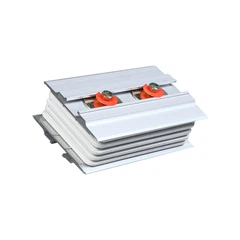
Subsequently, the demand for diversified scenarios drove continuous iteration of busway technology. After the 1970s, with the rise of the electronics industry, space-constrained scenarios such as data centers and office buildings emerged, highlighting the issue of the large size of traditional air-insulated busways. This led to the advent of compact busways. Through the design of densely arranged conductors and fully wrapped insulating materials, compact busways reduced volume while increasing current-carrying capacity-they not only met the high-power demands of server clusters and office equipment but also accommodated future capacity expansion. For complex environments like chemical workshops, offshore wind farms, and food processing plants, cast resin busways were developed. Encapsulated entirely with epoxy resin, these busways combined high-temperature resistance, anti-aging properties, and resistance to oil, water, and moisture, solving the problem of distribution stability in harsh environments.
Simultaneously, material upgrades advanced in parallel: early busways used pure copper as conductors, which was relatively costly. Later, aluminum alloy conductors, with their advantages of lightweight and low cost, were widely applied in medium and low-voltage scenarios. Copper-aluminum composite conductors, which combined the high conductivity of copper and the cost-effectiveness of aluminum, became the preferred choice for vertical power distribution in high-rise buildings.
Send Inquiry