

Introduction Of Bionic Design in The Busway Field
Dec 22, 2025
Leave a message
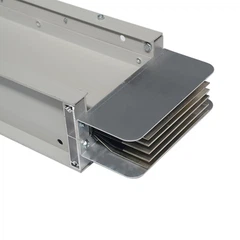
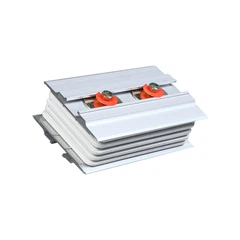
Nature has these really efficient structures that engineers look to for ideas in technology. Like, the honeycomb with its stable hexagonal setup, a team in research and development took that and made something similar for aluminum alloy shells in compact busways. They went with a porous, lightweight design, and it led to a big improvement in how heat gets dissipated.
The team ran some comparative analyses on different heat dissipation designs using computational fluid dynamics simulations, or CFD. From what they found, under natural convection, this bionic structure beats the traditional corrugated fin by about 18 percent in efficiency. Then in actual operation tests at rated current, the busway with the new setup had a temperature rise that was 5K to 8K lower compared to regular products. It seems like that makes a noticeable difference in keeping things cooler.
Improving heat dissipation for busways while they run is what they focused on most for this innovation. The honeycomb-like porous structure gives a bigger surface area for heat to escape, and the way the pores are arranged creates these air convection channels that help move heat away quickly. On top of that, while keeping the heat performance solid, it cuts the shell weight down by 15 percent, so its lighter overall.
This kind of thing shows how structural optimization and thermal management can cross over into the busway field successfully. It boosts the product performance, and sort of opens up new ways for the industry to get better energy efficiency just by innovating the structure. I think that part about the air channels is key, but it might be oversimplifying how exactly it all connects. Anyway, the lightweight aspect stands out too, especially since weight matters in these setups.
Send Inquiry