

What is the voltage drop of air - insulated bus duct?
Aug 01, 2025
Leave a message
Hey there! As a supplier of air-insulated bus ducts, I often get asked about the voltage drop of these nifty electrical components. So, let's dive right in and chat about what voltage drop in air-insulated bus ducts is all about.
First off, what's voltage drop? Well, in simple terms, it's the decrease in voltage that occurs as electricity flows through a conductor. In the case of air-insulated bus ducts, which are used to distribute electrical power in buildings, factories, and other industrial settings, voltage drop can have a significant impact on the performance of the electrical system.
Think of it like water flowing through a pipe. If the pipe is long or has a small diameter, there's going to be some resistance, and the water pressure at the end of the pipe will be lower than at the beginning. Similarly, when electricity flows through a bus duct, the resistance in the conductors causes a drop in voltage.
Now, why does voltage drop matter? For starters, it can affect the efficiency of electrical equipment. If the voltage at the end of the bus duct is too low, motors might not run at their optimal speed, lights could be dimmer than they should be, and other electrical devices might not function properly. In some cases, excessive voltage drop can even lead to equipment damage or failure.
So, what factors influence the voltage drop in air-insulated bus ducts? There are a few key ones:
1. Conductor Material and Size
The material and cross-sectional area of the conductors in the bus duct play a big role. Copper and aluminum are the most commonly used materials for bus duct conductors. Copper has lower resistance than aluminum, so for the same cross-sectional area, a copper bus duct will generally have less voltage drop. And the larger the cross-sectional area of the conductor, the lower the resistance and the less voltage drop there will be.
2. Length of the Bus Duct
Just like with the water pipe analogy, the longer the bus duct, the higher the resistance and the greater the voltage drop. So, if you're installing a long run of bus duct, you'll need to take this into account and make sure the conductors are sized appropriately to minimize voltage drop.
3. Current Load
The amount of current flowing through the bus duct also affects voltage drop. The higher the current, the more resistance there will be in the conductors, and the greater the voltage drop. That's why it's important to accurately calculate the expected current load when designing an electrical system with bus ducts.
4. Temperature
The temperature of the conductors can impact their resistance. As the temperature increases, the resistance of the conductors also increases, which can lead to more voltage drop. So, proper ventilation and cooling are important to keep the temperature of the bus duct within acceptable limits.
Now, let's talk about how we can calculate the voltage drop in air-insulated bus ducts. There are a few different methods, but one of the most common is to use the following formula:


[V_d = \frac{2 \times K \times I \times L}{CM}]
Where:
- (V_d) is the voltage drop in volts
- (K) is the resistance constant (for copper, (K = 12.9) ohms-cmil/ft; for aluminum, (K = 21.2) ohms-cmil/ft)
- (I) is the current in amperes
- (L) is the length of the bus duct in feet
- (CM) is the circular mil area of the conductor
This formula gives you a rough estimate of the voltage drop. However, in real-world applications, there are other factors to consider, such as the type of load (resistive, inductive, or capacitive) and the presence of any additional resistance in connections or joints.
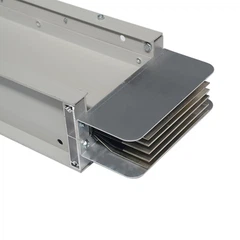
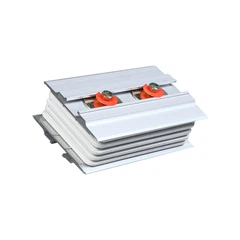
At our company, we take voltage drop seriously. We use advanced design software to accurately calculate and optimize the design of our Lighting Bus Duct, Air-Insulated Bus Duct Elbow, and Air-Insulated Bus Duct Feeder Unit. Our team of experts works closely with customers to understand their specific requirements and ensure that our bus ducts are designed to minimize voltage drop and provide reliable, efficient power distribution.
We also offer a range of high-quality bus duct products that are made from top-notch materials and manufactured to the highest standards. Whether you need a simple straight run of bus duct or a complex system with multiple elbows and feeder units, we've got you covered.
If you're in the market for air-insulated bus ducts and want to learn more about how we can help you minimize voltage drop and optimize your electrical system, don't hesitate to reach out. We're here to answer your questions, provide technical support, and work with you to find the best solution for your needs.
In conclusion, voltage drop is an important consideration when it comes to air-insulated bus ducts. By understanding the factors that influence it and taking the necessary steps to minimize it, you can ensure the efficient and reliable operation of your electrical system. So, if you have any questions or need help with your bus duct project, give us a shout. We're ready to assist you!
References
- Electrical Power Distribution Handbook, by Terry L. Schneider
- National Electrical Code (NEC), NFPA 70
That's all for now. I hope this blog post has been helpful in explaining what voltage drop in air-insulated bus ducts is and why it matters. If you have any more questions or want to discuss your bus duct requirements, feel free to get in touch. Looking forward to hearing from you!
Send Inquiry