

What is the thermal expansion coefficient of a copper bus duct?
Sep 25, 2025
Leave a message
As a supplier of copper bus ducts, I often encounter various technical inquiries from customers. One of the most frequently asked questions is about the thermal expansion coefficient of a copper bus duct. In this blog post, I will delve into this topic, explaining what the thermal expansion coefficient is, why it matters for copper bus ducts, and how it impacts the performance and installation of these crucial electrical components.
Understanding the Thermal Expansion Coefficient
The thermal expansion coefficient is a measure of how much a material expands or contracts when its temperature changes. It is defined as the fractional change in length or volume per unit change in temperature. For linear expansion, the coefficient of linear thermal expansion (α) is typically used, which is expressed in units of per degree Celsius (°C⁻¹) or per kelvin (K⁻¹).
Mathematically, the linear expansion of a material can be calculated using the following formula:
ΔL = α * L₀ * ΔT
Where:
- ΔL is the change in length
- α is the coefficient of linear thermal expansion
- L₀ is the original length
- ΔT is the change in temperature
Thermal Expansion Coefficient of Copper
Copper is a widely used material in bus ducts due to its excellent electrical conductivity, high thermal conductivity, and good corrosion resistance. The coefficient of linear thermal expansion for copper is approximately 16.5 x 10⁻⁶ °C⁻¹ at room temperature (around 20°C). This means that for every 1°C increase in temperature, a copper bus duct will expand by 16.5 millionths of its original length.
For example, if we have a copper bus duct that is 10 meters long and the temperature increases by 50°C, the change in length can be calculated as follows:
ΔL = α * L₀ * ΔT
ΔL = 16.5 x 10⁻⁶ °C⁻¹ * 10 m * 50°C
ΔL = 0.00825 m or 8.25 mm
This expansion may seem small, but in large-scale electrical systems where bus ducts can be several meters long and temperature variations can be significant, it can have a substantial impact on the performance and integrity of the system.
Importance of Thermal Expansion in Copper Bus Ducts
1. Mechanical Stress
When a copper bus duct expands or contracts due to temperature changes, it can create mechanical stress on the bus duct itself and its supporting structures. If the expansion is not properly accommodated, it can lead to bending, warping, or even damage to the bus duct. This can compromise the electrical connection, increase the risk of short circuits, and reduce the overall reliability of the electrical system.
2. Electrical Performance
Thermal expansion can also affect the electrical performance of the bus duct. As the bus duct expands, the distance between the conductors may change, which can alter the impedance and capacitance of the system. This can lead to voltage drops, power losses, and electromagnetic interference (EMI), all of which can have a negative impact on the efficiency and stability of the electrical system.
3. Installation and Maintenance
Proper installation and maintenance of copper bus ducts must take into account the thermal expansion characteristics of the material. Expansion joints are often used to allow for the expansion and contraction of the bus duct without causing damage. These joints are designed to absorb the thermal movement and maintain the electrical continuity of the system. Regular inspections and maintenance are also necessary to ensure that the expansion joints are functioning properly and that there are no signs of excessive stress or damage.
Our Solutions for Thermal Expansion in Copper Bus Ducts
At our company, we understand the importance of addressing thermal expansion in copper bus ducts. That's why we offer a range of high-quality products and solutions designed to minimize the impact of thermal expansion and ensure the reliable operation of your electrical system.
1. New Generation Sandwich Busduct
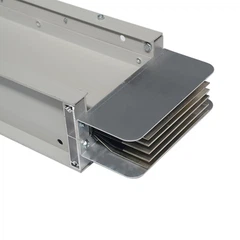
Our New Generation Sandwich Busduct is designed with advanced materials and construction techniques to provide excellent thermal performance and mechanical stability. The bus duct features a unique sandwich structure that helps to distribute the thermal stress evenly and reduce the risk of deformation. It also incorporates expansion joints that are specifically designed to accommodate the thermal expansion of the copper conductors.
2. Busway Vertical Elbow
The Busway Vertical Elbow is another important component in our product line. It is designed to provide a smooth and reliable connection between vertical and horizontal bus ducts, while also allowing for the thermal expansion and contraction of the system. The elbow is made of high-quality copper and is engineered to withstand the mechanical stress and electrical loads associated with thermal expansion.
3. Bus Duct Tap Off Unit
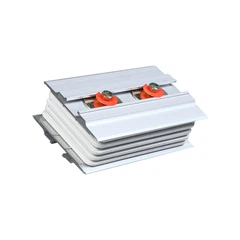
Our Bus Duct Tap Off Unit is designed to provide a convenient and safe way to tap power from the bus duct. It is equipped with expansion joints and other features to ensure that it can accommodate the thermal expansion of the bus duct without affecting the electrical performance or reliability of the tap off unit.


Contact Us for Your Copper Bus Duct Needs
If you are looking for high-quality copper bus ducts that can effectively handle thermal expansion and provide reliable electrical performance, look no further. Our team of experts is ready to assist you in selecting the right products for your specific application and to provide you with the technical support and guidance you need.
Whether you are designing a new electrical system or upgrading an existing one, we can help you find the best solutions to meet your requirements. Contact us today to start a conversation about your copper bus duct needs and to explore how our products can benefit your project.
References
- Incropera, F. P., DeWitt, D. P., Bergman, T. L., & Lavine, A. S. (2007). Fundamentals of Heat and Mass Transfer. John Wiley & Sons.
- ASHRAE Handbook: Fundamentals. (2017). American Society of Heating, Refrigerating and Air-Conditioning Engineers.
- National Electrical Code (NEC). (2020). National Fire Protection Association.
Send Inquiry