

What is the temperature rise of Air Insulated Busbar?
Feb 12, 2026
Leave a message
Hey there! As a supplier of Air Insulated Busbars, I often get asked about the temperature rise of these nifty electrical components. So, I thought I'd take a deep dive into this topic and share what I've learned over the years.


First off, let's understand what air-insulated busbars are. They're a key part of electrical distribution systems, used to carry and distribute electrical power. Unlike some other systems, air-insulated busbars use air as the insulating medium. This makes them relatively simple in design and cost-effective, which is why they're so popular in a wide range of applications, from commercial buildings to industrial plants.
Now, onto the main question: what's the temperature rise of air-insulated busbars? Temperature rise is a crucial factor when it comes to the performance and safety of busbars. Simply put, it's the increase in temperature of the busbar above the ambient (surrounding) temperature when it's carrying an electrical current.
Several factors can influence the temperature rise of air-insulated busbars. One of the most significant factors is the amount of current flowing through the busbar. As you might expect, the more current, the higher the temperature rise. This is because electrical current generates heat as it passes through the conductors of the busbar. The resistance of the conductors causes some of the electrical energy to be converted into heat energy.
Another important factor is the size and design of the busbar. A busbar with a larger cross-sectional area can carry more current without experiencing as high a temperature rise. This is because a larger area provides more room for the current to flow, reducing the resistance and thus the heat generated. Additionally, the design of the busbar, such as the spacing between conductors and the presence of cooling channels, can also affect how well it dissipates heat.
The ambient temperature also plays a role. If the surrounding environment is already hot, the busbar will have a harder time dissipating heat, leading to a higher temperature rise. That's why it's important to consider the operating environment when selecting and installing air-insulated busbars.
So, how do we measure the temperature rise of air-insulated busbars? Well, there are a few methods. One common way is to use temperature sensors placed on the busbar conductors. These sensors can directly measure the temperature and provide real-time data. Another method is to use infrared thermography, which allows us to visualize the temperature distribution across the busbar without making direct contact.
Why is it important to monitor the temperature rise of air-insulated busbars? For starters, excessive temperature rise can lead to a decrease in the performance of the busbar. High temperatures can cause the insulation material to degrade over time, increasing the risk of electrical faults and short circuits. Additionally, prolonged exposure to high temperatures can also reduce the lifespan of the busbar, leading to costly replacements.
To keep the temperature rise within acceptable limits, there are several things we can do. One option is to ensure proper ventilation around the busbar. Good ventilation helps to carry away the heat generated by the busbar, keeping it cool. Another option is to use a busbar with a higher current rating. This allows the busbar to handle more current without overheating.
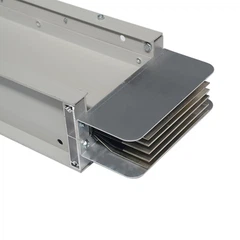
Now, I'd like to introduce you to some of our products. We offer a variety of air-insulated busbar solutions, including the 3-Phase Air-Insulated Bus Duct. This product is designed to provide reliable and efficient power distribution in three-phase electrical systems. It's built with high-quality materials and advanced manufacturing techniques to ensure low temperature rise and long-term performance.
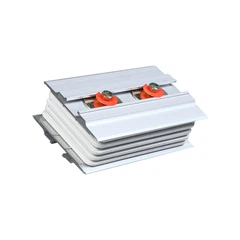
We also have the Air-Insulated Busway Tap Off Unit. This unit allows you to easily connect electrical loads to the busbar system. It's designed to be safe and easy to install, with built-in features to help control temperature rise.
And for applications where you need to change the direction of the busbar, we offer the Air-Insulated Bus Duct Elbow. This elbow is engineered to minimize temperature rise while providing a smooth transition for the electrical current.
If you're in the market for air-insulated busbars or have any questions about temperature rise or our products, feel free to reach out. We're here to help you find the right solution for your electrical distribution needs. Whether you're a small business owner or a large industrial facility, we've got the expertise and products to support you.
In conclusion, understanding the temperature rise of air-insulated busbars is essential for ensuring their safe and efficient operation. By considering factors like current, size, design, and ambient temperature, and taking appropriate measures to control temperature rise, you can extend the lifespan of your busbars and avoid costly electrical problems. So, don't hesitate to contact us if you want to learn more about our air-insulated busbar solutions and how they can meet your specific requirements.
References
- Electrical Power Distribution Handbook
- Standards for Air Insulated Busbars by relevant industry organizations
Send Inquiry