

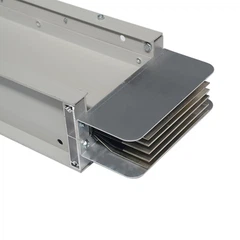
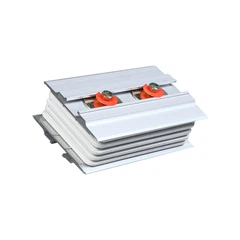
What is the heat dissipation performance of Rising Mains Bus Duct?
Jul 14, 2026
Leave a message
As a supplier specializing in Rising Mains Bus Duct, I often encounter inquiries about its heat dissipation performance. In this blog, I will delve into the intricacies of the heat dissipation performance of Rising Mains Bus Duct, exploring the factors that influence it, the methods used to enhance it, and its significance in electrical distribution systems.
Understanding Rising Mains Bus Duct
Before we dive into the heat dissipation performance, let's briefly understand what Rising Mains Bus Duct is. Rising Mains Bus Duct is a crucial component in electrical distribution systems, especially in high - rise buildings and large industrial facilities. It is used to transmit electrical power vertically from one floor to another or from a power source to different levels of a building.


There are different types of bus ducts available in the market, such as Feeder Bus Duct, Phase Segregated Bus Duct, and New Generation Sandwich Busduct. Each type has its own unique features and applications, but they all share the common goal of efficient power transmission.
Factors Affecting Heat Dissipation Performance
- Current Carrying Capacity
The amount of current flowing through the bus duct is a primary factor affecting heat generation and dissipation. Higher currents result in more resistive heating within the conductors. According to Joule's law, the power dissipated as heat (P) is given by the formula (P = I^{2}R), where (I) is the current and (R) is the resistance of the conductors. As the current increases, the heat generated increases exponentially. Therefore, bus ducts with higher current - carrying capacities need to be designed with better heat dissipation mechanisms. - Conductor Material
The material of the conductors in the bus duct plays a significant role in heat dissipation. Copper and aluminum are the most commonly used conductor materials. Copper has a lower resistivity compared to aluminum, which means that for the same current and cross - sectional area, a copper conductor will generate less heat. Additionally, copper has better thermal conductivity, allowing it to transfer heat more efficiently to the surrounding environment or to the heat dissipation components of the bus duct. - Insulation Material
The insulation material used in the bus duct not only provides electrical insulation but also affects heat dissipation. Insulation materials with low thermal resistance allow heat to transfer more easily from the conductors to the outer surface of the bus duct. However, the insulation material must also meet safety and electrical performance requirements. Some modern insulation materials are designed to have a good balance between electrical insulation properties and thermal conductivity. - Enclosure Design
The design of the bus duct enclosure has a major impact on heat dissipation. A well - designed enclosure should allow for proper air circulation around the conductors. For example, enclosures with ventilation slots or fins can increase the surface area available for heat transfer and promote natural convection. Forced ventilation systems, such as fans, can also be incorporated into the enclosure design to enhance the heat dissipation rate.
Heat Dissipation Mechanisms
- Conduction
Conduction is the transfer of heat through a solid material. In a Rising Mains Bus Duct, heat is conducted from the conductors to the enclosure through the insulation material and any contact points between the conductors and the enclosure. The thermal conductivity of the materials involved, such as the conductors, insulation, and enclosure, determines the efficiency of heat conduction. For example, using a highly conductive enclosure material can help in quickly transferring heat from the conductors to the outside environment. - Convection
Convection is the transfer of heat by the movement of a fluid (usually air). Natural convection occurs when the heated air around the bus duct rises due to its lower density, creating a flow of air that carries heat away from the bus duct. Forced convection can be achieved by using fans to blow air over the bus duct, increasing the rate of heat transfer. The design of the bus duct enclosure, including the presence of ventilation holes and the shape of the enclosure, can significantly affect the convection process. - Radiation
Radiation is the transfer of heat in the form of electromagnetic waves. All objects emit thermal radiation, and the amount of radiation depends on the temperature and the emissivity of the surface. In a bus duct, the conductors and the enclosure radiate heat to the surrounding environment. The surface finish of the enclosure can affect its emissivity. A dark - colored, rough - textured surface has a higher emissivity and can radiate heat more effectively than a shiny, smooth surface.
Importance of Good Heat Dissipation Performance
- Safety
Excessive heat in a bus duct can pose serious safety risks. High temperatures can cause the insulation material to degrade, leading to electrical breakdown and short - circuits. In extreme cases, it can even lead to fires. By ensuring good heat dissipation performance, the risk of these safety hazards is significantly reduced. - Efficiency
Heat generation in a bus duct represents a loss of electrical energy. When a bus duct has poor heat dissipation, more energy is wasted as heat, reducing the overall efficiency of the electrical distribution system. By improving heat dissipation, the energy losses are minimized, resulting in a more efficient system. - Longevity
High temperatures can accelerate the aging process of the components in a bus duct. The conductors may experience thermal expansion and contraction, which can lead to mechanical stress and eventually damage. The insulation material may also become brittle and lose its insulating properties over time. Good heat dissipation helps to maintain a lower operating temperature, extending the lifespan of the bus duct and reducing the need for frequent replacements.
Enhancing Heat Dissipation Performance in Rising Mains Bus Duct
- Optimal Conductor Sizing
Properly sizing the conductors based on the expected current load is crucial. Oversized conductors can be more expensive, but undersized conductors will generate excessive heat. By accurately calculating the current requirements and selecting the appropriate conductor cross - sectional area, the heat generation can be minimized. - Advanced Insulation Materials
Using insulation materials with high thermal conductivity and good electrical insulation properties can improve heat transfer from the conductors to the enclosure. Some manufacturers are developing new insulation materials that are specifically designed to enhance heat dissipation while maintaining safety standards. - Innovative Enclosure Designs
Enclosures can be designed with features such as internal baffles to direct air flow, external fins to increase the surface area for heat transfer, and ventilation systems that are optimized for the specific application. Forced - air cooling systems can also be integrated into the enclosure design for applications where natural convection is not sufficient.
Conclusion
The heat dissipation performance of Rising Mains Bus Duct is a critical factor in ensuring the safe, efficient, and long - term operation of electrical distribution systems. As a supplier, we are constantly working on improving the heat dissipation capabilities of our products through the use of advanced materials, innovative designs, and rigorous testing.
If you are in the market for Rising Mains Bus Duct and are concerned about heat dissipation performance, we are here to help. Our team of experts can provide you with detailed information about our products, their heat dissipation features, and how they can meet your specific requirements. Contact us for a consultation and let's discuss how we can provide the best bus duct solution for your project.
References
- Electrical Power Distribution Handbook, by Dugan, McGranaghan, and Beaty.
- Handbook of Electrical Engineering, by H. Cotton.
- IEEE Standards for Power Distribution Bus Ducts.
Send Inquiry