

What are the quality standards for Tinned Copper Busbar?
Jun 23, 2026
Leave a message
As a supplier of Tinned Copper Busbar, I am often asked about the quality standards for this essential electrical component. Tinned copper busbars play a crucial role in electrical systems, providing a reliable and efficient means of conducting electricity. In this blog post, I will delve into the key quality standards that ensure the performance, safety, and durability of tinned copper busbars.


Material Quality
The foundation of a high - quality tinned copper busbar lies in the quality of the copper base material. Copper is chosen for its excellent electrical conductivity, which is second only to silver. The copper used should have a high purity level, typically 99.9% or higher. High - purity copper ensures low electrical resistance, minimizing power losses and heat generation during operation.
In addition to purity, the copper should have good mechanical properties. It should be malleable enough to be formed into the required shapes without cracking or breaking. This is important as busbars often need to be bent, cut, and drilled to fit specific electrical installations.
Tin Plating Quality
The tin plating on the copper busbar serves several important functions. Firstly, it provides corrosion resistance. Copper can oxidize over time, especially in humid or corrosive environments, which can increase the electrical resistance of the busbar. Tin acts as a protective layer, preventing the copper from coming into contact with oxygen and other corrosive agents.
The thickness of the tin plating is a critical factor. A proper tin plating thickness ensures long - term corrosion protection. Industry standards typically recommend a minimum tin plating thickness of around 5 - 10 microns. However, for more demanding applications or harsh environments, a thicker plating may be required.
The tin plating should also be uniform across the entire surface of the busbar. Any areas with thin or uneven plating can be susceptible to corrosion, which can lead to premature failure of the busbar. To achieve a uniform plating, advanced plating techniques such as electroplating are commonly used.
Dimensional Accuracy
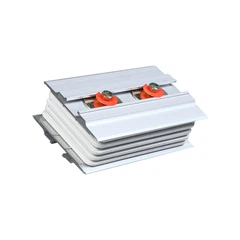
Precise dimensional accuracy is essential for tinned copper busbars. The busbars need to fit precisely into electrical enclosures and connect with other components such as Busway Connector Insulation Plate. Any deviation from the specified dimensions can lead to installation problems, poor electrical connections, and potential safety hazards.
The width, thickness, and length of the busbar should be within the tolerance limits specified by the relevant standards. For example, in some applications, the width tolerance may be ± 0.1 mm, and the thickness tolerance may be ± 0.05 mm. These tight tolerances ensure a proper fit and reliable electrical performance.
Electrical Performance
The electrical performance of tinned copper busbars is a key quality indicator. The busbar should have low electrical resistance, which is directly related to its conductivity. Low resistance ensures that the busbar can carry high currents without excessive heat generation.
The current - carrying capacity of the busbar is another important factor. It is determined by factors such as the cross - sectional area of the busbar, the material properties, and the ambient temperature. Manufacturers need to provide accurate current - carrying capacity ratings based on standardized testing methods.
Surface Finish
A smooth and clean surface finish is important for tinned copper busbars. A rough surface can increase the contact resistance when the busbar is connected to other components, leading to increased heat generation. Additionally, a clean surface free of contaminants such as dirt, oil, or oxidation ensures a good electrical connection.
The surface finish should also be free of any scratches or dents. Scratches can damage the tin plating and expose the underlying copper to corrosion.
Mechanical Strength
Tinned copper busbars need to have sufficient mechanical strength to withstand the stresses and vibrations encountered during installation and operation. They should be able to resist bending, torsion, and impact without deforming or breaking.
The mechanical strength is related to the material properties of the copper and the thickness of the busbar. Thicker busbars generally have higher mechanical strength, but they also need to be balanced with the electrical requirements and installation space.
Compliance with Standards
Tinned copper busbars should comply with relevant national and international standards. For example, in the United States, the busbars may need to comply with standards set by the National Electrical Manufacturers Association (NEMA) or the Institute of Electrical and Electronics Engineers (IEEE). In Europe, standards such as those from the International Electrotechnical Commission (IEC) are commonly followed.
Compliance with these standards ensures that the busbars meet the required safety and performance criteria. It also provides assurance to customers that the products they are purchasing are of high quality.
Testing and Certification
To ensure that the tinned copper busbars meet the quality standards, rigorous testing is required. Testing may include electrical conductivity tests, corrosion resistance tests, and mechanical strength tests.
Certification from independent testing laboratories can provide additional confidence in the quality of the busbars. For example, a busbar that has been certified by a recognized testing organization such as Underwriters Laboratories (UL) indicates that it has met specific safety and performance requirements.
Our Commitment as a Supplier
As a supplier of Tinned Copper Busbar, we are committed to providing high - quality products that meet or exceed the industry standards. We source the highest - quality copper materials and use advanced manufacturing processes to ensure the best possible performance of our busbars.
Our quality control team conducts thorough inspections at every stage of the manufacturing process, from raw material inspection to final product testing. We also offer a range of tinned copper busbars in different sizes and specifications to meet the diverse needs of our customers.
If you are in the market for tinned copper busbars or other related products such as Tin - Plated Aluminum Busbar, we invite you to contact us for a detailed discussion. Our experienced sales team can provide you with all the information you need and assist you in selecting the right products for your specific applications. We look forward to the opportunity to work with you and contribute to the success of your electrical projects.
References
- National Electrical Manufacturers Association (NEMA) standards.
- Institute of Electrical and Electronics Engineers (IEEE) standards.
- International Electrotechnical Commission (IEC) standards.
- Underwriters Laboratories (UL) certification guidelines.
Send Inquiry