

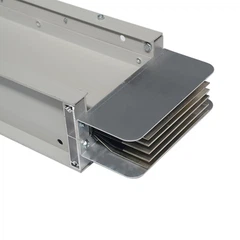
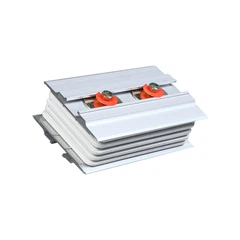
Can a busway connector be used in a corrosive environment?
Dec 25, 2025
Leave a message
In the realm of electrical power distribution, the choice of components is crucial, especially when considering the environmental conditions in which they will operate. One such component that often faces scrutiny in challenging environments is the busway connector. As a leading supplier of Busway Connector, I am frequently asked whether our busway connectors can be used in a corrosive environment. In this blog post, I will delve into this question, exploring the factors at play and the solutions we offer to ensure reliable performance even in harsh conditions.
Understanding Corrosive Environments
Corrosive environments are characterized by the presence of substances that can chemically react with materials, leading to degradation over time. These substances can include moisture, salts, acids, alkalis, and various industrial chemicals. Common examples of corrosive environments include coastal areas with high salt content in the air, chemical processing plants, wastewater treatment facilities, and food processing plants where cleaning agents and acids are used regularly.
The effects of corrosion on electrical components can be severe. It can lead to increased resistance, which in turn causes overheating, energy losses, and potential equipment failure. Corrosion can also weaken the mechanical integrity of connectors, leading to loose connections, arcing, and even electrical fires. Therefore, it is essential to select components that are resistant to corrosion when operating in such environments.
Challenges for Busway Connectors in Corrosive Environments
Busway connectors are designed to provide a reliable electrical connection between busbars, which are used to distribute electrical power within a building or industrial facility. In a corrosive environment, several challenges can arise for busway connectors:
1. Material Compatibility
The materials used in busway connectors must be able to withstand the corrosive agents present in the environment. For example, in a saltwater environment, metals such as steel and aluminum can be prone to corrosion. Copper is generally more resistant to corrosion than aluminum, but it can still be affected by certain chemicals. Therefore, the choice of conductor material is crucial in determining the connector's performance in a corrosive environment.
2. Surface Protection
Even if the base material of the connector is corrosion-resistant, the surface can still be vulnerable to attack. Oxidation, for example, can occur when metals are exposed to air and moisture, forming a layer of metal oxide that can increase resistance and reduce conductivity. To prevent this, connectors may be coated with protective materials such as tin, nickel, or zinc. However, these coatings must be carefully applied and maintained to ensure their effectiveness.
3. Sealing and Enclosure
Busway connectors are often installed in an open or semi-open environment, which means they are exposed to the elements. Therefore, it is important to provide adequate sealing and enclosure to protect the connectors from moisture, dust, and other contaminants. A well-sealed enclosure can also prevent the ingress of corrosive gases and liquids, reducing the risk of corrosion.
4. Maintenance and Inspection
Regular maintenance and inspection are essential to ensure the continued performance of busway connectors in a corrosive environment. This includes cleaning the connectors to remove any dirt, debris, or corrosion products, checking for loose connections, and replacing any damaged components. However, maintenance can be challenging in a corrosive environment, as the cleaning agents used may also be corrosive. Therefore, it is important to use appropriate cleaning methods and materials.
Solutions for Busway Connectors in Corrosive Environments
At our company, we understand the challenges faced by busway connectors in corrosive environments, and we have developed several solutions to address these issues:
1. Corrosion-Resistant Materials
We offer busway connectors made from a variety of corrosion-resistant materials, including Copper-Clad Aluminum Conductor and Tin-Plated Aluminum Busbar. Copper-clad aluminum conductors combine the conductivity of copper with the lightweight and cost-effectiveness of aluminum, while tin-plated aluminum busbars provide a protective layer that resists corrosion. These materials are carefully selected and tested to ensure they meet the highest standards of performance and reliability in corrosive environments.
2. Advanced Coating Technologies
In addition to using corrosion-resistant materials, we also apply advanced coating technologies to our busway connectors to provide an extra layer of protection. For example, our connectors may be coated with a thin layer of tin or nickel, which can prevent oxidation and reduce the risk of corrosion. These coatings are applied using a precise and controlled process to ensure uniform coverage and adhesion.
3. Sealed Enclosures
To protect our busway connectors from the elements, we offer a range of sealed enclosures that are designed to prevent the ingress of moisture, dust, and other contaminants. These enclosures are made from high-quality materials such as stainless steel or fiberglass, which are resistant to corrosion and can withstand harsh environmental conditions. The enclosures are also designed to be easy to install and maintain, with features such as removable panels and access ports for inspection and cleaning.
4. Customized Solutions
We understand that every application is unique, and we offer customized solutions to meet the specific needs of our customers. Our team of engineers and technicians can work with you to design and develop busway connectors that are tailored to your environment and requirements. Whether you need a connector for a coastal power plant, a chemical processing facility, or a food processing plant, we can provide a solution that is reliable, efficient, and cost-effective.
Case Studies
To illustrate the effectiveness of our solutions, let's look at a few case studies:


Case Study 1: Coastal Power Plant
A coastal power plant was experiencing problems with corrosion in its busway connectors. The saltwater environment was causing the connectors to corrode, leading to increased resistance, overheating, and frequent equipment failures. The plant management contacted us for a solution, and we recommended our copper-clad aluminum conductors and sealed enclosures. We also provided a maintenance plan to ensure the connectors were regularly inspected and cleaned. After the installation of our products, the plant reported a significant reduction in corrosion and equipment failures, resulting in improved reliability and reduced maintenance costs.
Case Study 2: Chemical Processing Facility
A chemical processing facility was using busway connectors that were not designed for a corrosive environment. The connectors were made from aluminum, which was prone to corrosion in the presence of the chemicals used in the facility. The facility management was experiencing frequent downtime due to loose connections and arcing, which was affecting production and safety. We recommended our tin-plated aluminum busbars and advanced coating technologies to protect the connectors from corrosion. We also provided a customized enclosure design to prevent the ingress of chemicals. After the installation of our products, the facility reported a significant improvement in the performance of its busway system, with reduced downtime and increased productivity.
Conclusion
In conclusion, busway connectors can be used in a corrosive environment, but it is essential to select the right components and take appropriate measures to protect them from corrosion. At our company, we offer a range of solutions to meet the challenges of corrosive environments, including corrosion-resistant materials, advanced coating technologies, sealed enclosures, and customized solutions. Our products are designed to provide reliable performance, efficiency, and cost-effectiveness, even in the most demanding applications.
If you are looking for a busway connector supplier that can provide high-quality products and solutions for corrosive environments, please contact us today. Our team of experts will be happy to discuss your requirements and provide you with a customized solution that meets your needs.
References
- "Corrosion of Metals in the Atmosphere" by G. S. Frankel
- "Electrical Power Distribution Systems" by J. C. Das
- "Handbook of Corrosion Engineering" by Y. S. Touloukian
Send Inquiry