

What is the rated current of Lighting Bus Duct?
Jul 23, 2026
Leave a message
Hey there! I'm a supplier of Lighting Bus Duct, and today I wanna chat about the rated current of Lighting Bus Duct.
Let's start by understanding what rated current actually means. In simple terms, the rated current of a Lighting Bus Duct is the maximum amount of electric current that the bus duct can carry continuously under specified conditions without exceeding its temperature limits and without causing any damage to its components. It's like the speed limit for a car on a highway. If you go over that limit, things can start to go wrong, and in the case of a bus duct, it could lead to overheating, insulation breakdown, or even a fire hazard.
So, how is the rated current of a Lighting Bus Duct determined? Well, there are several factors that come into play. First off, the material used in the conductors of the bus duct is crucial. Copper and aluminum are the most common materials for conductors. Copper has a higher conductivity than aluminum, which means it can carry more current for the same cross - sectional area. So, a bus duct with copper conductors will generally have a higher rated current compared to one with aluminum conductors of the same size.
The cross - sectional area of the conductors is another important factor. The larger the cross - sectional area, the more current the conductors can carry. It's like a water pipe; a wider pipe can carry more water than a narrow one. So, if you need a bus duct to carry a high current, you'll want conductors with a larger cross - sectional area.
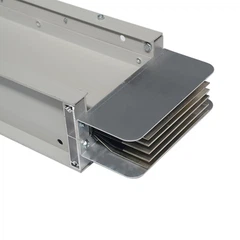
The design of the bus duct also affects its rated current. A well - designed bus duct will have proper ventilation and cooling mechanisms. This helps to dissipate the heat generated by the current flowing through the conductors. For example, an air - insulated bus duct, such as the 3 - Phase Air - Insulated Bus Duct, uses air as an insulating medium and also allows for better heat dissipation compared to some other types of bus ducts. The air can circulate around the conductors, carrying away the heat and keeping the temperature within safe limits.
The ambient temperature where the bus duct is installed is yet another factor. If the bus duct is installed in a hot environment, it will have a lower rated current because the conductors will already be starting at a higher temperature. The heat generated by the current will then cause the temperature to rise more quickly, and it's easier to reach the maximum allowable temperature. On the other hand, if the bus duct is installed in a cooler environment, it can carry more current as it has more "room" for the temperature to rise.
Now, let's talk about some applications and how the rated current plays a role. In a lighting system, the rated current of the Lighting Bus Duct needs to be carefully selected based on the total power requirements of the lighting fixtures. For example, in a large commercial building with hundreds of LED lights, you need a bus duct with a high enough rated current to supply power to all the lights without any issues. If the rated current is too low, the lights may dim or flicker, and in extreme cases, the bus duct could overheat.
In industrial settings, where there are often high - power lighting systems and other electrical loads, the choice of the rated current of the bus duct is even more critical. Industrial facilities may also have more demanding operating conditions, such as higher ambient temperatures or more vibrations. In these cases, special types of bus ducts, like the Air - Insulated Bus Duct Elbow which can be used to change the direction of the bus duct run, need to be selected with the appropriate rated current to ensure reliable operation.
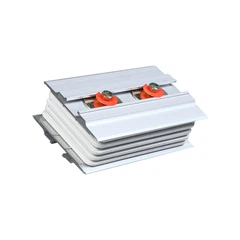
Another important aspect is the tap - off units. The Air - Insulated Busway Tap Off Unit allows you to connect individual lighting fixtures or other electrical loads to the bus duct. The rated current of the tap - off unit also needs to be compatible with the rated current of the bus duct. If the tap - off unit has a lower rated current than the bus duct, it could become a bottleneck and cause problems. On the other hand, if it has a much higher rated current than necessary, it may be more expensive and not cost - effective.
When it comes to choosing the right rated current for your Lighting Bus Duct, it's not always a straightforward decision. You need to consider all the factors I've mentioned above, as well as your specific application requirements. It's also a good idea to consult with an electrical engineer or an expert in the field. They can help you calculate the total power requirements of your lighting system and select the appropriate bus duct with the right rated current.


As a Lighting Bus Duct supplier, I've seen firsthand how important it is to get the rated current right. We offer a wide range of Lighting Bus Ducts with different rated currents to meet the needs of various applications. Whether you're working on a small residential project or a large industrial complex, we have the right solution for you.
If you're in the market for Lighting Bus Ducts and want to learn more about the rated current and which product is best for your needs, I'd love to have a chat with you. We can discuss your project requirements, go over the technical details, and help you make an informed decision. Don't hesitate to reach out and start the conversation about your next lighting project.
References
- Electrical Engineering textbooks on power distribution systems
- Manufacturer's specifications for Lighting Bus Ducts
Send Inquiry