

Can flexible copper busbar be used in DC circuits?
Nov 10, 2025
Leave a message
Flexible copper busbars have emerged as a versatile and reliable solution in various electrical applications. As a supplier of flexible copper busbars, I often encounter questions regarding their suitability for DC circuits. In this blog post, I will delve into the technical aspects and practical considerations to answer the question: Can flexible copper busbar be used in DC circuits?
Understanding Flexible Copper Busbars
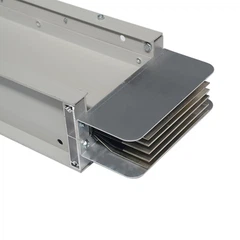
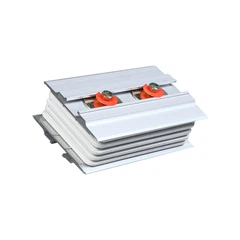
Before we explore their use in DC circuits, let's briefly understand what flexible copper busbars are. A flexible copper busbar is made of multiple layers of thin copper strips laminated together. This construction gives it the flexibility to bend and twist, making it suitable for applications where rigid busbars would be impractical. The high conductivity of copper ensures efficient transmission of electrical current, and the flexibility allows for easy installation in complex electrical systems.
Electrical Properties of Copper in DC Circuits
Copper is well - known for its excellent electrical conductivity. In DC circuits, the flow of electric current is unidirectional. Copper's low resistivity means that it offers minimal resistance to the flow of direct current. This results in less power loss in the form of heat, which is a crucial factor in DC power systems where energy efficiency is highly valued.
The resistivity of copper at room temperature is approximately (1.72\times10^{-8}\Omega\cdot m). This low resistivity allows flexible copper busbars to carry large amounts of DC current with relatively low voltage drops. For example, in a DC power distribution system, a flexible copper busbar can efficiently transfer power from a power source to various loads without significant power losses.
Advantages of Using Flexible Copper Busbars in DC Circuits
1. Easy Installation
One of the significant advantages of flexible copper busbars in DC circuits is their ease of installation. In many DC applications, such as battery banks and solar power systems, the layout of the electrical components can be complex. Flexible copper busbars can be easily routed around obstacles, bent to fit tight spaces, and connected to different components without the need for complex mechanical supports. This reduces installation time and labor costs.
2. Vibration Resistance
DC circuits in some applications, such as electric vehicles and industrial machinery, are subject to vibrations. Flexible copper busbars can better withstand vibrations compared to rigid busbars. The flexibility of the busbar allows it to absorb and dissipate the energy generated by vibrations, reducing the risk of mechanical failure and loose connections. This enhances the reliability and longevity of the DC electrical system.
3. Customizability
Flexible copper busbars can be easily customized to meet the specific requirements of DC circuits. They can be cut to different lengths, have different cross - sectional areas, and be designed with various connection configurations. For example, in a DC power supply for a data center, the flexible copper busbars can be customized to match the power requirements and physical layout of the server racks.
Considerations for Using Flexible Copper Busbars in DC Circuits
1. Current - Carrying Capacity
When using flexible copper busbars in DC circuits, it is essential to consider their current - carrying capacity. The current - carrying capacity depends on factors such as the cross - sectional area of the busbar, the ambient temperature, and the cooling conditions. It is crucial to select a flexible copper busbar with a sufficient current - carrying capacity to avoid overheating and potential damage to the electrical system.


2. Insulation
Proper insulation is necessary for flexible copper busbars in DC circuits, especially in high - voltage applications. Insulation helps prevent electrical short - circuits and protects personnel from electric shock. There are various types of insulation materials available, such as PVC, silicone, and fiberglass. The choice of insulation material depends on factors such as the operating temperature, voltage level, and environmental conditions of the DC circuit.
3. Connection Integrity
In DC circuits, the integrity of the connections between the flexible copper busbar and other electrical components is critical. Loose or poorly made connections can lead to increased resistance, which in turn can cause overheating and power losses. It is important to use proper connection methods, such as crimping or soldering, and to ensure that the connections are tightened to the appropriate torque.
Comparison with Other Conductors in DC Circuits
1. Copper - Clad Aluminum Conductor
Copper - Clad Aluminum Conductor is another option for DC circuits. While it combines the conductivity of copper on the outer layer with the lightweight property of aluminum in the core, it has some limitations compared to flexible copper busbars. Copper - clad aluminum conductors may have higher contact resistance at the joints, which can lead to increased power losses in DC circuits. Additionally, the flexibility of copper - clad aluminum conductors is generally lower than that of flexible copper busbars, making them less suitable for applications with complex layouts.
2. Aluminum Busbars
Aluminum busbars are also used in some DC applications due to their lower cost and lighter weight compared to copper. However, aluminum has a higher resistivity than copper, which means that for the same current - carrying capacity, an aluminum busbar needs to have a larger cross - sectional area. This can result in a bulkier and less space - efficient design. Moreover, aluminum is more prone to oxidation, which can affect the long - term performance of the busbar in DC circuits.
Applications of Flexible Copper Busbars in DC Circuits
1. Battery Systems
In battery banks used for energy storage in renewable energy systems or electric vehicles, flexible copper busbars are widely used. They can efficiently connect multiple battery cells in series or parallel, ensuring uniform current distribution and minimizing power losses. The flexibility of the busbars allows for easy installation in the confined spaces of battery packs.
2. Solar Power Systems
Solar power systems generate DC electricity. Flexible copper busbars are used to connect solar panels to inverters and other electrical components. Their ability to be easily routed around the solar panel arrays and their high conductivity make them an ideal choice for efficient power transfer in solar power systems.
3. Industrial DC Power Distribution
In industrial settings, DC power is often used for specific equipment such as DC motors and control systems. Flexible copper busbars can be used to distribute DC power from a central power source to various loads. Their customizability and vibration resistance make them suitable for the complex and dynamic environment of industrial plants.
Conclusion
In conclusion, flexible copper busbars can indeed be used in DC circuits, and they offer several advantages over other conductors. Their high conductivity, ease of installation, vibration resistance, and customizability make them a suitable choice for a wide range of DC applications. However, it is important to consider factors such as current - carrying capacity, insulation, and connection integrity when using flexible copper busbars in DC circuits.
If you are looking for high - quality flexible copper busbars for your DC circuit applications, I invite you to contact me for more information and to discuss your specific requirements. Our team of experts can provide you with customized solutions to meet your needs.
References
- Grover, F. W. (1946). Inductance Calculations: Working Formulas and Tables. Dover Publications.
- Marki, M., & Williams, C. (2003). Microwave Circuit Design Using Linear and Nonlinear Techniques. Wiley - Interscience.
- IEEE Standard 141 - 1993 (Redline). (1993). IEEE Recommended Practice for Electric Power Distribution for Industrial Plants. IEEE.
Send Inquiry