

Application Scenario Analysis
1. High-Rise Buildings: Core Solution for Vertical Power Supply
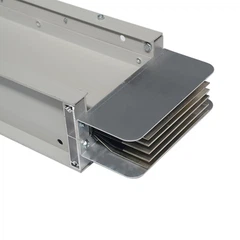
In high-rise buildings with more than 30 floors, dense-type busways become the preferred choice for vertical power distribution systems due to their high current-carrying capacity and compact structure. The copper busbar cross-sections can be flexibly configured according to load requirements, effectively reducing the space occupied in shafts compared to traditional cables. When used as main power supply trunks in high-rise office buildings, a single dense-type busway can generally meet the power and lighting needs of the entire building, and branch circuits can be flexibly arranged on each floor through plug-in boxes.
2. Data Centers: Standard for High-Load and Intelligent Power Distribution
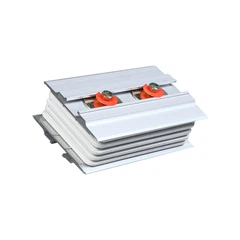
The high-density power demand of server clusters in data centers requires power distribution systems to have strong current-carrying capacity, low loss, and efficient heat dissipation. The impedance value of dense-type busways is only 1/3 that of cables, significantly reducing power loss. Meanwhile, the conductors, insulation layers, and enclosures of dense-type busways are closely fitted, demonstrating excellent heat dissipation efficiency.
3. Industrial Factories: Stable Support for High-Current Equipment
In heavy industry factories such as automobile manufacturing and metallurgy, dense-type busways can cope with the instantaneous high-current impacts of equipment like stamping machines and arc furnaces. Their dynamic and thermal stability design can also withstand the thermal effects of short-circuit currents, preventing conductor deformation. In addition, the protection grade of dense-type busways can reach IP54, enabling stable operation in dusty and oily environments, and effectively reducing maintenance requirements compared to air-type busways.
4. Hospitals and Medical Facilities: High-Reliability Power Supply
Medical equipment in critical areas of hospitals such as operating rooms and ICUs has extremely high requirements for power continuity. The low-impedance characteristics of dense-type busways can ensure the stable operation of precision instruments. Furthermore, the laminated structure of dense-type busways significantly reduces the space occupied compared to cable trays, freeing up space for medical gas pipelines or fresh air systems. The IP54 enclosure blocks the intrusion of dust and germs, and the shell can be repeatedly wiped with medical disinfectants, conforming to hospital infection control standards.
Our Construction Case Studies


Notes for Attention
The main limitation of dense-type busways lies in their higher cost, making them less economical for medium and low-load scenarios where air-type busways are more suitable. Of course, with the core advantages of "high load and high reliability", dense-type busways play an irreplaceable role in scenarios requiring centralized power supply and high-current transmission.