

Application Scenario Analysis
1. Small and Medium Industrial Factories: Cost-Effective Power Distribution
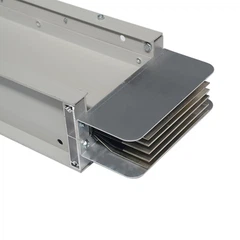
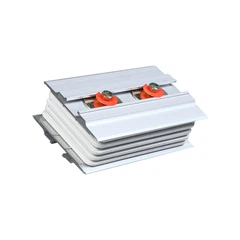
In small and medium factories for mechanical processing, electronic assembly, etc., air-type busways become the mainstream choice due to their low cost and easy maintenance. With a rated current typically ranging from 100 to 2000A, they can meet the power demands of ordinary machine tools and assembly line equipment, with initial investment lower than that of dense-type busways. Additionally, the open insulation design of air-type busways facilitates visual inspection, allowing maintenance personnel to directly observe the conductor connection status, which is suitable for small and medium enterprises with high requirements for maintenance efficiency.
2. Multi-storey Residential Buildings and Communities: Cost-effective Power Distribution Solutions
In multi-storey residential buildings and ordinary residential communities, air-type busways cover conventional power consumption scenarios such as lighting and sockets with their economic and practical characteristics. Their current-carrying capacity can meet the household distribution (household power distribution) needs of unit buildings. The aluminum alloy shell not only provides anti-corrosion performance but also aesthetic appeal, and the installation cost is lower than that of cable trays. For non-critical areas of high-rise residential buildings (such as stairwell lighting), air-type busways can also control costs while meeting safety standards.
3. Temporary Power Supply and Construction Sites: Convenient Installation and Reuse
In temporary power supply scenarios such as construction sites and exhibition venues, air-type busways have significantly better fast-installation characteristics than cables. Their modular design allows on-site assembly, and the installation time required for a single-section busway is short. Furthermore, this type of busway can be disassembled and reused—components removed after a single use can continue to be used in the next project, reducing temporary power supply costs. In scenarios such as temporary drainage pump stations for municipal projects and disaster relief resettlement sites, the rapid deployment capability of air-type busways can also meet emergency power supply needs.
Our Construction Case Studies


Notes for Attention
The main limitations of air-type busways are their lower protection rating and heat dissipation performance, which cannot compare with that of dense-type busways. They are not only unsuitable for extreme environments but also inapplicable to high current-carrying scenarios. Of course, with the core positioning of "economic flexibility", air-type busways have irreplaceable cost-performance advantages in power distribution scenarios with medium-low loads and conventional environments.