

Composites Enhance The Electrical Conductivity Efficiency Of Bus Ducts
Nov 11, 2025
Leave a message
A breakthrough in the field of materials science has opened up new possibilities for enhancing the performance of bus ducts. Through years of joint research and development, a scientific research institution has collaborated with a leading enterprise in the industry to successfully develop a graphene-reinforced copper matrix composite material. By constructing a three-dimensional graphene network inside traditional copper conductors, this material leverages graphene's excellent electrical conductivity and mechanical properties, resulting in a significant improvement in the composite's conductivity compared to pure copper, along with a qualitative enhancement in tensile strength.
The research team adopted advanced powder metallurgy technology, uniformly mixing specially treated graphene nanosheets with copper powder, and prepared dense composite billets through hot isostatic pressing (HIP) molding technology. Laboratory test data shows that while maintaining good processability, the material's softening resistance temperature is approximately 100℃ higher than that of pure copper-meaning it can maintain more stable electrical conductivity in high-temperature operating environments.
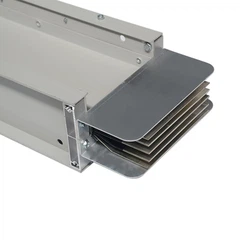
This material breakthrough implies that for transmitting the same current, the cross-sectional area of the new composite conductor can be made smaller, facilitating the lightweight and compact design of bus duct products. It is estimated that in applications with a rated current of 4000A, the use of this material can reduce the volume of bus ducts by about 10%, or effectively lower line losses and improve energy transmission efficiency under the same specifications. Currently, the material has entered the pilot scale-up phase and begun discussions with leading bus duct manufacturers to explore the feasibility of its application in high-end scenarios such as data centers and new energy industries.
Send Inquiry