

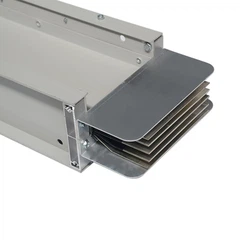
What is the rated current of air - insulated bus duct?
Sep 11, 2025
Leave a message
Hey there! As a supplier of air-insulated bus ducts, I often get asked about the rated current of these things. So, I thought I'd write this blog to share some insights on what the rated current of an air-insulated bus duct is and why it matters.
Let's start with the basics. The rated current of an air-insulated bus duct is the maximum amount of electrical current that the bus duct can safely carry under normal operating conditions. It's a crucial parameter because it determines the capacity of the bus duct to transmit electrical power. Think of it like the size of a water pipe - a bigger pipe can carry more water, and a bus duct with a higher rated current can carry more electrical current.
Now, how is the rated current determined? Well, it depends on several factors. First off, the cross-sectional area of the conductors in the bus duct plays a huge role. Just like a wider water pipe allows more water to flow through, a larger cross-sectional area of the conductors enables more electrical current to pass. The material of the conductors also matters. Copper and aluminum are commonly used because they're good conductors of electricity. Copper generally has better conductivity than aluminum, so for the same rated current, a copper conductor might have a smaller cross-sectional area compared to an aluminum one.
The ambient temperature is another important factor. Electrical conductors generate heat when current flows through them. If the ambient temperature is high, the conductors have a harder time dissipating this heat. So, in hot environments, the rated current of the bus duct might need to be derated. That means the bus duct can't carry as much current as it could in a cooler environment.
The ventilation around the bus duct also affects the rated current. Good ventilation helps in dissipating the heat generated by the conductors. If the bus duct is installed in a well-ventilated area, it can handle more current compared to a situation where it's in a confined space with poor ventilation.
When it comes to applications, different scenarios require different rated currents. For instance, in a small commercial building, a lower rated current air-insulated bus duct might be sufficient for lighting and small electrical appliances. You can check out our Lighting Bus Duct for such applications. These are designed to handle the relatively lower current demands of lighting systems.
On the other hand, in an industrial setting where there are large motors, heavy machinery, and high-power equipment, a bus duct with a much higher rated current is needed. Our 3-Phase Air-Insulated Bus Duct is built to handle the high current requirements of industrial applications. Three-phase power is commonly used in industries because it can deliver more power efficiently.
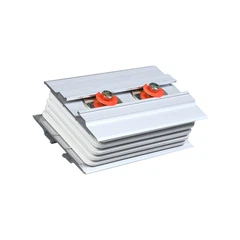
Another important aspect related to rated current is the tap-off units. Tap-off units are used to extract power from the bus duct at different points. The rated current of the tap-off unit needs to be compatible with the rated current of the bus duct. Our Air-Insulated Busway Tap Off Unit is designed to work seamlessly with our bus ducts, ensuring safe and efficient power extraction.
Now, you might be wondering how to choose the right rated current for your project. It's always a good idea to consult with an electrical engineer. They can analyze your power requirements, taking into account factors like the number and type of electrical loads, the ambient conditions, and the installation environment. They'll then be able to recommend the appropriate rated current for your air-insulated bus duct.


As a supplier, we offer a wide range of air-insulated bus ducts with different rated currents to meet various needs. Whether you're working on a small project or a large industrial installation, we've got you covered. Our products are designed and manufactured to the highest quality standards, ensuring reliability and safety.
If you're in the market for air-insulated bus ducts and want to discuss your specific requirements, we'd love to hear from you. We can provide you with detailed information about our products, help you choose the right rated current, and even offer installation and maintenance support. Don't hesitate to reach out to us for a quote or to start a conversation about your project. We're here to make sure you get the best solution for your electrical power distribution needs.
In conclusion, understanding the rated current of an air-insulated bus duct is essential for anyone involved in electrical installations. It affects the performance, safety, and efficiency of the power distribution system. By considering the factors that influence the rated current and choosing the right product for your application, you can ensure a smooth and reliable electrical supply.
References
- Electrical Engineering Handbook: Power Systems Volume
- Standards and Guidelines for Electrical Power Distribution Equipment
Send Inquiry