

What is the installation angle tolerance for Rising Mains Bus Duct?
Aug 11, 2025
Leave a message
In the realm of electrical distribution systems, Rising Mains Bus Ducts play a pivotal role in efficiently transferring power from one level to another in multi - storey buildings. As a trusted Rising Mains Bus Duct supplier, I understand the importance of every technical detail, especially the installation angle tolerance. This blog aims to delve into what the installation angle tolerance for Rising Mains Bus Duct is, why it matters, and how it impacts the overall performance of the electrical system.
Understanding Rising Mains Bus Duct
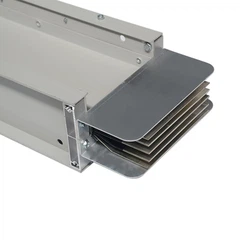
Before we jump into the installation angle tolerance, let's briefly understand what a Rising Mains Bus Duct is. A Rising Mains Bus Duct is a prefabricated electrical distribution system that is used to carry large amounts of electrical current vertically through a building. It consists of busbars, which are conductive bars made of copper or aluminum, enclosed in a protective housing. These busbars are insulated to prevent short - circuits and are designed to handle high - voltage and high - current applications.
The Rising Mains Bus Duct is a reliable alternative to traditional cable systems, offering advantages such as higher current - carrying capacity, better heat dissipation, and easier installation and maintenance. It is commonly used in commercial buildings, industrial facilities, and high - rise residential complexes.
What is Installation Angle Tolerance?
Installation angle tolerance refers to the allowable deviation from the ideal installation angle of the Rising Mains Bus Duct. In an ideal scenario, the bus duct should be installed perfectly vertically. However, in real - world applications, achieving a perfectly vertical installation is often challenging due to various factors such as building structure irregularities, installation errors, and environmental conditions.
The installation angle tolerance specifies the maximum angle by which the bus duct can deviate from the vertical without compromising its performance, safety, and longevity. For example, if the installation angle tolerance is specified as ± 5 degrees, it means that the bus duct can be installed at an angle that deviates up to 5 degrees from the vertical in either direction.
Why Installation Angle Tolerance Matters
Electrical Performance
The installation angle of the Rising Mains Bus Duct can significantly affect its electrical performance. When the bus duct is installed at an angle outside the specified tolerance, it can cause uneven distribution of current among the busbars. This uneven current distribution can lead to increased resistance, which in turn results in higher power losses and overheating. Over time, excessive heat can damage the insulation of the busbars, increasing the risk of short - circuits and electrical failures.
Mechanical Integrity
The mechanical integrity of the bus duct is also at stake when the installation angle exceeds the tolerance. A misaligned bus duct can experience additional stress on its joints and supports. This stress can cause mechanical wear and tear, leading to loosening of connections, deformation of the busbars, and even structural failure. In extreme cases, a severely misaligned bus duct can pose a safety hazard to the building occupants and the electrical system.
Thermal Management
Proper thermal management is crucial for the safe and efficient operation of the Rising Mains Bus Duct. The design of the bus duct is optimized for vertical installation to ensure effective heat dissipation. When the bus duct is installed at an improper angle, it can disrupt the natural convection of air around the busbars, reducing the heat dissipation efficiency. This can lead to higher operating temperatures, which can accelerate the aging of the insulation and other components of the bus duct.
Factors Affecting Installation Angle Tolerance
Building Structure
The structure of the building plays a significant role in determining the installation angle tolerance. In some buildings, the structural columns or walls may not be perfectly vertical, which can make it difficult to install the bus duct vertically. In such cases, the installation angle tolerance may need to be adjusted to accommodate the building's structural limitations.
Installation Method
The installation method used for the Rising Mains Bus Duct can also impact the installation angle tolerance. If the installation is carried out manually, there is a higher risk of installation errors, which can result in a larger deviation from the ideal installation angle. On the other hand, using advanced installation tools and techniques, such as laser - guided alignment systems, can help reduce the installation error and ensure a more accurate installation within the specified tolerance.
Environmental Conditions
Environmental conditions, such as seismic activity and wind loads, can also affect the installation angle tolerance. In areas prone to earthquakes or strong winds, the bus duct may be subjected to additional forces that can cause it to shift or tilt. In such cases, the installation angle tolerance may need to be increased to account for these external forces and ensure the long - term stability of the bus duct.
Determining the Appropriate Installation Angle Tolerance
The appropriate installation angle tolerance for a Rising Mains Bus Duct depends on several factors, including the design of the bus duct, the application requirements, and the installation environment. As a supplier, we work closely with our customers to determine the most suitable installation angle tolerance for their specific projects.
We conduct a detailed site survey to assess the building structure, installation conditions, and environmental factors. Based on this assessment, we recommend an installation angle tolerance that balances the need for electrical performance, mechanical integrity, and safety. In some cases, we may also provide custom - designed bus ducts with higher installation angle tolerances to meet the unique requirements of the project.
Industry Standards and Best Practices
The electrical industry has established standards and best practices for the installation of Rising Mains Bus Ducts, including guidelines on installation angle tolerance. These standards are developed by organizations such as the International Electrotechnical Commission (IEC) and the National Electrical Manufacturers Association (NEMA).
Compliance with these standards is essential to ensure the safety and reliability of the electrical system. When specifying the installation angle tolerance, we always refer to these industry standards and ensure that our products meet or exceed the requirements.


Impact on Related Components
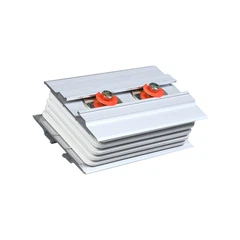
The installation angle tolerance of the Rising Mains Bus Duct can also have an impact on related components such as Busway Vertical Elbow and Sandwich Bus Duct Insulation.
A misaligned bus duct can put additional stress on the vertical elbows, which are used to change the direction of the bus duct. This stress can cause premature wear and tear of the elbows, reducing their lifespan and increasing the risk of failure. Similarly, the insulation of the bus duct can be affected by the installation angle. If the bus duct is installed at an angle outside the tolerance, the insulation may be subjected to uneven pressure, which can lead to insulation breakdown and electrical faults.
Role of 3 - Phase Busbar Trunking
3 Phase Busbar Trunking is an integral part of the Rising Mains Bus Duct system. It consists of three busbars that carry the three - phase electrical power. The installation angle tolerance of the bus duct can affect the performance of the 3 - phase busbar trunking.
An improper installation angle can cause phase - to - phase imbalance in the current distribution, leading to issues such as voltage fluctuations, harmonic distortion, and reduced power quality. Therefore, it is crucial to ensure that the 3 - phase busbar trunking is installed within the specified installation angle tolerance to maintain the stability and efficiency of the electrical system.
Ensuring Proper Installation
As a Rising Mains Bus Duct supplier, we not only provide high - quality products but also offer comprehensive installation support to our customers. Our team of experienced engineers and technicians can assist with the installation process, ensuring that the bus duct is installed within the specified installation angle tolerance.
We provide detailed installation instructions and training to the installation contractors, emphasizing the importance of following the recommended installation angle tolerance. During the installation, we conduct regular inspections to verify that the bus duct is being installed correctly. If any deviations from the specified tolerance are detected, we work with the contractors to correct the issue promptly.
Conclusion
The installation angle tolerance of the Rising Mains Bus Duct is a critical parameter that can significantly impact its electrical performance, mechanical integrity, and safety. As a supplier, we understand the importance of providing products with appropriate installation angle tolerances and ensuring proper installation.
By choosing our Rising Mains Bus Ducts, you can be confident that you are getting a reliable and efficient electrical distribution solution. Our products are designed and manufactured to meet the highest industry standards, and our team is dedicated to providing you with the best support throughout the project.
If you are interested in our Rising Mains Bus Duct products or have any questions about installation angle tolerance, we encourage you to contact us for a consultation. We look forward to working with you to meet your electrical distribution needs.
References
- International Electrotechnical Commission (IEC) standards on bus duct installation.
- National Electrical Manufacturers Association (NEMA) guidelines for electrical distribution systems.
- Technical literature on Rising Mains Bus Ducts from leading manufacturers.
Send Inquiry