

What is the function of the expansion joint in Air Insulated Busbar?
Oct 31, 2025
Leave a message
In the realm of electrical power distribution, Air Insulated Busbars (AIBs) play a pivotal role. As a leading supplier of Air Insulated Busbars, I've witnessed firsthand the significance of various components that contribute to their optimal performance. One such crucial component is the expansion joint. In this blog, we'll delve into the functions of expansion joints in Air Insulated Busbars and understand why they are indispensable in modern electrical systems.
Understanding Air Insulated Busbars
Before we explore the role of expansion joints, let's briefly understand what Air Insulated Busbars are. AIBs are electrical conductors that are used to distribute electrical power within a building, industrial facility, or a data center. They consist of copper or aluminum bars insulated by air and enclosed in a metal enclosure. AIBs offer several advantages over traditional cable systems, including higher current-carrying capacity, lower power losses, and easier installation and maintenance.
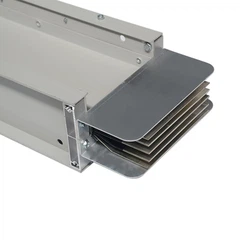
Our company offers a wide range of Air Insulated Busbar products, such as Data Center Busway, 3-Phase Air-Insulated Bus Duct, and Air-Insulated Busway Tap Off Unit. These products are designed to meet the diverse needs of our customers, from small commercial buildings to large industrial complexes.
The Need for Expansion Joints in Air Insulated Busbars
One of the primary challenges in electrical power distribution systems is dealing with thermal expansion and contraction. When an Air Insulated Busbar is energized, it generates heat due to the flow of electrical current. This heat causes the busbar to expand. Conversely, when the busbar is de-energized or the ambient temperature drops, it contracts. These expansion and contraction cycles can cause significant stress on the busbar system, leading to mechanical failure, electrical arcing, and even fire hazards.
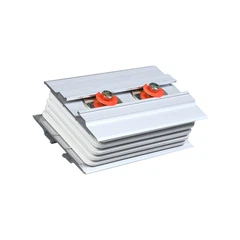
Expansion joints are designed to absorb these thermal movements and prevent damage to the busbar system. They act as flexible connectors between different sections of the busbar, allowing them to expand and contract freely without causing stress on the rest of the system. By accommodating thermal expansion and contraction, expansion joints ensure the long-term reliability and safety of the Air Insulated Busbar system.
Functions of Expansion Joints in Air Insulated Busbars
1. Absorbing Thermal Expansion and Contraction
As mentioned earlier, the primary function of an expansion joint is to absorb the thermal expansion and contraction of the busbar. When the busbar expands, the expansion joint stretches to accommodate the increased length. When the busbar contracts, the expansion joint compresses back to its original position. This flexibility allows the busbar to expand and contract without putting excessive stress on the connections, supports, or the enclosure.
For example, in a large industrial facility where the Air Insulated Busbar may experience significant temperature variations throughout the day, expansion joints are essential to prevent damage to the system. Without expansion joints, the thermal stress could cause the busbar to warp, crack, or even break, leading to costly repairs and downtime.
2. Reducing Vibration and Noise
In addition to thermal expansion and contraction, Air Insulated Busbars can also be subject to vibration and noise. Vibration can be caused by various factors, such as the operation of electrical equipment, mechanical forces, or seismic activity. These vibrations can cause wear and tear on the busbar system, leading to premature failure.
Expansion joints act as shock absorbers, reducing the transmission of vibration from one section of the busbar to another. By absorbing the vibrations, expansion joints help to protect the busbar system from damage and extend its lifespan. They also help to reduce noise levels, creating a more comfortable and safe working environment.
3. Compensating for Misalignment
During the installation of an Air Insulated Busbar system, it is not always possible to achieve perfect alignment between different sections of the busbar. Misalignment can occur due to various reasons, such as uneven floor surfaces, structural movement, or installation errors. Expansion joints can compensate for these misalignments by providing a flexible connection between the sections.
They allow for a certain degree of angular and lateral movement, ensuring that the busbar system can be installed even in less-than-ideal conditions. This flexibility makes the installation process easier and more efficient, reducing the time and cost associated with installation.
4. Maintaining Electrical Continuity
Another important function of expansion joints is to maintain electrical continuity in the busbar system. Despite their flexibility, expansion joints are designed to provide a low-resistance electrical connection between the different sections of the busbar. They are typically made of materials with high electrical conductivity, such as copper or aluminum, and are designed to minimize electrical losses.
By maintaining electrical continuity, expansion joints ensure that the electrical current can flow smoothly through the busbar system, without any interruptions or voltage drops. This is crucial for the proper operation of electrical equipment and the overall reliability of the power distribution system.
Types of Expansion Joints in Air Insulated Busbars
There are several types of expansion joints available for Air Insulated Busbars, each designed to meet specific requirements. The most common types include:
1. Flexible Braided Expansion Joints
Flexible braided expansion joints are made of a braided copper or aluminum conductor enclosed in a flexible insulating sleeve. They are highly flexible and can accommodate large amounts of thermal expansion and contraction. Braided expansion joints are suitable for applications where the busbar is subject to significant temperature variations or where there is a need for a high degree of flexibility.
2. Bellows Expansion Joints
Bellows expansion joints consist of a series of corrugated metal bellows that are designed to expand and contract. They are typically made of stainless steel or other high-strength metals and are capable of absorbing both axial and lateral movements. Bellows expansion joints are commonly used in applications where the busbar is subject to high-pressure or high-temperature conditions.


3. Slip Expansion Joints
Slip expansion joints work by allowing one section of the busbar to slide relative to another. They consist of a sliding sleeve that is designed to fit over the busbar and provide a flexible connection. Slip expansion joints are relatively simple and cost-effective, making them a popular choice for many applications.
Choosing the Right Expansion Joint for Your Air Insulated Busbar System
When choosing an expansion joint for your Air Insulated Busbar system, several factors need to be considered. These include:
1. Thermal Movement Requirements
The first step in choosing an expansion joint is to determine the amount of thermal movement that the busbar is likely to experience. This can be calculated based on the length of the busbar, the temperature range it will be exposed to, and the coefficient of thermal expansion of the busbar material. Once the thermal movement requirements are known, an expansion joint with the appropriate flexibility and capacity can be selected.
2. Electrical Requirements
The expansion joint must also meet the electrical requirements of the busbar system. It should have a low electrical resistance to minimize power losses and ensure efficient power transmission. The material used for the expansion joint should also be compatible with the busbar material to prevent galvanic corrosion.
3. Environmental Conditions
The environmental conditions in which the busbar system will operate also need to be considered. For example, if the busbar is located in a harsh environment with high humidity, dust, or chemicals, an expansion joint with appropriate protection against corrosion and contamination should be selected.
4. Installation Space
The available installation space is another important factor to consider. Some expansion joints may require more space than others, especially those that are designed to accommodate large amounts of movement. It is important to ensure that there is enough space for the expansion joint to operate freely without interfering with other components of the busbar system.
Conclusion
Expansion joints are an essential component of Air Insulated Busbar systems. They play a crucial role in absorbing thermal expansion and contraction, reducing vibration and noise, compensating for misalignment, and maintaining electrical continuity. By choosing the right expansion joint for your busbar system, you can ensure its long-term reliability, safety, and performance.
As a leading supplier of Air Insulated Busbars, we understand the importance of providing high-quality expansion joints that meet the diverse needs of our customers. Our expansion joints are designed and manufactured to the highest standards, using the latest technology and materials. We offer a wide range of expansion joints to suit different applications and requirements, and our team of experts can provide you with professional advice and support to help you choose the right solution for your project.
If you are interested in learning more about our Air Insulated Busbar products or expansion joints, or if you have any questions or requirements, please feel free to contact us. We look forward to discussing your needs and providing you with the best solutions for your electrical power distribution system.
References
- Electrical Power Distribution Handbook, McGraw-Hill
- National Electrical Code (NEC), NFPA 70
- IEEE Standard for Metal-Enclosed Bus, IEEE C37.23
Send Inquiry