

What are the requirements for parallel connection of Lighting Bus Duct?
Sep 09, 2025
Leave a message
When it comes to the parallel connection of Lighting Bus Duct, as a seasoned Lighting Bus Duct supplier, I understand the importance of adhering to strict requirements to ensure safety, efficiency, and optimal performance. In this blog, I'll delve into the key requirements for parallel connection, drawing on my experience in the industry and our company's expertise in providing high - quality bus duct solutions.
Electrical Characteristics Compatibility
One of the fundamental requirements for parallel connection of Lighting Bus Duct is the compatibility of electrical characteristics. This includes voltage, frequency, and phase sequence.
Voltage
The voltage ratings of the bus ducts being connected in parallel must be identical. Any mismatch in voltage can lead to uneven current distribution among the bus ducts. For example, if one bus duct has a higher voltage rating than the others, it will tend to carry more current, which can cause overheating in that particular bus duct and potentially lead to equipment failure. This is because the current will flow from the higher - voltage source to the lower - voltage source, creating an imbalance. In practical applications, before parallel connection, we always measure the voltage of each bus duct using high - precision voltmeters to ensure they are within an acceptable tolerance range.
Frequency
The frequency of the electrical supply to the parallel - connected bus ducts must also be the same. In most power systems, the standard frequency is either 50Hz or 60Hz. A difference in frequency can result in significant power fluctuations and instability. When the frequencies are not matched, the currents in the bus ducts will not be in phase, leading to reactive power flow and increased losses. To guarantee frequency compatibility, we use frequency meters to verify that all bus ducts are operating at the same frequency.
Phase Sequence
Correct phase sequence is crucial for parallel connection. If the phase sequence is incorrect, large circulating currents will flow between the bus ducts. These circulating currents can cause excessive heating, damage to the bus duct insulation, and even pose a safety hazard. To determine the phase sequence, we use phase sequence indicators. Once we confirm that the phase sequences of all bus ducts are the same, we can proceed with the parallel connection.
Ampacity and Load Distribution
Another important aspect is the ampacity and load distribution of the bus ducts.
Ampacity
The ampacity of each bus duct in the parallel connection should be carefully considered. The total load current should be evenly distributed among the parallel - connected bus ducts. Each bus duct must be able to carry its share of the load without exceeding its rated ampacity. For instance, if we have two bus ducts connected in parallel to carry a total load of 1000A, and each bus duct has a rated ampacity of 600A, the load should be divided as evenly as possible between them. Overloading a single bus duct can lead to premature aging of the insulation, increased resistance, and ultimately, a higher risk of fire. As a supplier, we provide detailed ampacity ratings for our Air Insulated Busbar, and we offer guidance on load distribution during the installation process.
Load Distribution
To achieve proper load distribution, the impedance of each bus duct should be as close as possible. Bus ducts with lower impedance will tend to carry more current. Therefore, we ensure that the physical characteristics of the bus ducts, such as conductor size, length, and material, are similar. In some cases, we may use current - sharing devices or monitoring systems to ensure that the load is evenly distributed among the parallel - connected bus ducts. These devices can detect any imbalance in the current and make adjustments accordingly.
Mechanical and Physical Requirements
Mechanical and physical factors also play a significant role in the parallel connection of Lighting Bus Duct.
Physical Dimensions and Installation
The physical dimensions of the bus ducts must be compatible to ensure a proper connection. The length, width, and height of the bus ducts should be such that they can be easily installed side by side or in a parallel configuration. During installation, we pay close attention to the alignment of the bus ducts. Misalignment can cause stress on the connections, leading to poor electrical contact and increased resistance. We use alignment tools and fixtures to ensure that the bus ducts are installed accurately.
Insulation and Protection
Good insulation is essential for the safe operation of parallel - connected bus ducts. The insulation materials used in the bus ducts should have high dielectric strength and be able to withstand the operating voltage and environmental conditions. Additionally, the bus ducts should be protected from external factors such as moisture, dust, and mechanical damage. Our 3 - Phase Air - Insulated Bus Duct is designed with high - quality insulation materials and protective enclosures to ensure reliable performance in various environments.
Monitoring and Protection Systems
To ensure the long - term reliability of the parallel - connected Lighting Bus Duct, monitoring and protection systems are necessary.

Current Monitoring
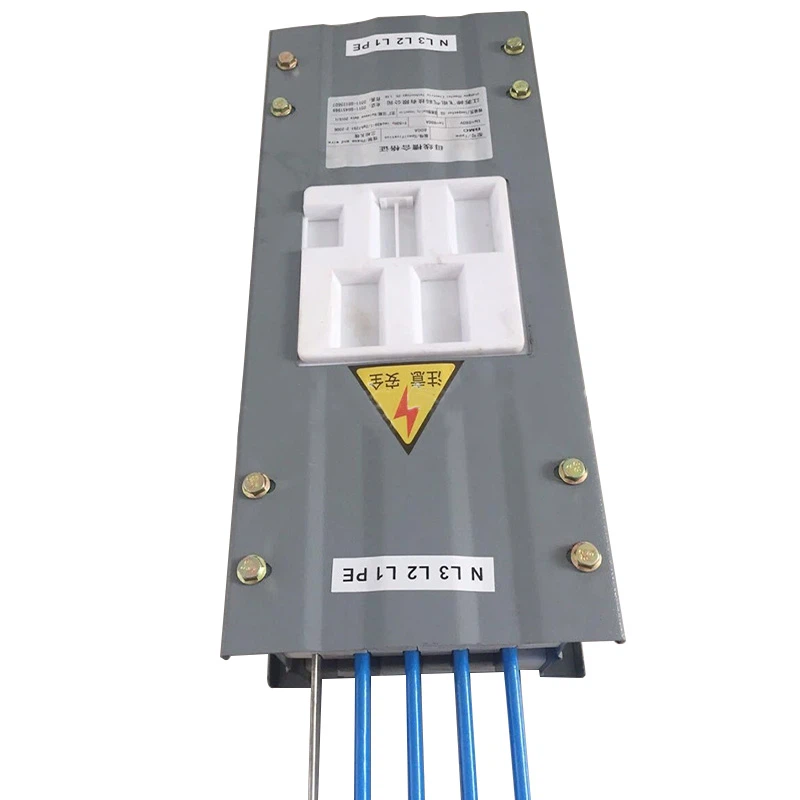
Continuous current monitoring is essential to detect any abnormal current flow in the bus ducts. We install current sensors on each bus duct to measure the current in real - time. If there is an imbalance in the current or if the current in a particular bus duct exceeds its rated value, an alarm can be triggered. This allows for timely intervention to prevent equipment damage.
Temperature Monitoring
Temperature is another critical parameter to monitor. Overheating can indicate a problem with the electrical connection or excessive load. We use temperature sensors to measure the temperature of the bus ducts at key points, such as the connection joints. If the temperature rises above a certain threshold, appropriate measures can be taken, such as reducing the load or checking the electrical connections.
Protection Devices
Protection devices such as circuit breakers and fuses should be installed in the parallel - connected bus duct system. These devices can quickly disconnect the power supply in case of a short - circuit or over - current fault, protecting the bus ducts and other electrical equipment from damage.
Compatibility with the Overall Electrical System
The parallel - connected Lighting Bus Duct must be compatible with the overall electrical system. This includes the power source, distribution panels, and other electrical components.
Power Source Compatibility
The bus ducts should be able to handle the characteristics of the power source. For example, if the power source has a high level of harmonic distortion, the bus ducts should be designed to minimize the impact of these harmonics. We can provide bus ducts with low - harmonic designs to ensure compatibility with non - linear loads.
Integration with Distribution Panels
The parallel - connected bus ducts should be easily integrated with the distribution panels. The connection points between the bus ducts and the distribution panels should be properly designed to ensure good electrical contact and mechanical stability. Our Data Center Busway is designed to be highly compatible with various distribution panels, making it easy to install and integrate into the overall electrical system.
In conclusion, the parallel connection of Lighting Bus Duct requires careful consideration of electrical characteristics, ampacity, mechanical and physical factors, monitoring and protection systems, and compatibility with the overall electrical system. As a Lighting Bus Duct supplier, we are committed to providing high - quality products and professional technical support to ensure that our customers can achieve safe and efficient parallel connection of bus ducts. If you are interested in our Lighting Bus Duct products or need more information about parallel connection requirements, please feel free to contact us for procurement and further discussions.
References
- Electrical Power Systems Quality, by Roger C. Dugan, Mark F. McGranaghan, Surya Santoso, and H. Wayne Beaty.
- Handbook of Electrical Engineering, by F. Karady and M. S. Sachdev.
Send Inquiry