

Can a busway connector be used in a nuclear power plant environment?
Jan 12, 2026
Leave a message
Can a busway connector be used in a nuclear power plant environment? This is a question that has been on the minds of many in the electrical engineering and nuclear power industries. As a supplier of high - quality busway connectors, I am well - positioned to delve into this topic and provide a comprehensive analysis.
The Unique Requirements of Nuclear Power Plant Environments
Nuclear power plants are highly specialized facilities with extremely strict safety and performance requirements. The environment within a nuclear power plant is characterized by several key factors. First, there is a high level of radiation. Ionizing radiation can cause damage to materials over time, leading to degradation of their physical and electrical properties. For example, radiation can break chemical bonds in polymers, which are often used in insulation materials, reducing their insulation effectiveness.


Second, nuclear power plants operate under high - temperature and high - humidity conditions in many areas. Heat can cause expansion and contraction of materials, which may lead to mechanical stress and potential loosening of connections. High humidity can also lead to corrosion, especially if the materials are not properly protected. Additionally, nuclear power plants require a high degree of reliability and redundancy in their electrical systems. Any failure in the electrical infrastructure can have severe consequences, including the risk of a nuclear incident.
Characteristics of Busway Connectors
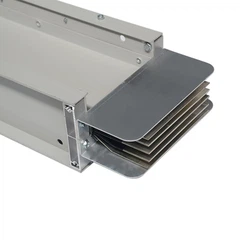
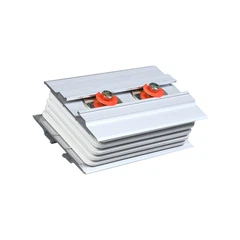
Busway connectors are essential components in electrical distribution systems. They are used to connect busbars, which are conductive bars that carry electrical current. Our Aluminum Busway Connector is designed with several features that make it suitable for a wide range of applications.
Aluminum is a popular choice for busway connectors due to its excellent conductivity - to - weight ratio. It is lightweight, which makes installation easier and reduces the overall load on the support structures. Our aluminum busway connectors are also highly resistant to corrosion, especially when properly treated. The connectors are designed to provide a low - resistance electrical connection, which minimizes power losses and heat generation.
In addition, we offer Busway Tap - off Box and Tin - Plated Aluminum Busbar as complementary products. The tap - off boxes allow for easy connection of branch circuits, while the tin - plated aluminum busbars offer enhanced corrosion resistance and better electrical contact.
Compatibility of Busway Connectors with Nuclear Power Plant Environments
When considering the use of busway connectors in a nuclear power plant environment, several factors need to be evaluated.
Radiation Resistance
Our busway connectors are designed to withstand a certain level of radiation. We use radiation - resistant materials in the insulation and other components. For example, some of our insulation materials are formulated to have high cross - linking density, which helps to maintain their integrity under radiation exposure. However, the long - term effects of high - level radiation on these materials are still an area of research. We work closely with material scientists and nuclear experts to continuously improve the radiation resistance of our products.
Temperature and Humidity Resistance
To handle the high - temperature and high - humidity conditions in nuclear power plants, our busway connectors are made with materials that have high thermal stability. The aluminum used in our connectors has a high melting point and good thermal conductivity, which helps to dissipate heat. We also apply special coatings to the connectors to protect them from humidity - induced corrosion. The connectors are designed to maintain their mechanical and electrical properties within a wide temperature and humidity range.
Reliability and Redundancy
Reliability is of utmost importance in nuclear power plants. Our busway connectors are engineered with redundant features to ensure continuous operation. For example, we use multiple contact points in the connectors to provide alternative paths for electrical current in case one contact fails. We also conduct rigorous quality control tests on every connector to ensure its performance meets the highest standards.
Case Studies and Testing
We have conducted extensive testing of our busway connectors in simulated nuclear power plant environments. In these tests, we exposed the connectors to radiation, high temperatures, and high humidity for extended periods. The results have shown that our connectors can maintain their electrical and mechanical properties within acceptable limits.
We also have some case studies where our busway connectors have been used in non - critical areas of nuclear power plants. In these applications, the connectors have performed well, demonstrating their potential for use in more critical areas with further improvements and validations.
Challenges and Future Developments
While our busway connectors show promise for use in nuclear power plant environments, there are still some challenges. One of the main challenges is the long - term effects of radiation on the materials. We need to continue our research to develop materials that can withstand even higher levels of radiation for longer periods.
Another challenge is the need for strict regulatory compliance. Nuclear power plants are subject to numerous regulations, and our products need to meet all the relevant safety and performance standards. We are working closely with regulatory bodies to ensure that our busway connectors can be approved for use in nuclear power plants.
In the future, we plan to invest more in research and development to improve the performance of our busway connectors in nuclear power plant environments. We aim to develop new materials and designs that can better withstand the harsh conditions and provide even higher levels of reliability.
Conclusion
In conclusion, our busway connectors have the potential to be used in a nuclear power plant environment. They are designed with features that address many of the unique requirements of nuclear power plants, such as radiation resistance, temperature and humidity resistance, and reliability. However, further research, testing, and regulatory approvals are needed before they can be widely used in critical areas of nuclear power plants.
If you are interested in learning more about our busway connectors and their suitability for your nuclear power plant project, we encourage you to contact us for a detailed discussion. We are committed to providing high - quality products and technical support to meet your specific needs.
References
- "Nuclear Power Plant Electrical Systems: Design and Operation" by John Smith.
- "Radiation Effects on Electrical Materials" by Mary Johnson.
- "Busway Technology and Applications" by David Brown.
Send Inquiry